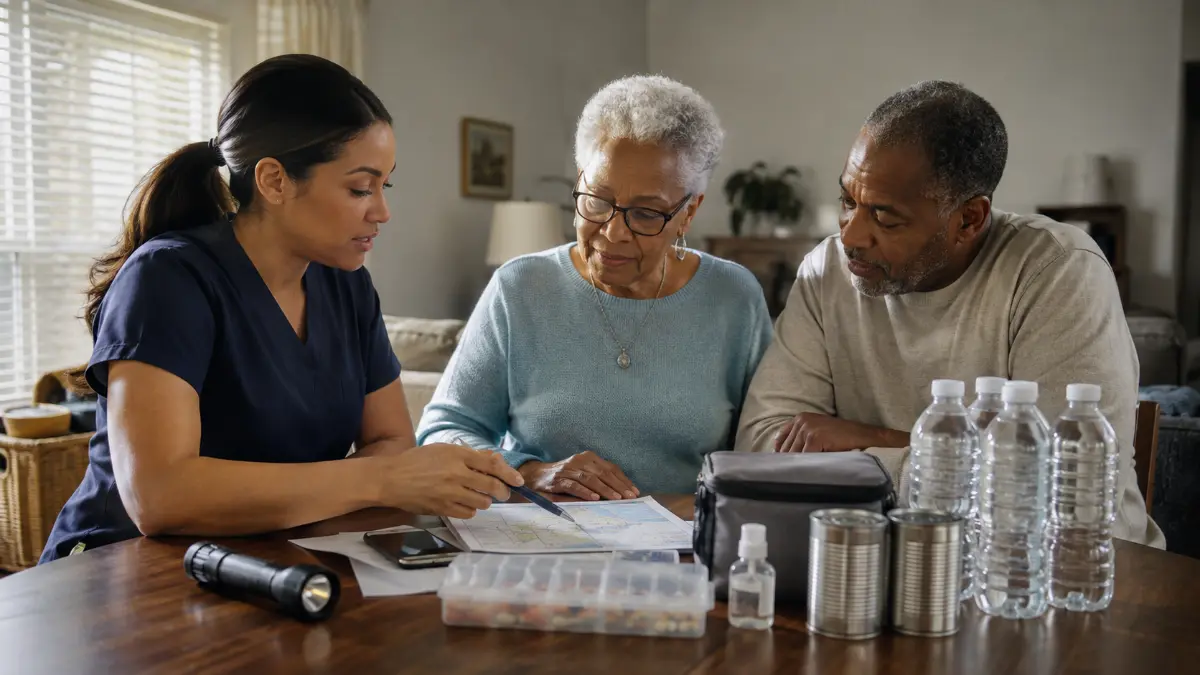

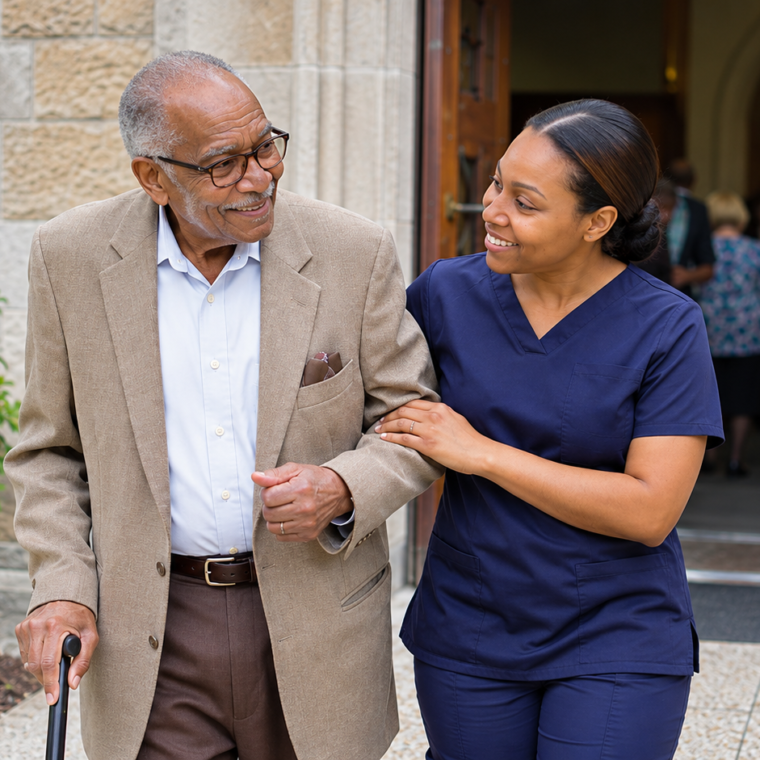

Quick answer: To help an older adult stay connected with worship or faith community events, ask what participation matters to them, check accessibility and timing, and assign responsibility for transportation, mobility assistance, and communication. A non medical home caregiver may help with daily preparation and companionship when those tasks are within the agreed care plan. Attendance, transportation, and event support must be confirmed rather than assumed.
For some Houston families, Sunday worship, a weekday prayer gathering, a community lunch, or a holiday service is an important part of an older parent’s routine. When dressing takes longer, walking becomes tiring, or family schedules change, the challenge is often practical: how can a loved one participate comfortably and by choice?
A good plan respects the older adult’s beliefs, preferences, privacy, and right to decline. It also separates what the family, congregation, venue, transportation provider, and home care agency can each do.
Start With the Older Adult’s Preferences, Not the Family Calendar
Ask whether the person wants to attend in person, join remotely, receive a visit from a faith community representative, or take a break. Preferences may change from week to week. Do not assume participation is desired simply because it was part of a long standing routine.
- Which gathering or activity matters most, and how often?
- Is a shorter visit, quieter seating area, or remote option preferable?
- Would the older adult like a family member, volunteer, or caregiver to accompany them?
- What information may be shared with the congregation, and with whose permission?
1. Check the Venue Before the Event
A familiar building can still present practical barriers. Ask the event organizer about step free entry, ramps, accessible restrooms, seating near an exit, parking or drop off, and the distance from the entrance to the gathering space. Confirm whether elevators are operating and whether the event will be crowded or outdoors.
For a general explanation of accessibility obligations in public accommodations, families can consult the U.S. Department of Justice ADA guidance. Accessibility requirements depend on the venue and circumstances; a family should confirm the specific arrangements directly with the organizer.
Important legal distinction: Religious organizations and entities controlled by them, including many houses of worship, are generally exempt from ADA Title III requirements. Other event venues may have different obligations. Regardless of the legal rules, ask the organizer directly about accessible entry, restrooms, seating, and a practical arrival plan. Do not assume accessibility features are available.
2. Plan the Entire Outing, Not Just the Service Time
Work backward from the gathering. Consider the time needed for washing, dressing, breakfast, mobility equipment, the trip, arrival, the event itself, and the return home. Build in rest time and avoid rushing a person who needs more time to move safely.
- Before: confirm the older adult’s preference, event time, clothing, weather, and mobility needs
- Travel: identify the driver, vehicle access, pickup location, and backup ride
- At the venue: confirm who will assist with entry, seating, restroom access, and departure
- Afterward: plan food, hydration, rest, and the next scheduled home care visit
Do not assume a home care visit includes driving or accompanying someone outside the home. Ask the agency to confirm approved duties, staffing, schedule, and any transportation arrangements before making plans.
3. Decide Which Tasks a Non Medical Caregiver Can Support
Depending on the agreed care plan and agency policies, non medical assistance may include helping someone get ready, organizing clothing and personal items, supporting ordinary routines, or providing companionship before or after an event. Any hands on mobility assistance must fit the caregiver’s training and assigned duties.
Families who need help with bathing, dressing, or grooming can review Angels Instead’s personal care services and discuss the specific morning routine with the agency. These services do not, by themselves, establish that event attendance or transportation is available.
For an older adult who values conversation and connection at home, Angels Instead also describes companionship care. The family should confirm the scope of each requested activity before a visit is scheduled.
4. Prepare a Simple Event Handoff Plan
When several people share responsibilities, write down who is doing what. A single page plan can prevent a missed pickup, a confusing handoff, or an older adult waiting alone after an event.
- Event name, date, start and expected finish time
- Older adult’s preferred level of participation and any consent to share information
- Responsible person for getting ready and confirming departure
- Driver or transportation provider, pickup address, and backup contact
- Venue entrance, seating arrangements, restroom location, and on site contact
- Who is responsible for the return trip and next care visit
- What to do if the event is canceled, weather changes, or the person decides not to attend
5. Offer Alternatives When In Person Attendance Is Difficult
Staying connected does not always require a full outing. Some communities offer livestreams, telephone access, smaller gatherings, pastoral or community visits, or social events at different times. Ask the older adult which options feel meaningful rather than treating a video stream as an automatic substitute.
The National Institute on Aging provides guidance on staying connected and reducing social isolation. Social connection can include friends, family, neighbors, and community activities, whether religious or secular.
Families should also respect religious differences. A caregiver’s role is to support the older adult’s stated preferences within the agreed care plan, not to persuade the person to join or avoid a particular activity.
A Houston Family Example
Consider a parent in west Houston who wants to attend a weekly community gathering but now needs extra time to dress and becomes tired after walking long distances. A daughter could ask the venue about a closer entrance and seating, arrange a ride with a family member, and discuss morning personal care support with Angels Instead. The family would still need to confirm whether any caregiver assistance at the venue is offered and scheduled. If the parent prefers to stay home that week, the plan should adapt without pressure.
When to Reassess the Plan?
Review the plan after a fall, a change in mobility, a new health concern, increased fatigue, a venue change, or a missed handoff. A clinician should evaluate new medical symptoms and advise on health related restrictions. A non medical caregiver should not determine whether someone is medically fit to travel or attend a crowded event.
Frequently Asked Questions
Can a home care caregiver take my parents to church or another religious service?
Possibly, but do not assume transportation or accompaniment is included. Ask Angels Instead to confirm available services, caregiver duties, scheduling, and any transportation policies for the specific outing.
Can caregivers help an older adult get ready for worship?
Help with dressing, grooming, and other daily routines may be available through an agreed nonmedical care plan. Confirm the individual tasks and the caregiver’s assigned responsibilities.
What if my parents use a walker or wheelchair?
Check venue entrances, seating, restrooms, travel arrangements, and the distance to walk. Discuss appropriate mobility assistance with the agency and obtain professional guidance when needed.
What if my parents do not want to attend anymore?
Respect the decision. Ask whether another kind of social contact is welcome, without pressuring the person to participate in religious activities.
Does Angels Instead provide transportation to religious events in Houston?
This article does not establish transportation availability. Contact the agency directly to ask about current service options, location, scheduling, and policies.
Can a caregiver participate in prayers or religious rituals?
Any participation should reflect the older adult’s wishes, caregiver boundaries, agency policy, and mutual consent. Do not assume a caregiver shares the same beliefs or is expected to take part.
The older adult may also request a caregiver who can respectfully support the routine without participating in worship. Any accommodation of preferences depends on agency policy and staffing, and should never require a caregiver to adopt religious beliefs.
How can family members support participation when they work on weekends?
Choose the most important event, arrange a reliable driver or approved provider, confirm venue accessibility, and plan personal care visits around the outing. Keep a backup option if attendance becomes impractical.
Discuss a Care Routine That Supports What Matters
A meaningful routine may include worship, a community meal, a family gathering, or simply time with friends. Angels Instead can discuss non medical home care needs and which services may fit your family’s schedule in the Houston area. Call (281) 800-1800 to talk through the daily support your loved one needs.
You can also contact Angels Instead about care to ask about current availability and service boundaries.