
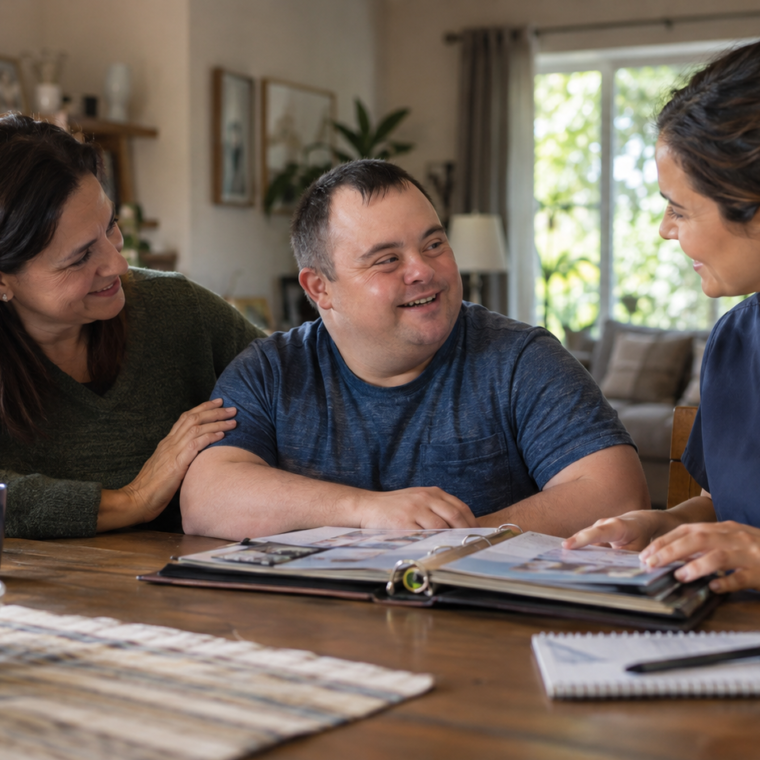

Quick Answer: Respite care can give a family caregiver temporary relief while an adult with an intellectual disability receives agreed support at home. A strong plan centers the adult receiving care. It documents communication, routines, preferences, personal care needs, safety information, and the limits of non medical support. The caregiver should know what the person wants to keep doing independently, what help is welcome, and when a concern belongs with a clinician, crisis resource, or emergency service.
| At a Glance: What Strong Adult Respite Care Should Protect
• The adult participates in planning to the greatest extent possible • Communication preferences and processing time are clearly documented • Familiar routines continue instead of being replaced for caregiver convenience • Personal care and supervision match the actual care plan rather than the diagnosis alone • Caregivers know ordinary reporting steps and emergency escalation boundaries • Family relief matters, but dignity, choice, privacy, and continuity remain central |
Texas Health and Human Services describes respite care services as short term support that can relieve an unpaid primary caregiver when the person receiving care needs assistance. For an adult with an intellectual disability, however, good respite is more than filling a family caregiver’s hours away. The visit should fit the person’s ordinary life.
That means the handoff cannot stop at meals, hygiene, supervision, and reminders. It should also explain how the adult communicates, what choices matter, what creates comfort or distress, which routines should stay familiar, and what support should not be provided without the right authority or training.
1. Start With the Adult Receiving Care
Texas Health and Human Services guidance on person directed planning emphasizes the person’s preferred outcomes, strengths, choices, abilities, interaction style, and natural support. Planning should reflect what matters to the person receiving services, not only what is convenient for others.
Ask the adult what they want from respite visits. Depending on communication preferences, that may happen through conversation, pictures, gestures, a communication device, simple choices, or support from trusted people who know the person well. Limited speech should not be treated as proof that the person has nothing to contribute to the plan.
Document what the person wants to keep doing independently, what kind of assistance is welcome, how privacy should be protected, and how the caregiver should respond when the person refuses a task or changes a preference.
2. Supported Choices Are Different From Taking Over
Texas Health and Human Services explains supported decision making as a process that helps an adult with a disability make life decisions without giving the supporter authority to decide on the adult’s behalf. A respite caregiver should not assume legal authority simply because the adult needs assistance with daily routines.
Offer understandable choices rather than making every decision for the person. Give enough processing time. Avoid repeating the same question until the caregiver gets the answer they prefer. If legal authority, guardianship, medical consent, or another formal arrangement affects a decision, the family should rely on verified records and appropriate professional guidance rather than assumptions.
| Person Centered Handoff Snapshot
• Preferred name and communication method • How the person shows agreement, discomfort, pain, or distress • Daily routines that should remain familiar • Personal care, mobility, meal, and supervision needs • Activities, people, foods, and environments the person enjoys or avoids • Emergency contacts, relevant health instructions, and escalation steps |
3. Build a Handoff That Describes the Person, Not Just the Diagnosis
A usable respite handoff should be specific enough that a caregiver can support the adult without guessing. It should describe strengths, routines, preferences, support needs, important risks, and who to contact when something changes.
Texas Health and Human Services person directed planning guidance emphasizes the person’s preferred outcomes, strengths, choices, abilities, interaction style, and natural supports. That same principle is useful when families prepare information for respite, even when the respite provider is separate from a state program.
Keep the handoff practical. Include the normal schedule, communication needs, personal care instructions, food preferences, mobility support, important health information, emergency contacts, community routines, privacy boundaries, and family communication preferences. Update it when the person’s needs or choices change.
4. Introduce a New Caregiver Gradually When Possible
A sudden handoff to an unfamiliar person can be stressful when trust, communication, or routine matters. A brief introduction may be enough for one person and not enough for another.
When practical, begin with a trusted family member or support person present. Let the caregiver observe how the adult communicates, completes familiar tasks, takes breaks, and makes choices. A shorter first visit built around a familiar activity can reveal more than a rushed explanation at the door.
Angels Instead’s respite care service describes an initial consultation, care plan development, caregiver matching, and ongoing support. Its respite page also specifically includes disability respite for people with physical or intellectual disabilities.
5. Personal Care Must Match the Person and the Care Plan
Some adults need hands on assistance with bathing, dressing, grooming, toileting, eating, or mobility. Others may need setup, reminders, verbal cueing, or only occasional physical help. The diagnosis alone does not tell a caregiver how much assistance to provide.
Angels Instead’s personal care services include support with bathing, dressing, grooming, toileting, meals, mobility, light housekeeping, and other daily routines. The individual care plan should define what help is appropriate for the person receiving respite.
Explain actions before providing intimate or physical assistance. Protect privacy. Offer choices about timing, clothing, products, meals, and activities. Do not take over a task simply because doing it for the person would be faster.
6. Communication and Distress Need Context
A change in behavior may communicate pain, illness, fear, frustration, sensory discomfort, fatigue, grief, a disrupted routine, or another unmet need. Labels such as difficult or noncompliant do not explain what happened.
The handoff should describe early signs of distress, useful communication supports, known triggers, preferred calming approaches, and actions that tend to make a situation worse. A non medical respite caregiver should stay within the written plan and agency policy rather than inventing a behavioral intervention.
| Signs the Care Plan May Need Review
• The adult repeatedly refuses a part of the visit that was previously acceptable • Communication needs have changed and caregivers are struggling to understand the person • Personal care, mobility, eating, or supervision needs have increased • Frequent caregiver changes are making visits harder • The family is asking respite caregivers to perform tasks outside the agreed nonmedical role • A new health or safety concern is being treated as a routine respite issue |
7. Respite Can Support Community Life
Adult life includes relationships, recreation, faith, errands, community activities, and personal interests. Respite should not automatically reduce the person’s world to staying occupied inside the house.
When included in the care plan and within the provider’s service scope, support may involve preparing for a familiar activity, completing errands, taking a walk, cooking, using technology, or participating in community routines. Transportation, money handling, supervision, photography, and social media boundaries should be clarified before the visit.
Families can review Angels Instead’s home care planning process to understand its consultation, personalized care plan, caregiver matching, and ongoing support process.
8. Create Clear Health, Safety, and Emergency Boundaries
A respite plan should distinguish an ordinary concern from an emergency. A missed routine, a refused activity, or a change that needs a family update is different from choking, severe breathing difficulty, loss of consciousness, serious injury, immediate danger, or another life threatening event.
Non Medical respite care should not be presented as nursing, crisis stabilization, behavior therapy, or emergency response. If the adult has an established medical, seizure, swallowing, behavioral, or crisis plan, the family and agency should confirm exactly what the assigned caregiver is trained and authorized to do.
Call 911 for an immediate threat to life or safety. For nonemergency concerns that exceed the respite caregiver’s role, follow the person’s established plan and contact the appropriate family member, clinician, service coordinator, crisis resource, or other responsible professional.
How Texas Families Can Compare Respite Options
Texas families can also use Take Time Texas to learn about respite and search for resources. A directory can help identify options, but families should still verify the provider’s current services, caregiver fit, rates, scheduling, and policies.
- Does the provider currently support adults with intellectual disabilities?
- How will the adult participate in assessment, caregiver matching, scheduling, and care plan reviews?
- Can the caregiver support the person’s actual communication, personal care, mobility, meals, and community routines?
- How are health changes, incidents, emergency contacts, and family updates handled?
- How are substitute caregivers introduced when the regular caregiver is unavailable?
- Which transportation, money handling, medication reminder, and community activity tasks are actually offered?
- What are the current rate, minimum visit, cancellation, holiday, and backup coverage policies?
Angels Instead lists multiple Texas communities on its areas served page. Families should still confirm current caregiver availability and whether the required support can be provided in their specific location.
What a Strong First Respite Visit Looks Like?
A good first visit should feel predictable rather than performative. The caregiver greets the adult directly, reviews only the information needed for the visit, confirms the planned routine, and asks before changing activities or providing assistance.
Documentation should focus on facts: what activities occurred, what help was accepted, relevant meals or routines, meaningful changes from baseline, incidents, and questions for the family. The adult’s feedback should influence the next visit. A shift is not successful merely because every task on a checklist was completed.
| First Visit Check
• The adult knows who is arriving and why • The caregiver has the current handoff and emergency contacts • Preferred communication and routines are understood • The caregiver knows which tasks are authorized and which are outside scope • The family knows how updates and incidents will be communicated • The adult’s response to the visit is considered before the next schedule is set |
Frequently Asked Questions
What is respite care for an adult with an intellectual disability?
It is temporary support that gives a family caregiver time away while the adult receives agreed help with daily routines, personal care, meals, mobility, companionship, supervision, or other approved activities. The plan should reflect the individual person rather than a generic diagnosis template.
Can respite care happen in the person’s home?
Yes. Home based respite can allow the adult to remain in a familiar environment. The provider should still verify the care plan, caregiver fit, household needs, emergency contacts, and the exact services required.
How should families prepare for the first visit?
Prepare a concise handoff covering communication, routines, preferences, personal care, mobility, meals, important health information, emergency contacts, and what the adult wants to do. A gradual introduction may help when familiarity and trust are important.
How is intellectual disability respite different from autism respite?
The groups can overlap, but the terms are not interchangeable. The correct respite plan should be based on the person’s actual communication, routines, abilities, preferences, and support needs rather than assumptions attached to a diagnosis.
Does respite replace IDD services, nursing, therapy, or crisis support?
No. Non Medical respite supports daily life and family caregiver relief. It does not replace nursing, therapy, service coordination, crisis stabilization, medical care, or emergency response.
The Bottom Line
The strongest respite plan does more than cover a family caregiver’s absence. It protects continuity, communication, privacy, choice, and the adult’s ordinary life. That requires a clear handoff, a thoughtful caregiver match, and firm boundaries around health, safety, consent, and services outside nonmedical home care.
To discuss respite routines, personal care, caregiver matching, and family relief, contact Angels Instead for a home care assessment. Confirm the services, caregiver fit, scheduling, rates, and policies that matter to the adult receiving care before the first visit.