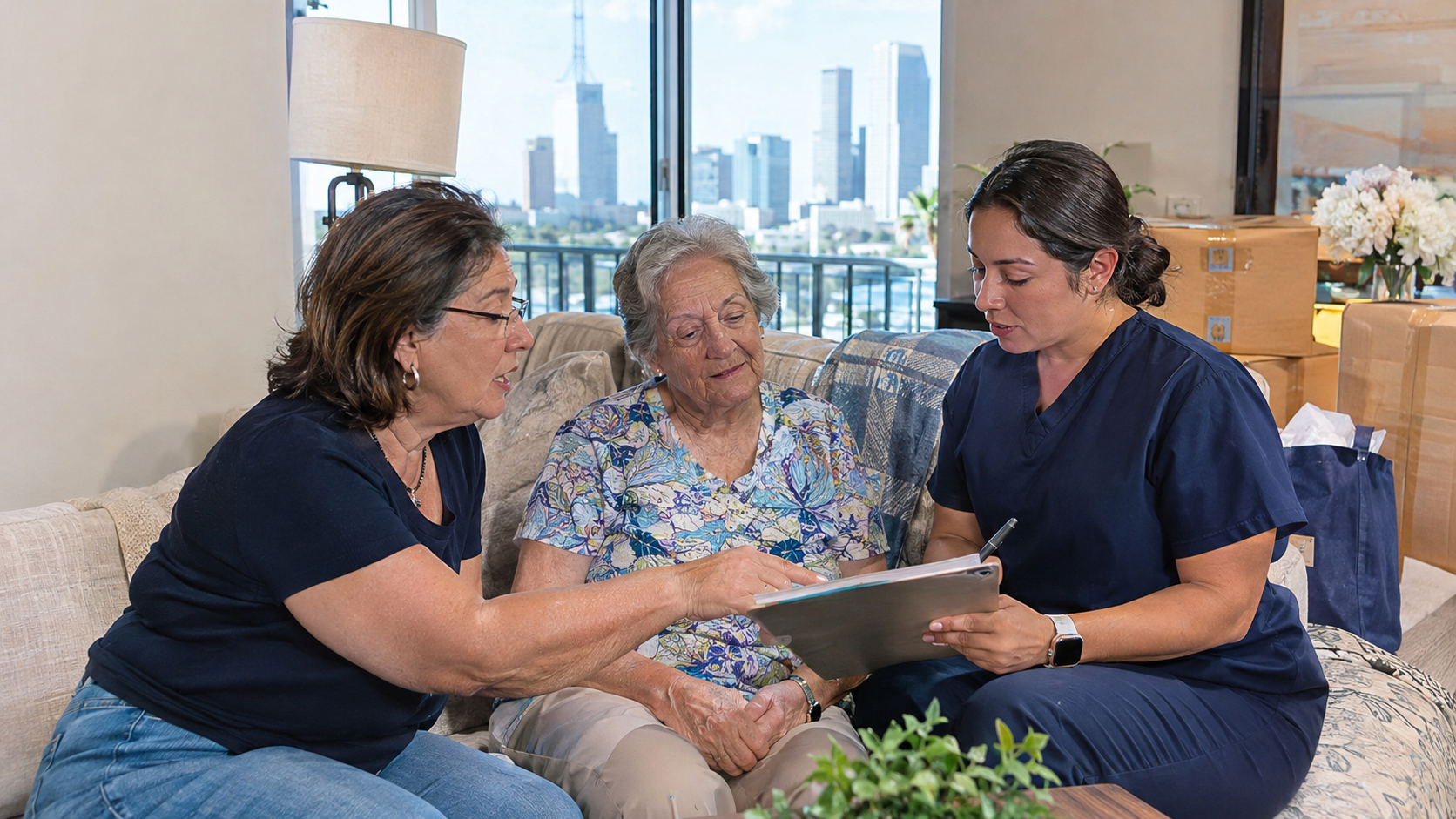



Quick answer: Yes, an older adult can receive home care while living at two addresses, but coverage must be confirmed separately for each home. Families should document access and daily routines at both residences, maintain one current care summary, assign move day responsibilities, and confirm the first caregiver visit after every move. The same caregiver or schedule is not guaranteed.
An older parent might spend weekdays with a daughter in Houston and weekends at their own house in Katy. Another family may split the year between Texas and another state. Two familiar homes can offer flexibility, but they also create two sets of keys, medication storage questions, routines, and emergency contacts. The solution is not simply to copy a care schedule from one address to the other.
Why Two Addresses Change the Care Plan?
A home care plan depends on the actual environment and who is present. Stairs, bathrooms, lighting, pets, entry procedures, and household members may differ. A routine that works at one address may not be safe or practical at the other. Families should document those differences before scheduling assistance.
The National Institute on Aging recommends planning ahead for daily support and reviewing home needs as circumstances change. Its aging in place guidance offers a useful starting point for discussing support across both households.
1. Make a Separate Home Profile for Each Address
Create a one page profile for each home. Keep copies with the family decision maker and share relevant details securely with the care provider, with the older adult’s permission.
- Exact address, unit number, gate or building entry instructions, and parking details
- Main entrance, spare key holder, alarm procedures, and any access restrictions
- Bathroom setup, bedroom location, steps, lighting, and mobility barriers
- Where meals, clothing, daily supplies, and emergency items are kept
- Local emergency contact, nearby family member, and preferred hospital information when appropriate
For each residence, use the National Institute on Aging’s home safety recommendations to prompt a room by room discussion. A family should arrange qualified assessment or modifications when hazards exceed routine housekeeping.
2. Keep One Care Summary, Not Two Conflicting Versions
Assign one family member to maintain a current care summary. Include preferred routines, communication needs, allergies or dietary restrictions as reported by the family, important contacts, and the tasks the caregiver has been authorized to perform. Update it when circumstances change, and make sure outdated copies are replaced. Share sensitive details only through an approved, secure channel and only with people who need them for the agreed care.
Medical instructions, prescriptions, equipment settings, and treatment plans should come from the relevant licensed professionals. A non medical caregiver should not interpret conflicting medical orders or decide whether a medication regimen should change between addresses.
3. Confirm Coverage Before Every Move
Service areas, staffing, minimum visits, pricing, and caregiver assignments may vary by address. A care agency serving one Houston area home may not be able to staff a second residence, particularly if it is outside its service area or in another state.
Families exploring help with bathing, dressing, grooming, and similar routines can review Angels Instead’s personal care services. Discuss both addresses with the coordinator before agreeing to any schedule.
Ask the agency to confirm which address is covered, what hours are possible, whether a different caregiver would be assigned, how schedule changes are requested, and how handoffs are documented. Never assume uninterrupted coverage during travel.
4. Plan the Transition Day as a Separate Care Event
The day an older parent changes homes can be the point where ordinary routines break down. Confirm who is responsible for transportation, packing, entry, and settling in. Transportation is not automatically included in non medical home care; confirm whether it is offered and appropriate for the individual.
- Before departure: check essential clothing, mobility aids, glasses, hearing devices, and contact information
- Before arrival: confirm that the destination home is accessible and basic supplies are ready
- On arrival: review meals, bathroom access, the next caregiver visit, and who is staying overnight
- After arrival: tell the appropriate care team which address is active and confirm the next visit
The first 24 hours after arrival deserve extra attention. Confirm the older adult can reach the bathroom and bedroom, locate essential supplies, and contact the person responsible if the next visit is delayed. A family member should verify the scheduled caregiver visit rather than relying on a calendar entry that was created for the previous address.
5. Decide Who Owns Communication and Emergencies
Use a single family contact for routine scheduling and identify a backup contact at each address. Document who should be called first if a caregiver cannot enter, a visit is missed, or the older adult needs urgent help. Call 911 for an emergency; do not rely on routine caregiver messaging as an emergency response system.
The federal Ready.gov disaster preparedness guide for older adults emphasizes planning for support networks, communication, and changing circumstances. Families using two homes should discuss what happens if severe weather or travel restrictions prevent a planned move.
6. Match the Support to Each Household
At one home, the priority may be meal preparation and companionship. At the other, it may be dressing assistance and help maintaining a predictable morning routine. The care plan should identify actual needs rather than treating both addresses as interchangeable.
For social engagement and daily routine support, review Angels Instead’s companionship services. Availability and the exact tasks included must be confirmed with the agency.
Example: Coordinating Home Care Between Spring and The Woodlands
Imagine an older mother who stays with her son in Spring during the week and returns to her own home in The Woodlands for weekends. At her son’s home, the bedroom is on the ground floor and a family member prepares dinner. At her other home, she uses a different bathroom and needs help organizing morning meals. The family creates two home profiles, keeps one updated care summary, and asks the provider to confirm staffing and visit times for each location. This is an illustrative example, not a guarantee of Angels Instead coverage.
Two Home Care Coordination Checklist
Before each move, the family coordinator should share the active address, next confirmed visit, entry arrangements, and any changes to the older adult’s daily routine through the provider’s approved communication channel. Keep door codes and sensitive medical details out of unsecured messages.
- Both addresses and access instructions are documented separately
- A current family contact and backup are listed for each home
- Daily tasks and household hazards are reviewed at both addresses
- The agency has confirmed service area, staffing, and timing for each location
- Travel day responsibilities and the first visit after arrival are assigned
- Medical and medication questions are directed to licensed professionals
- Emergency contacts and weather contingency arrangements are current
- The older adult has participated in decisions wherever possible
Frequently Asked Questions
Can one home care agency serve both of my parent’s homes?
Possibly, but only if the agency serves both locations and confirms staff availability, scheduling, and the appropriate care plan for each address.
Should we use the same caregiver at both addresses?
Consistency may be helpful, but it cannot be assumed. Ask whether the same caregiver is available and whether travel between homes is part of the arrangement.
What if one home is outside the Houston area?
Discuss the second address early. A provider may not operate there. Families may need a separate licensed provider and a documented handoff.
Can a caregiver transport my parent between homes?
Do not assume transportation is included. Confirm agency policy, suitability, insurance requirements, and the older adult’s needs before making arrangements.
Who should manage medications when my parent changes homes?
The older adult and authorized healthcare professionals should establish the medication plan. Families can coordinate information and supplies; nonmedical caregivers must remain within authorized duties.
How often should the two home plan be updated?
Review it whenever an address, routine, health need, family contact, or care schedule changes, and at regular intervals agreed upon with the provider.
Can Angels Instead help plan care for two Houston area addresses?
Families can discuss both locations and their care needs with Angels Instead. Coverage, caregiver assignments, visit times, and specific services require direct confirmation.
Discuss Both Addresses Before You Schedule Care
If your parent regularly moves between two homes, share both addresses and the daily routine at each location before scheduling support. Angels Instead can discuss available nonmedical home care options and help identify what must be confirmed for each household.
Start with the Angels Instead Looking for Care page or call (281) 800-1800 to discuss your family’s needs. Care arrangements depend on service area, staffing, and an agreed care plan.