
| Quick answer: Chronic obstructive pulmonary disease, commonly called COPD, can make ordinary routines such as bathing, dressing, cooking, housekeeping, transportation, and getting to appointments more demanding. Non medical home care can reduce that daily workload while the senior’s physicians and other licensed healthcare professionals remain responsible for COPD diagnosis, treatment, medication decisions, oxygen, pulmonary rehabilitation, and clinical monitoring. |
Educational disclaimer: This article provides general educational information and is not medical or legal advice. Follow the senior’s healthcare plan and contact the appropriate healthcare professional when symptoms or care needs change. Call 911 for a medical emergency.
Why Can COPD Make Everyday Activities More Difficult?
COPD can make ordinary physical activity more demanding. The Centers for Disease Control and Prevention identifies shortness of breath during everyday activities, coughing, wheezing, difficulty taking deep breaths, and excess mucus among common COPD symptoms.
For an older adult, those symptoms can affect much more than exercise. Getting ready in the morning may involve walking to the bathroom, bathing, drying, dressing, preparing breakfast, and moving around the house. Preparing a meal may require gathering ingredients, standing at a counter, lifting cookware, serving food, and cleaning afterward.
When breathing or stamina changes, these ordinary routines can consume much more effort than they once did. Home care can help by reducing some of the practical workload around the day.
How Can Angels Instead Support a Senior Living With COPD?
Angels Instead currently describes its core service as personalized non medical home care. Depending on the assessment and care plan, support may include personal care, meal preparation, mobility assistance, light housekeeping, companionship, transportation, errands, and family caregiver relief.
These services do not treat COPD. They address the everyday routines that can become harder when an older adult is living with breathlessness, fatigue, reduced stamina, mobility limitations, or another condition affecting daily function.
For example, a caregiver may prepare clothing before bathing, make a meal so the senior does not have to stand in the kitchen for a long period, complete agreed household tasks, accompany the senior to an appointment, or provide companionship when getting out of the house has become more difficult.
Personal Care Can Make Difficult Mornings More Manageable
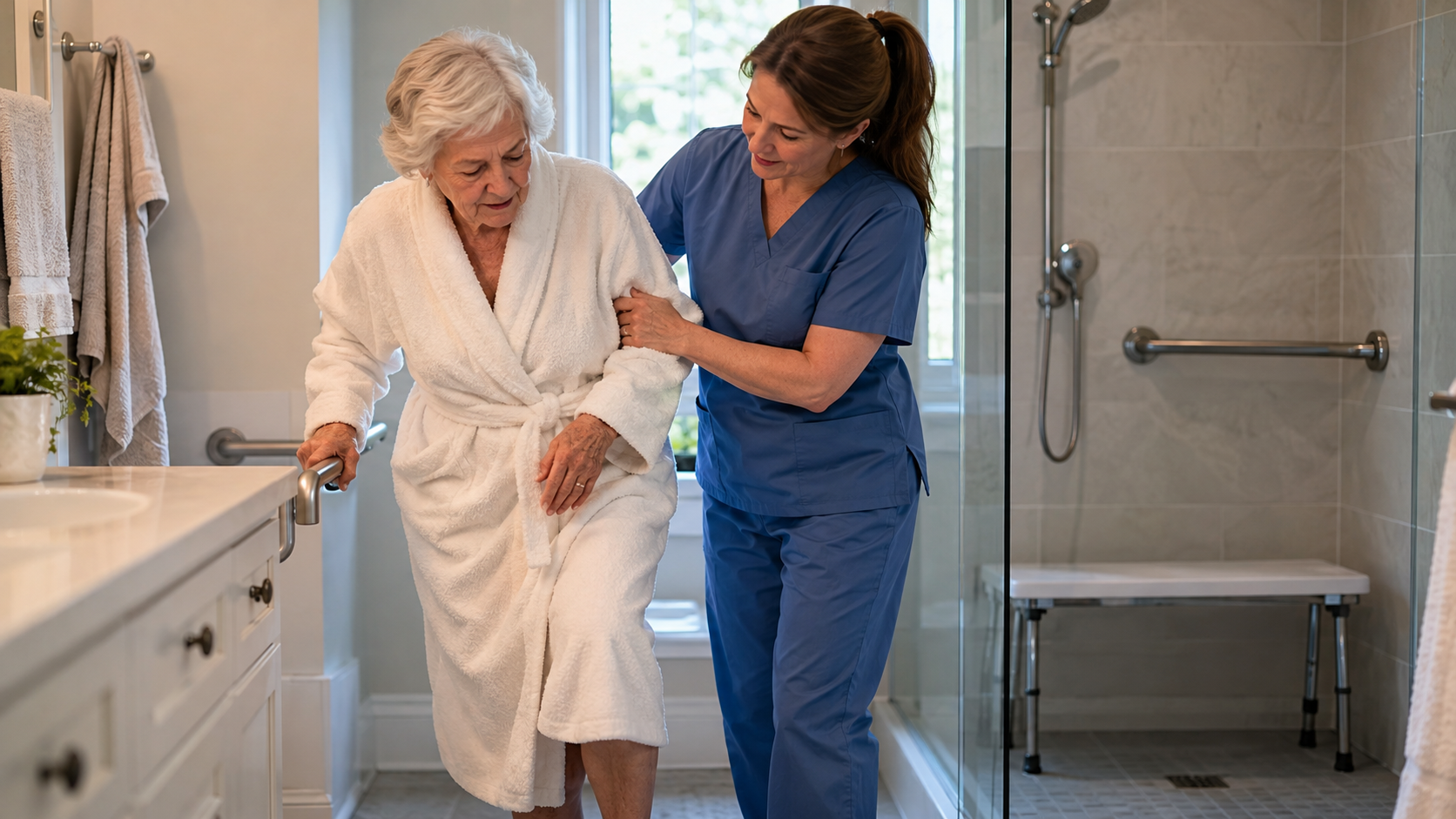
Bathing and dressing involve more physical effort than many families realize. A shower can require walking, standing, reaching, washing, drying, dressing, and moving safely around a wet bathroom.
When a senior tires easily, rushing can make the morning harder. Depending on the care plan, Angels Instead caregivers can assist with daily personal care routines such as bathing, dressing, grooming, toileting, and mobility.
Good support should preserve participation rather than taking over every task. A caregiver can prepare commonly used items, reduce unnecessary movement, allow enough time, and provide the level of help identified in the care plan.
The goal is to make the routine more manageable while protecting privacy, dignity, and independence.
Meal Preparation Can Remove Another Daily Burden
A full refrigerator does not guarantee that meals are being prepared or eaten. Shopping, carrying groceries, preparing ingredients, standing at the counter, cooking, serving food, and cleaning the kitchen all require effort.
For a senior who becomes tired easily, those steps may become difficult enough that meals are skipped or replaced with whatever requires the least work.
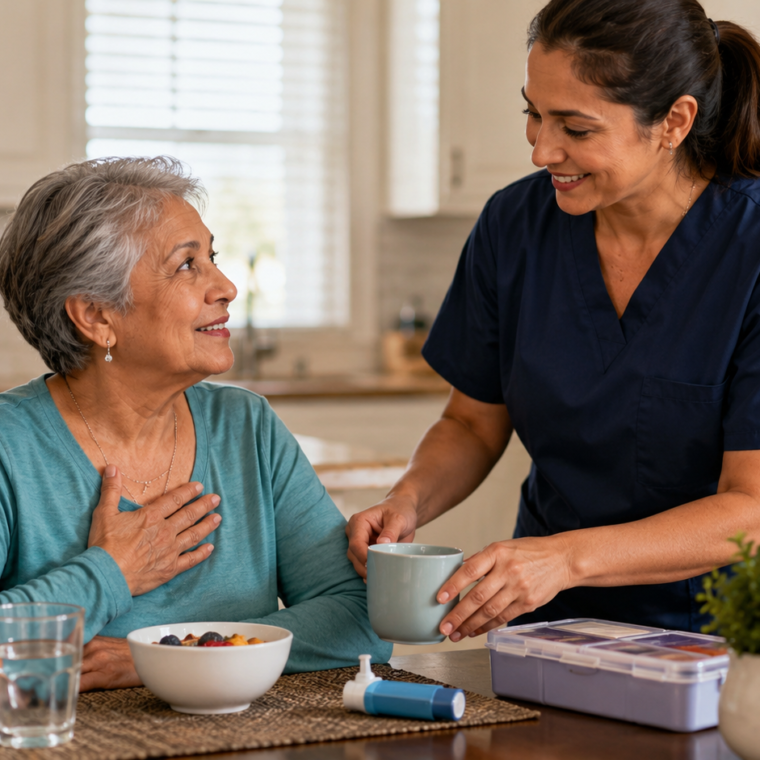
Angels Instead lists meal preparation among its non medical home care services. Depending on the care plan, a caregiver may help with grocery related routines, prepare familiar meals, set up the eating area, serve food, and clean afterward.
The caregiver’s role is not to create a medical diet for COPD. Dietary restrictions, supplements, fluid instructions, swallowing concerns, or unexplained weight changes belong with the appropriate healthcare professional.
Light Housekeeping Can Reduce Unnecessary Physical Work
Laundry still needs to be done. Dishes still accumulate. Trash still needs to be removed. Linens still need changing.
For a senior with limited stamina, household chores can consume effort that might otherwise be used for bathing, meals, appointments, social interaction, or other important parts of the day.
Angels Instead includes light housekeeping within its daily living support. Depending on the care plan, this can include routine tasks such as laundry, dishes, changing linens, basic tidying, and keeping commonly used pathways clear.
Families should also pay attention to respiratory irritants such as smoke, dust, fumes, and strong scents. Medical guidance about COPD triggers should come from the senior’s healthcare team. The home care routine can then respect those instructions.
Mobility Support Should Be Based on Actual Need
COPD does not automatically mean that a person needs mobility assistance. Some older adults living with COPD, however, also experience weakness, reduced endurance, balance problems, arthritis, or other conditions that make movement around the home more difficult.
Angels Instead currently lists mobility assistance and transfer support among its home care services. The level of assistance should be based on the individual assessment rather than assumptions based only on a COPD diagnosis.
For one senior, support may mean having someone nearby while moving through the home. Another person may need more direct assistance with an approved mobility routine. The care plan should define the task clearly.
Transportation and Appointment Support Can Reduce Family Pressure
COPD management may involve physician visits, testing, medication reviews, pulmonary rehabilitation, and other appointments. Getting to those appointments can become its own logistical burden.
The senior may need help getting ready. Transportation may need to be arranged. An adult child may repeatedly need to leave work. After the appointment, the senior may need help getting settled back at home.
Angels Instead states that caregivers can assist with errands, grocery shopping, and escorting clients to appointments or social activities, depending on the care plan and current service availability.
This type of support does not replace clinical care. It reduces the practical work required to reach it.
Companionship Still Matters When Leaving Home Becomes Harder
When leaving home requires more preparation or effort, social activities may gradually disappear. A senior may stop attending gatherings, visiting friends, participating in hobbies, or going on routine outings.
Medical appointments can slowly become some of the person’s only regular trips outside the house.
Companionship care does not treat COPD, anxiety, or depression. It can provide conversation, hobbies, social engagement, familiar routines, and reliable human presence during the week.
Angels Instead currently offers companionship as part of its non medical home care services. Activities should fit the senior’s interests, abilities, and established care plan.
Family Caregivers Need Support Too
COPD can change the workload of an entire household. One family member starts preparing meals. Another handles transportation. A spouse takes over housekeeping. Someone attends appointments. Someone else checks in every morning.
Over time, these responsibilities can quietly become difficult for one person or family to cover consistently.
Non medical respite care can give family caregivers scheduled relief while another caregiver handles agreed daily responsibilities. Angels Instead currently describes respite support that can include companionship, meal preparation, light housekeeping, medication reminders, safety focused supervision, and approved personal care or mobility routines depending on the care plan.
The most useful schedule is not automatically the largest number of hours. It is the schedule that covers the periods when the family actually needs help.
How Many Hours of Home Care Does a Senior With COPD Need?
There is no standard COPD home care schedule. COPD severity alone does not determine how many non medical care hours a person needs.
Instead, look at the senior’s actual week. Identify which routines require help, which tasks are being skipped, when fatigue creates the greatest difficulty, and which responsibilities are currently being covered by family members.
A useful starting point is the recurring period that creates the clearest care gap. That may be bathing mornings, meal preparation, appointment days, evening routines, or periods when the family caregiver is working.
Then review whether the schedule actually solved the problem. If the senior’s health changes clinically, contact the healthcare team rather than assuming that adding more non medical care hours is the complete answer.
What Should Houston Families Ask Before Starting Home Care?
Families should ask specific questions before care begins. Clear answers are more useful than broad promises.
- Which personal care, mobility, meal, housekeeping, transportation, and companionship tasks are included in the proposed care plan?
- What experience does the caregiver have supporting older adults with chronic conditions or limited stamina?
- How are changes in breathing, appetite, mobility, fatigue, or routine documented and reported?
- What happens if the regular caregiver is unavailable?
- How often can the care plan be reviewed or adjusted?
- Does the agency currently serve the senior’s Houston neighborhood and regular appointment locations?
- If the senior uses oxygen, inhalers, nebulizers, a pulse oximeter, or respiratory medication, what exactly is the caregiver permitted and trained to do?
Do not assume that respiratory equipment or medication related tasks are automatically included. Confirm the agency policy and care plan before service begins.
Know When the Need Is Clinical
Home care and home health care solve different problems. Angels Instead’s current educational content explains that home care mainly supports daily activities, while home health care addresses skilled clinical needs.
A senior may need licensed clinical care when the primary need involves skilled nursing, respiratory assessment, therapy, clinical monitoring, medication management beyond the approved home care role, or another medical service.
Some older adults may receive both types of support. A licensed healthcare professional may address a clinical need while a non medical caregiver helps with meals, personal care, housekeeping, companionship, transportation, or family respite.
The services can complement one another, but they should not be confused.
When COPD Symptoms Require Medical Attention?
Every person living with COPD should follow the treatment and action plan provided by their healthcare team.
Current National Heart, Lung, and Blood Institute guidance says emergency help is needed when a person is having a hard time catching their breath or talking, their lips or fingernails turn blue or gray, people around them notice that they are not mentally alert, their heartbeat is very fast, or the recommended treatment for their symptoms is not working.
Call 911 when the situation is a medical emergency. A non medical caregiver should not attempt to diagnose worsening breathing or independently change oxygen, medication, or respiratory treatment.
Frequently Asked Questions
Can Angels Instead treat COPD at home?
No. Angels Instead currently specializes in non medical home care. COPD diagnosis, treatment, medication decisions, oxygen management, pulmonary rehabilitation, and clinical monitoring belong with qualified healthcare professionals.
What can home care help with for someone who has COPD?
Depending on the assessment and care plan, support may include bathing, dressing, grooming, toileting, meal preparation, light housekeeping, mobility assistance, transportation, errands, companionship, supervision, and respite for family caregivers.
Can someone with COPD receive both home care and home health care?
Yes. The services address different needs. Skilled clinical services may be provided by an appropriate healthcare provider while a non medical caregiver supports everyday routines.
Can Angels Instead help with meals?
Angels Instead currently lists meal preparation among its home care services. Medical nutrition recommendations should come from qualified healthcare professionals and can be incorporated into the routine when appropriate.
Can a caregiver help with oxygen or respiratory equipment?
Families should confirm the exact agency policy before care begins. The answer can depend on the task, care plan, training, assessment, delegation requirements, and applicable rules. A caregiver should not independently change prescribed oxygen or respiratory treatment.
How do families know when it is time to consider home care?
Home care may be worth discussing when bathing, dressing, cooking, housekeeping, transportation, mobility, companionship, or other daily routines are becoming difficult or when family members can no longer cover the needed support consistently.
Talk With Angels Instead About the Daily Routines That Have Become Harder
A COPD diagnosis does not automatically tell a family what kind of home care is needed. The more useful question is: What has become harder at home?
Maybe preparing dinner now takes too much effort. Maybe bathing has become difficult. Maybe every appointment requires an adult child to miss work. Maybe a spouse who has handled everything for years needs dependable relief.
Those are home care questions.
Angels Instead provides personalized non medical home care for seniors and adults across Houston and other Texas communities. Current services include assistance with daily activities, companionship, meals, mobility, transportation, respite, and individualized care planning.
Families can request a free home assessment to discuss the routines that are becoming harder, determine which services fit within the care plan, and identify where additional support may make everyday life at home more manageable.
COPD treatment belongs with the medical team. Daily living support does not have to fall entirely on the family.