

| Quick answer: When structured stroke rehabilitation ends, becomes less frequent, or shifts to a home/outpatient plan, families often take on more daily responsibility. Non medical home care can support personal care, meals, mobility within an established plan, transportation, household routines, companionship, reminders, and family respite. It does not replace rehabilitation, diagnose changes, choose swallowing strategies, change medications, or manage an emergency. Sudden new stroke symptoms require 911 immediately. |
What Changes After Structured Stroke Rehabilitation?
A stroke survivor may leave inpatient rehabilitation, complete a course of home health therapy, move to outpatient appointments, or continue with exercises and strategies prescribed by the rehabilitation team. There is no single moment when every survivor is simply “finished” with recovery. What often changes is the amount of professional support available during the ordinary day.
That is where families can feel the gap. Bathing may take longer. One sided weakness can make dressing, toileting, or meal preparation harder. Aphasia or other communication changes can turn a simple choice into a frustrating exchange. Post stroke fatigue may make the afternoon look very different from the morning. Appointments, meals, housekeeping, transportation, and family responsibilities still have to happen.
For Houston families, the practical question is not, “How do we replace rehabilitation?” It is, “What daily help will allow the survivor to follow the established plan, remain involved in their own routines, and avoid placing every task on one spouse or adult child?”
Where Non Medical Home Care Fits?
Stroke rehabilitation is clinical care. Physical therapists address mobility, balance, strength, and movement strategies. Occupational therapists address daily activities and adaptations. Speech language pathologists may treat communication and swallowing problems. Physicians, nurses, pharmacists, and other clinicians manage medical needs within their professional roles. NINDS stroke recovery guidance explains that rehabilitation is central to relearning or compensating for abilities affected by stroke.
Non-medical home care has a different job. Angels Instead’s home care services can support daily living through tasks that are included in the care plan and permitted by the agency. Depending on the assessed need and agency policy, that may include personal care, meal preparation, companionship, light housekeeping, transportation, mobility support, reminders, and respite.
The line must stay clear: a caregiver can follow a documented routine, but should not invent a transfer technique, progress an exercise program, diagnose new symptoms, select a swallowing strategy, or decide how a medication problem should be managed.
Mobility Support Must Follow the Current Plan
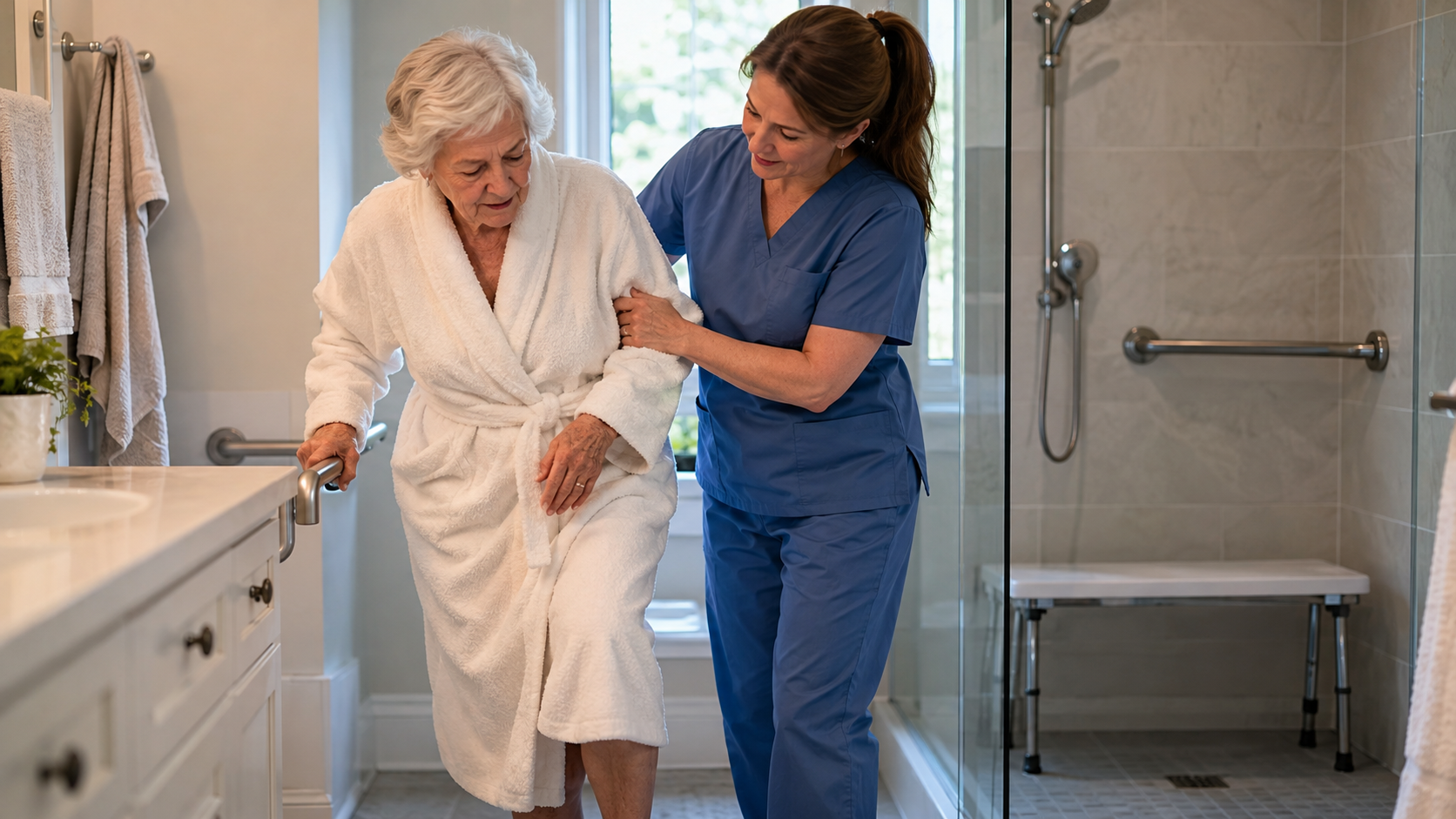
Mobility is one of the easiest areas for well meaning help to become unsafe. After a stroke, a person may have weakness, poor coordination, altered sensation, balance problems, visual changes, or difficulty judging space. A caregiver who pulls on an affected arm, rushes a transfer, or improvises with a walker can create unnecessary risk.
The home care plan should document how the person gets out of bed, stands, walks, turns, uses stairs, transfers to the toilet or chair, and enters a vehicle. It should identify the equipment in use and the level of assistance taught by the rehabilitation team. Caregivers should provide only the mobility support they are trained and authorized to perform.
Angels Instead currently describes mobility assistance that can include walking support, wheelchair help, assistive-device support, transfers, and transportation. Before this article goes live, operations should confirm exactly which stroke-related mobility tasks the agency accepts and how caregivers are trained for them.
Emergency distinction: Sudden new weakness or numbness, sudden speech or understanding difficulty, sudden vision change, sudden severe balance/coordination problems, or a sudden severe headache can be stroke warning signs. Those are not “monitor and report later” events. Call 911 immediately.
Personal Care Should Preserve Participation and Dignity
Bathing, dressing, grooming, toileting, and continence routines may require hands-on assistance, setup, standby support, or simply more time after a stroke. The right approach is not to take over automatically. Ask what the person can still do safely, prepare the environment, and assist only where help is needed.
Angels Instead’s personal care services include bathing, dressing, grooming, toileting, mobility support, meals, and other daily-living assistance. The exact level of help should be documented during assessment and reviewed when function changes.
Communication requires the same respect. Aphasia can affect speaking, understanding, reading, or writing, but aphasia does not itself mean a loss of intelligence. Use adult language, short clear sentences, reduced distractions, and enough time for the person to respond. Follow communication strategies recommended by the speech-language pathologist rather than assuming that a person who cannot answer quickly does not understand.
Meals and Swallowing Need a Hard Clinical Boundary
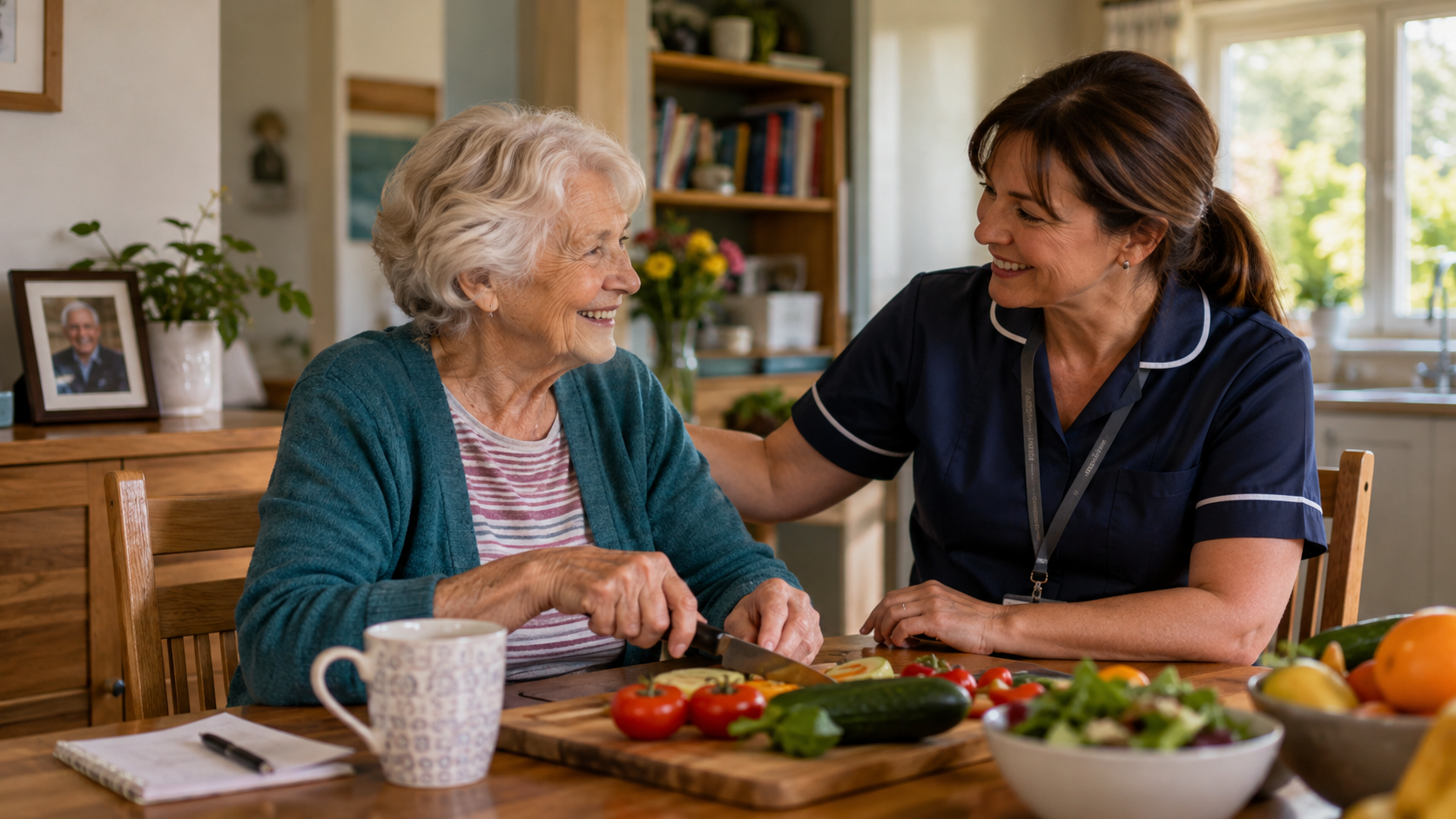
Meal preparation can be a useful part of non medical home care after stroke, but swallowing is a clinical issue. A caregiver may shop, prepare food according to the established plan, set up the eating area, provide permitted feeding assistance, and report changes. The caregiver should not choose a new food texture, thicken liquids independently, or decide that a person is safe to eat based on observation alone.
The American Stroke Association’s dysphagia guidance notes that stroke related swallowing problems can lead to aspiration and other complications. Coughing, throat clearing, a wet or gurgly voice, prolonged eating, weight loss, or breathing problems after meals can be warning signs. Importantly, aspiration can sometimes be “silent,” so the absence of coughing does not prove swallowing is safe.
If a speech language pathologist or other qualified clinician has prescribed positioning, textures, liquid consistency, pacing, or other precautions, the home-care plan should reproduce those instructions accurately. New or worsening swallowing concerns should be reported promptly to the clinical team. Active choking or severe breathing difficulty is an emergency.
Build a Written Post Rehabilitation Handoff
A rotating family schedule is hard enough without relying on memory. A written handoff gives the survivor, family, and caregivers one practical reference point.
- The person’s preferred wake up, meal, rest, and bedtime routines.
- Tasks the person wants to continue doing independently.
- Current transfer, walking, wheelchair, and assistive device instructions.
- Communication strategies that work best, including aphasia support when applicable.
- Meal, hydration, feeding, and swallowing instructions supplied by the clinical team.
- Medication-reminder or self administration assistance that is actually permitted in the care plan.
- Appointments, transportation arrangements, and who may receive or record health information.
- Equipment used in the home and any restrictions attached to it.
- Changes the caregiver should document and report.
- Family, clinician, and emergency contacts, including clear 911 triggers.
Update the handoff after a hospitalization, fall, new diagnosis, major medication change, new equipment, meaningful decline, or revised therapy recommendation. The care plan should reflect the survivor’s current ability, not what was true three months ago.
Make the Home Fit the Survivor’s Current Abilities
A home that worked before the stroke may now require adjustments. Cluttered pathways, throw rugs, poor lighting, low seating, tight turns, and frequently used items stored out of reach can make ordinary routines harder.
The American Stroke Association’s living-at-home guidance emphasizes self care ability, movement, communication, safety, accessibility, independence, and caregiver availability when planning for life at home.
A non medical caregiver can help keep pathways clear, place commonly used items consistently, reduce avoidable clutter, and report new barriers. More significant equipment choices or structural changes should be guided by the rehabilitation or home-safety team, particularly when wheelchair access, bathroom modifications, stair use, or transfers are involved.
Transportation and Appointment Day Support
Follow up appointments can involve much more than the drive. The survivor may need extra time to dress, gather documents, transfer into a vehicle, check in, navigate a clinic, communicate questions, and settle back at home afterward. A caregiver may be able to help with those logistics when transportation and accompaniment are included in the service plan.
The stroke survivor should remain central to the conversation. A caregiver can help organize a question list or take notes when authorized, but should not speak over the person or make medical decisions without legal authority. Families should confirm vehicle, wheelchair, mileage, accompaniment, and privacy policies before relying on transportation support.
Respite Is Part of a Sustainable Plan
Family caregivers commonly absorb meals, transfers, appointments, household tasks, communication with clinicians, and emotional support. That workload can become unsustainable long before a family labels it “burnout.” Planned relief is better than waiting for exhaustion or a crisis.
Angels Instead’s in-home respite care can provide scheduled coverage so a spouse or adult child can work, sleep, attend appointments, manage other family responsibilities, or simply recover. The substitute caregiver should receive the same written handoff and follow the same mobility, communication, meal, and escalation boundaries.
Schedule respite around the hardest parts of the week rather than filling arbitrary hours. If mornings require hands-on bathing and transfers, or appointment days consume most of the primary caregiver’s energy, those are high-value periods to cover.
How Many Hours of Home Care May Be Needed?
There is no standard number of home care hours after a stroke. The right schedule depends on current function, fatigue, personal-care needs, family availability, communication or cognitive changes, transportation, meal routines, and how complex the established plan is.
Map one normal week. Mark which tasks require hands on help, standby assistance, setup, reminders, transportation, or supervision. Note when fatigue is highest and when family support is unavailable. Start with the periods creating the greatest safety or workload problem, then review whether the schedule is actually helping.
More hours are not automatically better. The goal is the right help at the right time while preserving participation and independence. A meaningful decline may require clinical reassessment, not simply additional non medical hours.
Questions Houston Families Should Ask Before Hiring
- What post stroke experience and mobility training do caregivers receive?
- Which transfers, ambulation tasks, wheelchair tasks, feeding assistance, and medication-reminder tasks are actually permitted?
- How does the agency incorporate written instructions from physical, occupational, or speech therapy into the care plan?
- How are aphasia, cognitive changes, fatigue, and personal preferences documented for the caregiver?
- What happens if the caregiver sees a sudden neurological change versus a non-emergency change?
- What backup coverage is available if the regular caregiver is absent?
- How often is the care plan reviewed, and what triggers an earlier reassessment?
- What transportation and appointment-accompaniment services are available, and what are the limits?
Be cautious with any agency that promises to “provide stroke rehabilitation” through non-medical caregivers, guarantees recovery, claims to prevent falls, or suggests it can independently manage dysphagia. Those are not strong marketing claims; they are scope and trust problems.
When to Call the Clinical Team and When to Call 911
Contact the clinical team for non-emergency changes such as gradually increasing fatigue, repeated difficulty completing usual routines, new non-urgent pain, worsening continence, changes in appetite, or persistent concerns about mobility, communication, or swallowing that are not sudden emergencies.
Call 911 immediately for possible stroke symptoms. The CDC’s current stroke signs and symptoms guidance identifies sudden balance or coordination problems, sudden vision trouble, sudden weakness or numbness especially on one side, sudden confusion or speech difficulty, and sudden severe headache as warning signs. Do not wait for a routine callback and do not drive the person to “see how it goes.” Emergency medical services can begin care on the way to the hospital.
The caregiver’s job is to observe, support the established plan, document appropriately, and escalate. It is not to diagnose why a sudden change is happening.
Frequently Asked Questions
What kind of home care is needed after a stroke?
It depends on the survivor’s current abilities and the family’s available support. Non medical care may include personal care, mobility assistance within the plan, meal preparation, transportation, companionship, light housekeeping, reminders, and respite. Clinical needs still belong with licensed healthcare professionals.
Can a caregiver help with rehabilitation exercises?
A caregiver may be able to support activities that were prescribed or taught by the rehabilitation team when the task is documented, permitted by the agency, and within the caregiver’s training. The caregiver should not design, progress, or replace therapy.
Can caregivers help with meals if the survivor has swallowing problems?
They may prepare and set up meals and provide permitted assistance according to written clinical instructions. Food texture, liquid consistency, swallowing strategies, and positioning should come from a qualified clinician. New swallowing concerns require clinical review.
Can a caregiver provide medication reminders after a stroke?
Medication reminders or permitted assistance with self administration may be part of non-medical care, depending on the agency and plan. A caregiver should not change doses, decide what to do about a missed dose, or independently interpret side effects or new neurological symptoms.
When should a family increase home care hours?
Review the schedule when personal care needs increase, meals are being missed, transportation or appointments become difficult, fatigue is creating unsafe gaps, nighttime support grows, or the family caregiver can no longer cover the required routine reliably. A sudden or significant clinical change should also be discussed with the healthcare team.
Talk With Angels Instead About a Practical Post-Stroke Home Care Plan
A useful post stroke plan is not a generic package. It connects the survivor’s current abilities, rehabilitation instructions, family availability, home environment, daily priorities, and clear escalation rules.
Angels Instead currently provides non medical home care in Houston and surrounding Texas communities. Families can discuss personal care, mobility support, meals, transportation, household routines, and respite as part of a personalized assessment. Before care begins, confirm the exact caregiver tasks, schedule, training needs, and communication process in writing.
Ready to discuss the daily routine? Request a free home care assessment or call (281) 800-1800.