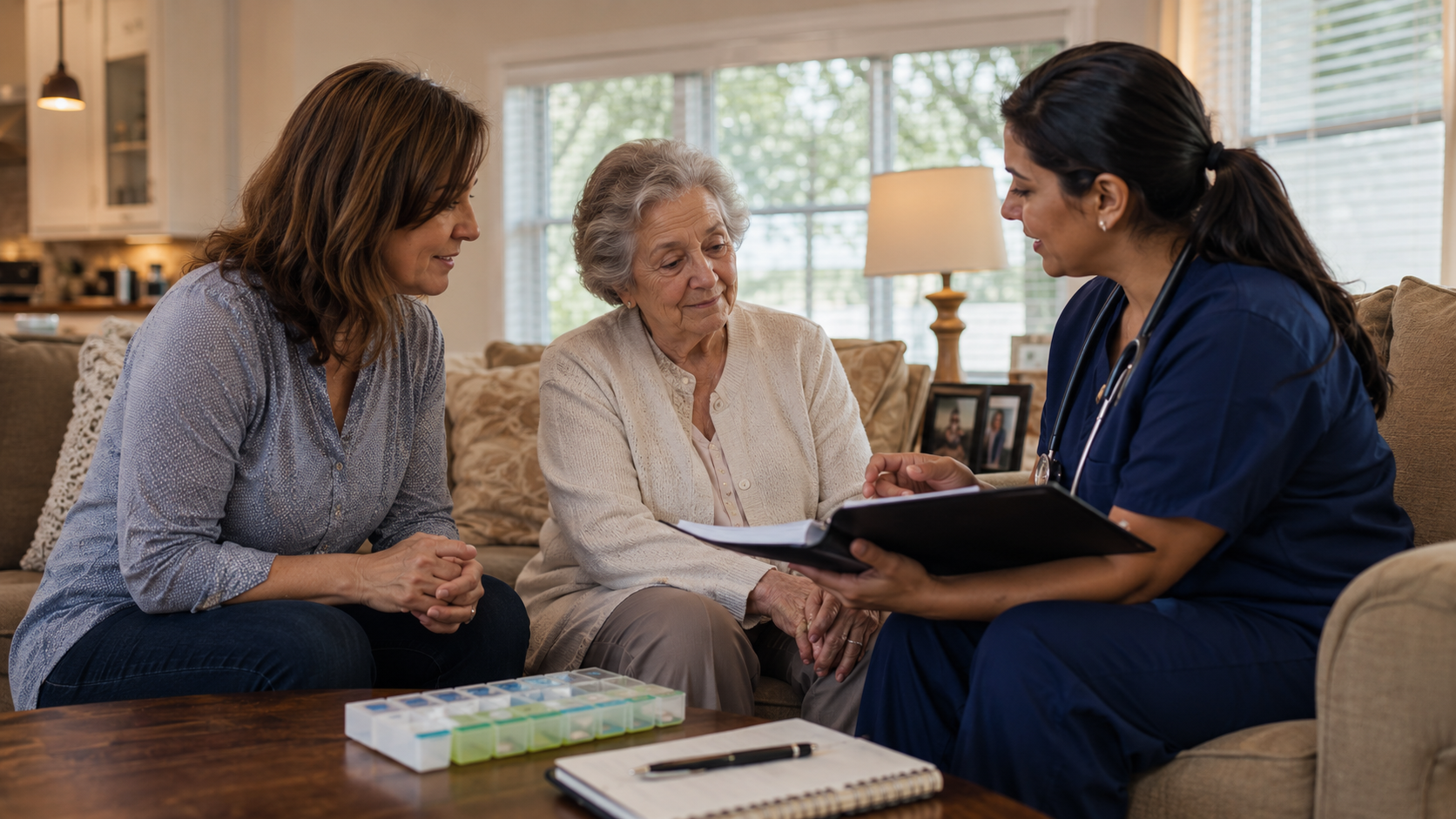


Quick Answer: Many people with Alzheimer’s can continue living at home for a period of time when the home is reasonably safe, daily needs are covered, supervision matches the person’s current abilities, and family or professional support is dependable. The decision should be based on real function and safety, not on the diagnosis alone.
Educational Note: This article provides general information and is not medical advice. Diagnosis, treatment, medication decisions, driving recommendations, rehabilitation, and clinical monitoring belong with qualified healthcare professionals. Call 911 for a medical emergency.
Families often ask whether a parent or spouse with Alzheimer’s can stay at home. The better question is whether the current home arrangement is still safe, workable, and sustainable.
That distinction matters because this article is not another treatment explainer or another after diagnosis planning guide. It focuses on the decision itself: what evidence tells a family that home is still working, what signs show the plan needs more support, and when the setting may need to change.
For treatment focused guidance, see New Alzheimer’s Treatments Are Offering Hope. For planning immediately after diagnosis or a treatment decision, see Alzheimer’s Care at Home After a New Treatment or Diagnosis.
At a Glance: Can Home Still Work?
|
Living at Home Does Not Mean Living Independently
A person can remain in their own home while receiving scheduled caregiving, family visits, meal support, transportation, reminders, supervision, overnight help, or more continuous assistance.
Needing help does not automatically mean the person must move. At the same time, wanting to stay home does not make the current arrangement safe. The decision should follow what is actually happening during an ordinary week.
1. Can the Person Still Be Alone Safely?
Ask about specific situations rather than whether the person is generally fine alone. Can they respond appropriately if an alarm sounds? Do they leave the house and become disoriented? Can they use the phone in an emergency? Do they forget that an appliance is on?
A person may be safe alone for part of the day but not for an entire afternoon, evening, or night. The answer can change as the disease progresses.
2. Is the Home Still Manageable?
The same house can become harder to manage as memory, judgment, balance, vision, or mobility change. Families should revisit cooking, stairs, bathrooms, lighting, household hazards, emergency information, and nighttime movement.
Home safety is not a one time project. It should be reassessed whenever abilities or behavior change.
The National Institute on Aging safety resources provide an authoritative starting point for home safety planning.
Home Safety Snapshot
|
3. Are Essential Daily Routines Reliably Covered?
A home arrangement can start failing without one dramatic event. Meals are skipped. Bathing becomes irregular. Appointments are missed. Clothing is not changed. The person waits for someone to arrive before using stairs or leaving the house.
The key word is reliably. A routine is not truly covered if it depends on someone remembering to stop by or repeatedly leaving work at the last minute.
4. Has Wandering or Getting Lost Changed the Risk?
Wandering changes the supervision question because a person may leave a familiar environment and be unable to return safely.
The National Institute on Aging advises that a person with Alzheimer’s who has a history of wandering should not be left unattended. Families should take episodes of getting lost seriously and reassess the level of supervision required.
Review the National Institute on Aging wandering guidance for practical safety information.
5. Can the Family Sustain the Current Plan?
A home may look stable only because one spouse or adult child is quietly filling every gap. Ask who covers mornings, evenings, nights, appointments, and emergencies. Then ask what happens when that person is sick, working, traveling, or simply needs rest.
If every answer depends on the same exhausted caregiver, the plan needs backup. The weakness may be the coverage, not the home itself.
Planned respite care can give family caregivers protected time away while established routines continue.
Signs the Current Plan Needs Reassessment
|
When More Home Care May Be Enough?
Not every new problem means the person must leave home. Sometimes the weak point is a specific gap in coverage.
A person may do well in the morning but need supervision later. A spouse may manage daytime routines but need overnight relief. A family may cover weekends but not workdays. Adding the right hours can make the arrangement more stable when the problem is clearly defined.
Families can review Angels Instead’s current home care services and discuss which schedule matches the actual care gap.
When Home May No Longer Be the Best Setting?
Home care should not be framed as a promise that a person with Alzheimer’s will remain at home under every circumstance.
The setting may need to change when risks cannot be reasonably reduced, supervision needs exceed available coverage, repeated emergencies continue, skilled clinical needs fall outside the home care plan, or the family cannot sustain the required level of care even after additional support is added.
This decision should be based on a pattern, not one difficult afternoon. Families may need input from physicians, therapists, care coordinators, social workers, and other qualified professionals who understand the person’s medical and functional needs.
Seven Question Decision Check
|
How Angels Instead Fits Into the Decision?
Angels Instead provides non medical home care support that can help families cover daily living needs while a person remains at home. Its dementia care services include support with daily routines, personal care, meals, medication reminders, appointments, respite, safety support, and flexible scheduling.
Home care does not determine whether Alzheimer’s treatment is working, diagnose a change in cognition, or decide whether someone is medically safe to live alone. Those decisions belong with qualified healthcare professionals. The home care role is practical: filling the daily routines and coverage gaps the family cannot reliably manage alone.
Families can review Angels Instead Alzheimer’s and dementia care for current service information.
Frequently Asked Questions
Can someone with Alzheimer’s live alone?
Some people in the earlier stages may be able to live alone for a period of time, but the decision should be based on actual function, judgment, safety, emergency response ability, and available support.
How do I know when living alone is becoming unsafe?
Warning signs can include getting lost, unsafe cooking, repeated falls, missed essential routines, nighttime problems, or increasing periods when the person should not be left alone.
Does needing a caregiver mean my loved one has to move?
No. A person can remain at home while receiving scheduled or extended support if the combined family and professional care plan can reliably cover their needs.
When should a family add more home care hours?
Review the schedule when supervision gaps appear, nighttime needs increase, essential routines are missed, or family caregivers can no longer maintain the current coverage.
Can home care guarantee that someone with Alzheimer’s can remain at home?
No. Alzheimer’s is progressive, and needs can eventually exceed what a particular home environment or care schedule can reasonably support.
The Bottom Line
The real question is not simply whether someone with Alzheimer’s can live at home. It is whether the current home arrangement remains reasonably safe, adequately supported, and sustainable.
If those pieces still fit together, home may remain workable. If several are starting to fail, the plan should change before a crisis makes the decision for the family.
If your family is unsure whether the current home arrangement still matches your loved one’s needs, request a home care assessment from Angels Instead. Bring a realistic picture of when the person is alone, which routines require help, where safety concerns are appearing, and what hours the family can reliably cover.