

Quick Answer: Nonmedical home care can help a senior with arthritis by supporting the parts of daily routines that become difficult because of pain, stiffness, reduced grip, limited movement, or fatigue. The goal is to help with the difficult step while preserving the person’s choices and abilities. Diagnosis, pain treatment, medication decisions, exercise prescription, and rehabilitation remain with qualified healthcare professionals.
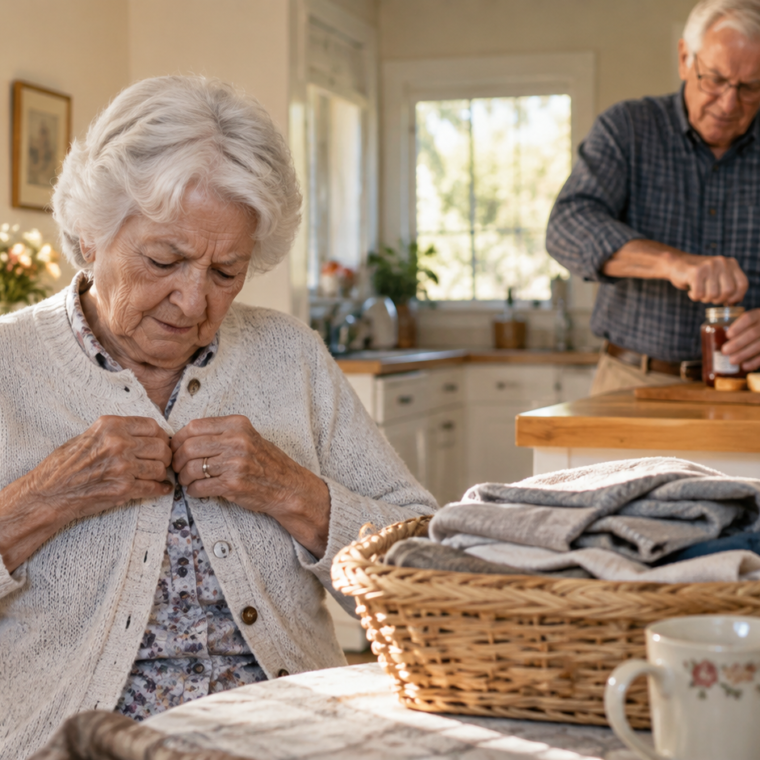
Your mother can still dress herself, but buttons take longer. Your father can still make breakfast, but opening a jar or lifting a heavy pan hurts. Laundry gets postponed because carrying, bending, reaching, and folding all use joints that are already stiff.
These changes can look minor until they start disrupting the whole day. For families, the useful question is not whether a caregiver can treat arthritis. The question is which ordinary tasks have become harder and what level of practical help would make them manageable again.
At a Glance: Where Arthritis Can Disrupt the Day
|
Arthritis Often Changes Small Movements First
A shirt with tiny buttons is avoided. Shoes with laces are replaced with the same easy pair every day. A coffee jar stays unopened. Towels remain in the dryer because reaching and bending are uncomfortable.
The task is not always impossible. It may simply be slower, more tiring, or more painful than it used to be. A useful home care plan should identify the exact movement creating the barrier instead of labeling the person as generally dependent.
The National Institute on Aging osteoarthritis information describes pain, stiffness, swelling, and difficulty with ordinary activities such as dressing, using stairs, rising from a chair, gripping objects, and walking.
1. Dressing Can Become a Hand and Joint Problem
Buttons, zippers, hooks, shoelaces, jewelry clasps, and tight sleeves may become frustrating when hand or shoulder joints hurt. Hip or knee stiffness can make bending toward socks and shoes difficult.
Instead of automatically dressing the person from start to finish, ask which step is difficult. A caregiver may lay out clothing, help with fasteners, position shoes within easier reach, or provide the level of hands on help included in the care plan. The older adult can still choose clothing and complete the parts that remain comfortable.
Families can review Angels Instead’s personal care assistance for help with bathing, dressing, grooming, toileting, and other daily routines when those services fit the care plan.
2. Timing Can Matter as Much as the Task
Some people feel stiffer at certain times of day. A routine that is manageable later may be difficult first thing in the morning.
A caregiver should not diagnose the cause or decide how stiffness should be medically treated. But the care schedule can respect the person’s established rhythm. If dressing is easier after breakfast, the plan should not force a rushed routine at dawn simply because that is more convenient for someone else.
3. The Kitchen Exposes Grip, Reach, and Standing Problems
Meal preparation combines several movements that arthritis can make difficult. Opening containers uses grip. Chopping and stirring use the hands and wrists. Reaching into cabinets uses the shoulders. Lifting cookware and standing at the counter can add strain.
A caregiver can prepare ingredients, open containers, handle heavier cookware, prepare the meal, or complete cleanup when those tasks are part of the care plan. The older adult can still choose the menu and participate in the parts they enjoy.
When food preparation is part of the barrier, families can review Angels Instead’s Quality Meals support and discuss which kitchen tasks are actually difficult.
Daily Support Snapshot: Kitchen and Household Tasks
|
4. Laundry and Housework Can Hide the Real Barrier
Laundry is not one task. It is carrying, sorting, bending, reaching, lifting wet clothing, moving items between machines, folding, and putting clothes away.
A person may still know how to operate the machine but avoid laundry because carrying the basket hurts. Light household help can support the physically demanding step without turning an unfinished basket into proof that the person cannot manage a home.
5. Bathing and Grooming Can Become Harder Without Looking Dramatic
A shoulder may hurt when washing hair. Fingers may struggle with a shampoo bottle or toothbrush. Knees can make stepping into a tub harder. Hip stiffness can make reaching the feet difficult.
A caregiver should explain assistance, protect privacy, and help only to the level needed. A sudden major change in the person’s ability to bathe, dress, or groom should not automatically be blamed on arthritis.
6. Getting Up May Be Harder Than Walking
Families sometimes judge mobility only by whether the person can walk. The harder moment may be standing from a chair, bed, or toilet.
The care plan should describe the actual mobility need. A non medical caregiver should not invent a transfer method or exercise program. When a physician, physical therapist, occupational therapist, or another qualified professional has provided instructions, those directions should be reflected appropriately in the care plan.
Families can review Angels Instead’s mobility assistance for current service context around walking and transfers.
Mobility and Safety Snapshot
|
7. Pacing Is Different From Doing Everything for the Person
One poor response to arthritis is rushing the person. Another is taking over every task so they barely need to move.
Give the person time to complete the safe parts of the routine. When a qualified professional has provided an exercise or movement plan, a caregiver may support the established routine only as permitted by the care plan and agency policy. The caregiver should not create new exercises or decide how much pain is acceptable.
The CDC physical activity and arthritis guidance explains that appropriate physical activity can help reduce joint pain and improve function, while the activity plan should match the individual’s health and abilities.
8. Describe Pain and Function, Do Not Diagnose
A caregiver may notice that a client is moving more slowly or says a knee hurts today. That observation is useful. It is not a diagnosis.
Specific reporting is more useful than saying arthritis is getting worse. New, severe, worsening, or unusual pain, sudden inability to use a joint, major swelling, a new injury, or a marked change in function should be reported promptly and evaluated by an appropriate healthcare professional.
The caregiver should follow agency procedures and should not recommend changing pain medicine, adding supplements, altering doses, or using a treatment that has not been appropriately directed.
Signs a Care Plan Review May Be Useful
|
Independence Means Choice, Not Doing Everything Without Help
Independence should not become a test of endurance. Receiving help with a jar lid does not erase independence. Having someone carry the laundry basket does not remove the person’s ability to decide how the day should go.
A stronger approach is to preserve control. The person chooses the clothes, decides what to eat, and chooses which tasks matter. The caregiver supports the step that has become physically difficult when that support is part of the care plan.
A Practical Arthritis Daily Routine Check
|
How Angels Instead Can Support Daily Life With Arthritis?
For this topic, the relevant Angels Instead role is non medical home care for seniors and adults who need help with daily living. The care plan should not simply list arthritis as a diagnosis. It should identify the tasks that have become difficult and the level of help the person actually wants.
One client may need help with dressing fasteners and breakfast. Another may need meal preparation, laundry, and mobility support. Another may need only a few recurring tasks while remaining independent for most of the day.
The useful care plan is built around function, preference, timing, and dignity.
Families can review Angels Instead’s home care services and discuss which daily routines should be included in a personalized plan.
Frequently Asked Questions
Can a home caregiver treat arthritis?
No. Nonmedical home care can support daily routines that have become difficult, but diagnosis, pain treatment, medication decisions, rehabilitation, and exercise prescription belong with qualified healthcare professionals.
What daily tasks can arthritis make harder?
Depending on the joints affected, arthritis can make dressing, fastening buttons, putting on shoes, cooking, opening containers, bathing, grooming, using stairs, standing from a chair, walking, carrying laundry, and completing errands more difficult.
Should a caregiver do every task for a senior with arthritis?
No. Assistance should match the care plan and the person’s preferences. The caregiver can support the difficult step while allowing the older adult to complete the parts that remain comfortable and important.
Can a caregiver help with exercises for arthritis?
A caregiver should not create or prescribe an exercise program. If a qualified healthcare professional has provided an established routine, the caregiver may support it only when appropriate under the care plan and agency policy.
What if arthritis pain suddenly becomes much worse?
New, severe, unusual, or worsening pain should be discussed with an appropriate healthcare professional. A caregiver can report what was observed but should not diagnose the cause or change medication instructions.
The Bottom Line
Arthritis can make ordinary routines harder without making an older adult completely dependent. Look for the specific movement creating the barrier: gripping, reaching, bending, standing, lifting, walking, or getting up.
Use home care to support the difficult step while preserving the person’s choices and abilities. Keep diagnosis, pain treatment, medication decisions, exercise prescription, and rehabilitation with qualified healthcare professionals.
If arthritis is making everyday routines more tiring for your loved one, contact the Angels Instead team to discuss which daily tasks may benefit from respectful non medical support while preserving independence and dignity.