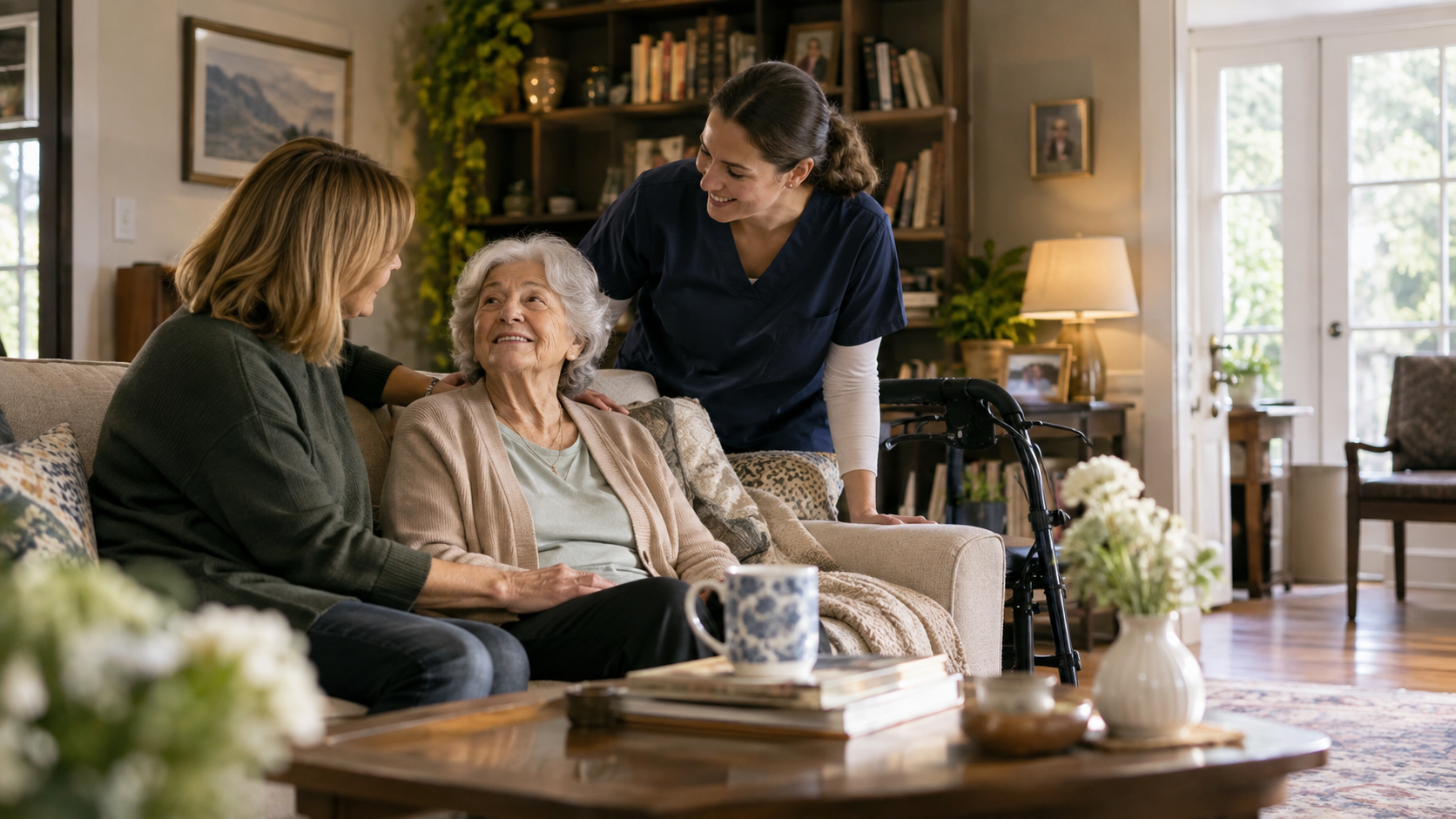


Quick answer: After an Alzheimer’s diagnosis or a new treatment decision, families need two connected plans. The medical plan covers diagnosis, medications, imaging, treatment monitoring, and clinical follow up. The home care plan covers what happens every day, including personal care, meals, routines, mobility, companionship, transportation, supervision, and caregiver coverage. These plans should support each other, but they are not the same.
Educational note: This article provides general information and is not medical advice. Diagnosis, treatment eligibility, medication decisions, imaging, infusion care, and clinical monitoring belong with qualified healthcare professionals. Call 911 for a medical emergency.
An Alzheimer’s diagnosis can leave a family with a folder full of medical information and very little clarity about Tuesday morning. A new treatment conversation can create the same problem. The neurologist may explain scans, biomarkers, medication options, and follow up visits, but the family still has to decide who will help with breakfast, bathing, transportation, missed routines, nighttime confusion, or the hours when no relative can be present.
That gap is where many care plans fail. Families plan around the diagnosis but not around the day. They know the name of the condition, yet they have not mapped what the person can still do independently, which tasks now require reminders, which activities need hands on help, when supervision matters, or which family member is actually available.
A stronger approach begins by treating Alzheimer’s and dementia care at home as a practical planning problem. The goal is not to replace medical care. The goal is to translate the person’s changing abilities, preferences, risks, and family resources into a workable routine at home.
What Should Happen After an Alzheimer’s Diagnosis?
An Alzheimer’s diagnosis is not based on one memory complaint or one online test. The National Institute on Aging explanation of Alzheimer’s diagnosis describes a process that can include medical history, information from family or friends, cognitive testing, laboratory tests, mental health evaluation, and brain imaging. In some cases, biomarker testing may also help support the diagnosis.
For families, the important planning point is that diagnosis should create a baseline. What can the person still manage? Which abilities are changing? What has become harder only recently? Which changes might have another medical cause? The answers help the clinical team and the family avoid treating every difficulty as if it is automatically caused by Alzheimer’s disease.
The first home planning meeting should therefore be concrete. Instead of saying Mom is getting worse, write down what has actually changed. Perhaps she now needs reminders to start bathing. Maybe she can prepare cereal but no longer manages the stove safely. Perhaps Dad still dresses himself but wears the same clothes for several days. Specific observations are more useful than a broad label.
How Does a New Alzheimer Treatment Decision Change the Plan?
Disease modifying treatments have added another layer to early Alzheimer’s care. The FDA information for Kisunla states that Kisunla, the brand name for donanemab azbt, is approved for Alzheimer’s disease and should be initiated in people with mild cognitive impairment or mild dementia stage of disease, the population studied in the clinical trials.
For a family, the treatment decision does not erase the need for a home plan. It adds new coordination questions. Who will handle transportation to appointments? Who keeps the visit calendar? Who communicates new symptoms to the medical team? Does the person need more support on treatment days? Which changes should be documented between visits?
Treatment response should not be judged by whether a person had a good or bad afternoon at home. The clinical team determines how treatment is monitored. Families can support that process by observing everyday function and reporting meaningful changes accurately.
Start With a Seven Day Home Care Map
Before choosing hours of care, map one ordinary week. Do not begin with an agency package or a fixed number of hours. Begin with the tasks that actually happen.
- Morning: getting out of bed, toileting, bathing, dressing, grooming, breakfast, and morning medications according to the medical plan.
- Midday: meals, hydration, errands, appointments, household tasks, movement, and social activity.
- Evening: dinner, hygiene, changing clothes, preparing for bed, and managing confusion that may increase later in the day.
- Night: bathroom trips, wandering concerns, sleep changes, reassurance, and whether someone must remain available.
- Outside the home: transportation, grocery shopping, medical visits, religious activities, family events, and other routines that still matter to the person.
Next to each activity, mark one of four levels: independent, needs a reminder, needs standby supervision, or needs hands on help. Then mark who currently provides the help. This immediately shows whether the family has a care problem, a coverage problem, or both.
Separate Medical Tasks From Daily Living Support
Confusion between home care and home health can create unrealistic expectations. For this article, the relevant Angels Instead services are its non medical home care offerings for personal care and daily living support. The Angels Instead website also presents separate home health content, so families should confirm which service line matches the need they are trying to solve. Families who are uncertain about the difference can review home care versus home health care before building the schedule.home care versus home health care
The medical team remains responsible for diagnosis, treatment decisions, prescribing, clinical monitoring, and other skilled care. A non-medical caregiver can support the routines around that plan, such as getting ready for an appointment, providing transportation or an escort when permitted, preparing meals, helping with personal care, and reporting observations according to the established communication process.
This boundary should be written down. Families should know which needs belong to the physician, nurse, therapist, pharmacist, emergency service, or other licensed professional and which needs can be handled through non medical home care.
Plan Personal Care Around Ability, Not Just Diagnosis
An Alzheimer’s diagnosis does not tell you exactly how much help someone needs with bathing, dressing, grooming, oral hygiene, or toileting. One person may need only reminders. Another may need step by step prompting. Another may need hands on assistance.
When those routines are becoming difficult, personal care support can be added around the person’s actual level of ability rather than assuming that every person with Alzheimer’s needs the same type of help.
The care plan should protect privacy and participation. If a person can still wash their face, choose clothing, brush their hair, or complete part of the routine, the caregiver should not automatically take over. Support should fill the gap rather than remove abilities that remain.
Build Meals Into the Care Plan Before Nutrition Becomes a Crisis
Families often notice memory changes before they notice meal problems. The refrigerator may look stocked, but food is not being eaten. The person may forget whether they had lunch, lose the sequence of cooking, leave a burner on, or become overwhelmed by too many choices.
If the care map shows that meals are a weak point, meal preparation support can be scheduled around shopping, preparation, serving, cleanup, and the person’s established dietary instructions.
A home caregiver should follow the medical or dietary plan that has already been provided. Clinical nutrition decisions remain with the appropriate healthcare professional.
Do Not Treat Companionship as an Extra
Care planning can become so task focused that families forget the person still needs a day worth living. Conversation, familiar music, short outings, hobbies, photographs, religious routines, and simple shared activities can provide connection and structure.
Angels Instead’s companionship care includes conversation, hobbies, outings, games, emotional support, and social engagement. Those activities can be built into the care plan rather than added only after every household task is complete.
The care plan should also record what the person enjoys and what tends to cause distress. That information can help a caregiver approach the day in a way that feels familiar instead of treating every visit as a list of chores.
Reassess Mobility and the Home Environment
Memory and judgment changes can affect movement even when the person is physically strong. They may forget an assistive device, stand too quickly, misjudge furniture, or try to complete a transfer without waiting for help.
If walking or transfers are part of the care problem, mobility assistance can be considered within the person’s established care instructions.
Home care should not invent an exercise program or override therapy guidance. Families should follow recommendations from the appropriate clinicians for assistive devices, rehabilitation, fall risk, and home modifications.
Create a Family Coverage Plan Before Burnout Decides for You
Families often build care schedules around goodwill rather than actual availability. One daughter covers mornings before work. A spouse handles nights. A son promises weekends but travels often. The schedule appears complete until one person becomes sick, has a work deadline, or simply cannot continue at the same pace.
Planned respite care can create protected coverage for the hours when family caregivers need rest, work time, appointments, or other responsibilities.
The important word is planned. Waiting until the primary caregiver is exhausted turns respite into an emergency purchase. A stronger care plan decides in advance which hours the family wants to keep and which hours should be covered by outside help.
Write Down the Communication Rules
After diagnosis or a treatment decision, several people may be involved: the person receiving care, relatives, physicians, specialists, home care staff, and sometimes therapists or other professionals. Without a communication plan, important observations can disappear into text messages, notebooks, and memory.
Define who receives routine updates, what should be documented, what counts as a meaningful change, who contacts the medical team, and what requires immediate escalation. A useful log focuses on facts such as meals completed, assistance needed, mobility changes, sleep pattern, missed routines, and unusual behavior. It should not become constant surveillance.
Review the Care Plan When the Person Changes, Not Only on a Calendar Date
Angels Instead states that its care planning process begins with a consultation and home assessment, followed by a personalized care plan, caregiver matching, and ongoing support. The current Angels Instead FAQ also explains that care plans can be adjusted as needs change.
That flexibility matters in Alzheimer’s care because needs can change unevenly. A person may remain independent with dressing but suddenly need more meal supervision. Nighttime may become harder while mornings remain manageable. A family member who was covering three days each week may become unavailable.
Review the plan whenever there is a meaningful change in function, safety, treatment, household support, or caregiver availability. The right question is not whether the diagnosis changed. The question is whether the current plan still matches real life.
Plan for Appointment and Treatment Days
A treatment plan can add appointments, scans, laboratory work, infusion visits, and follow up conversations to a family schedule that is already crowded. The practical question is not only who drives. Families should decide who confirms the appointment, helps the person get ready, brings the current medication list or requested records, stays available during the visit if appropriate, and makes sure new instructions reach the people providing support at home.
If the person is receiving an Alzheimer treatment, the home care plan should identify what the caregiver is expected to do before and after appointments without crossing into clinical monitoring. That may include transportation or escort support when allowed, preparing a meal, helping the person settle back into the normal routine, and documenting observable changes for the family. New symptoms or concerns should be escalated according to instructions from the medical team rather than interpreted by a non medical caregiver.
Protect Choice, Familiarity, and the Person’s Voice
Care planning can become dominated by risk lists and family logistics. The person living with Alzheimer’s still has preferences, habits, relationships, and routines that should shape the plan whenever possible. Ask what time they prefer to wake, what foods feel familiar, which clothes they like, what activities matter, who they are comfortable receiving help from, and which parts of the day they still want to manage independently.
This is also important for caregiver matching. A technically complete schedule can still fail if the person feels rushed, misunderstood, or uncomfortable with the caregiver. Angels Instead states that its process includes caregiver matching and ongoing support, which gives families an opportunity to discuss personality, communication style, routine, and fit as part of the plan rather than treating those details as secondary.
The strongest Alzheimer’s home care plan is therefore not the one that takes over the most tasks. It is the one that provides enough support to make the day workable while preserving abilities, preferences, and familiar routines that still remain.
What Should Families Ask Before Starting Alzheimer’s Home Care?
- Which tasks does my loved one still complete independently?
- Which tasks need reminders, supervision, or hands on help?
- What times of day create the greatest risk or caregiver strain?
- Which needs belong to the medical team rather than a non medical caregiver?
- What routines, preferences, communication approaches, and triggers should a caregiver understand?
- How will changes be documented and who receives updates?
- What happens if the regular caregiver is unavailable?
- How often can the schedule or care plan be changed?
- Which family responsibilities do we want to keep and which should we hand off?
- What signs would tell us that the current number of care hours is no longer enough?
Frequently Asked Questions
Should home care begin immediately after an Alzheimer’s diagnosis?
Not every person needs the same level of help at diagnosis. Start by mapping what the person can still do, where reminders or supervision are needed, and where the family has coverage gaps. Home care can then be added around the needs that are already present.
Does a new Alzheimer’s treatment remove the need for home care?
Not necessarily. Medical treatment and home care address different problems. Treatment is managed by the clinical team, while home care can support everyday routines, personal care, meals, mobility, companionship, supervision, transportation, and family respite.
Can a home caregiver decide whether Alzheimer treatment is working?
No. Treatment response is a clinical question. Caregivers and families can observe and document changes in everyday function, but the medical team determines how treatment is evaluated.
How many hours of Alzheimer’s home care are needed?
There is no universal number. Hours should be based on the person’s actual daily tasks, level of assistance, supervision needs, family availability, and the times when coverage gaps occur.
What should be included in an Alzheimer’s home care plan?
A useful plan includes personal care needs, meals, mobility routines, preferred activities, transportation, supervision, communication rules, family coverage, caregiver backup, and clear boundaries for medical issues.
Can an Alzheimer’s care plan change later?
Yes. The plan should be reviewed when function, safety, treatment, household support, or caregiver availability changes. Angels Instead states that its care plans can be adjusted as needs change.
The Bottom Line
An Alzheimer’s diagnosis gives a name to the condition. A treatment decision gives the medical team a clinical path. Neither one automatically creates a workable day at home.
Families still need to decide who helps, what help is actually needed, when coverage matters, how medical and non medical responsibilities are separated, how changes are communicated, and when the plan should be updated.
If those questions are becoming difficult to answer on your own, request a home care assessment from Angels Instead. Bring your seven day task map, current routines, family availability, and the questions you still need to solve. A useful home care plan should begin with real life, not a generic package.