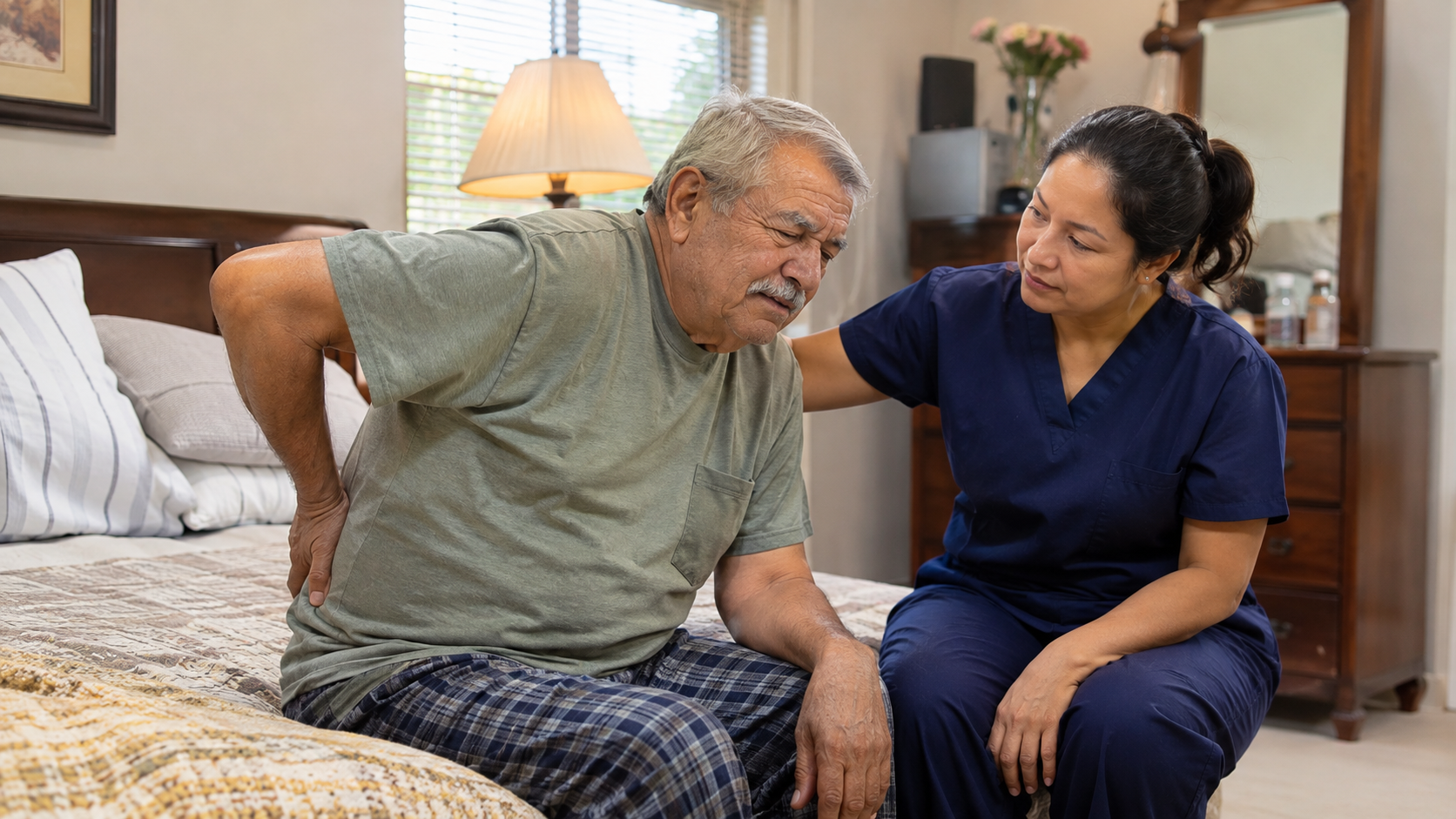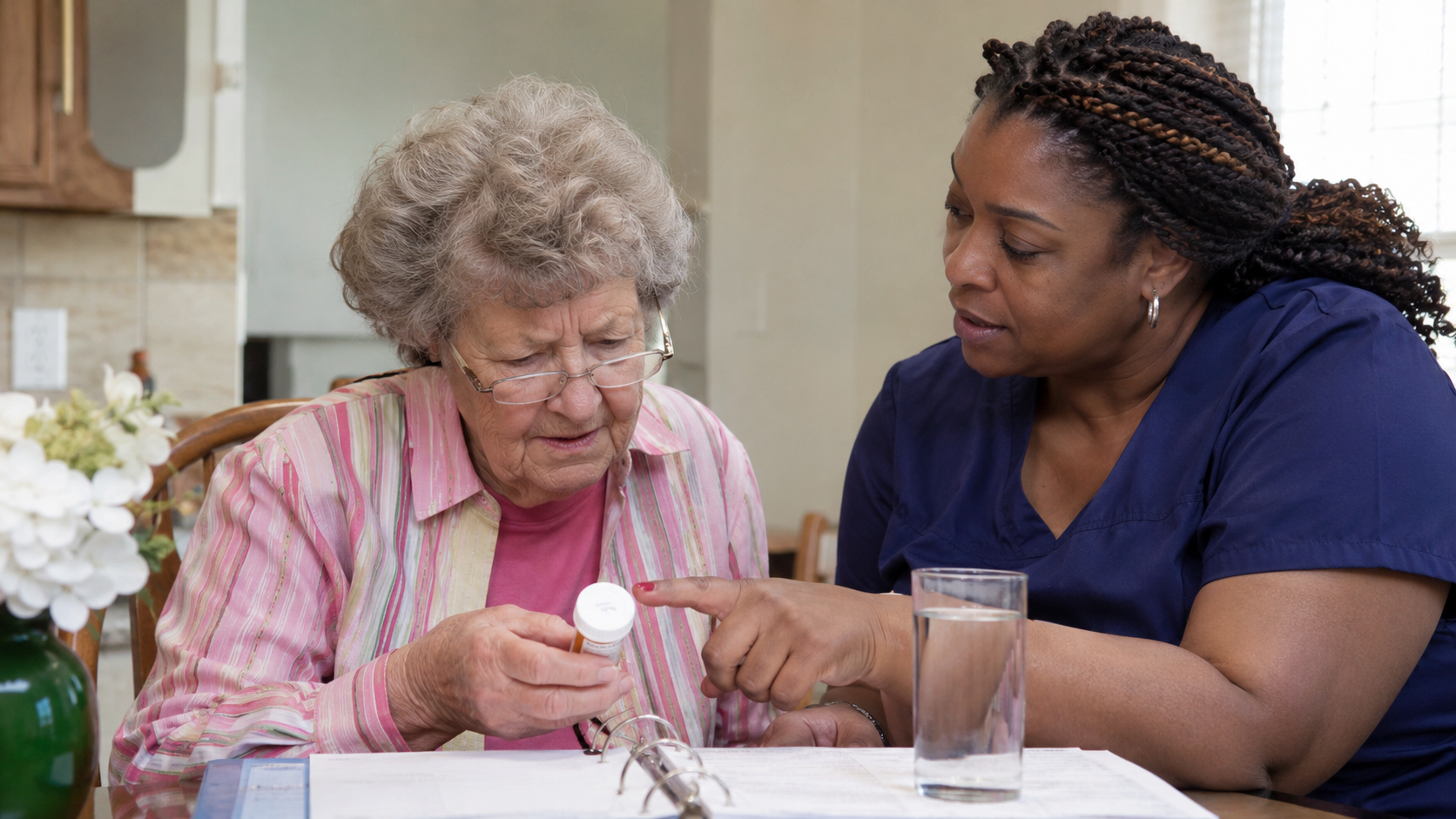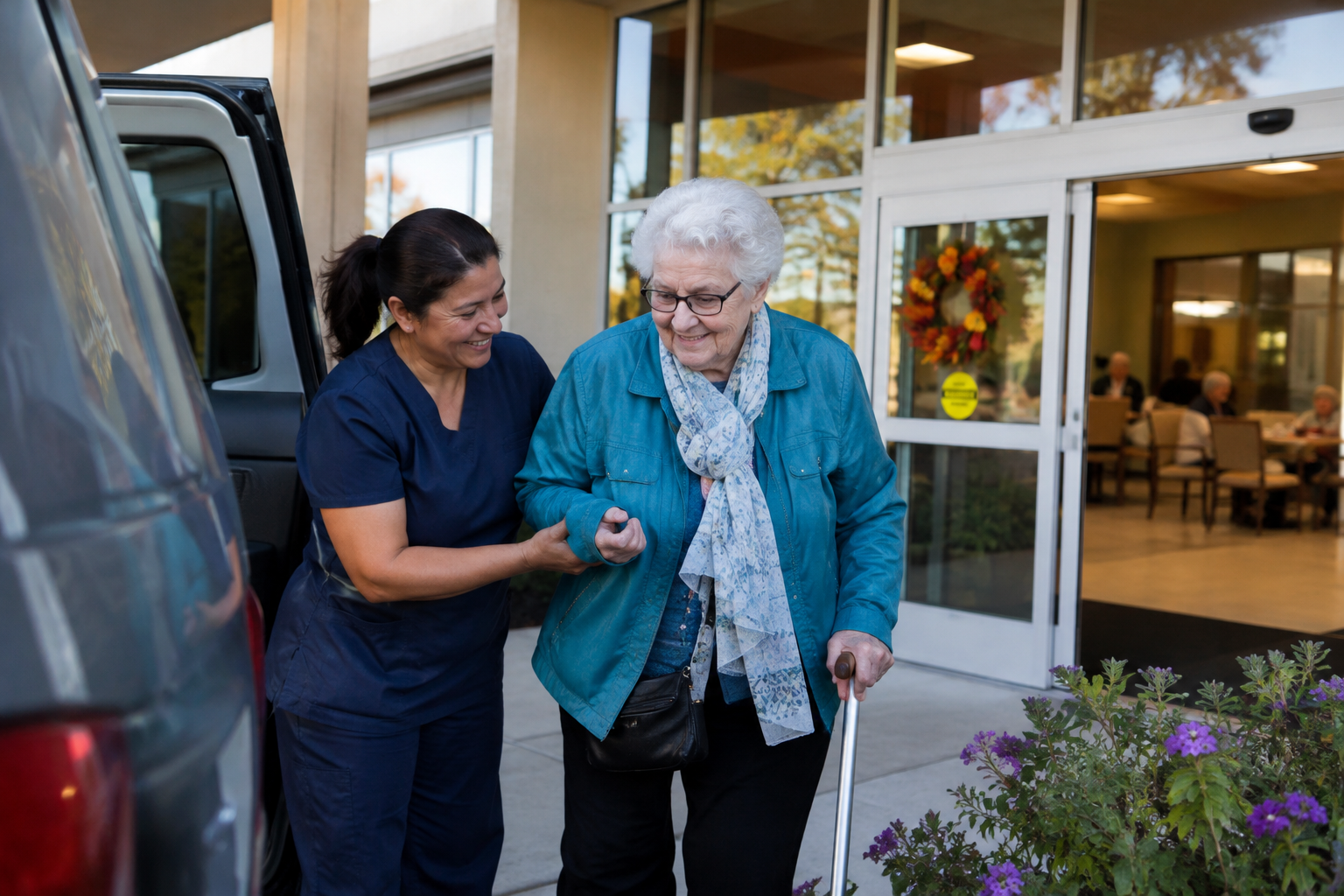

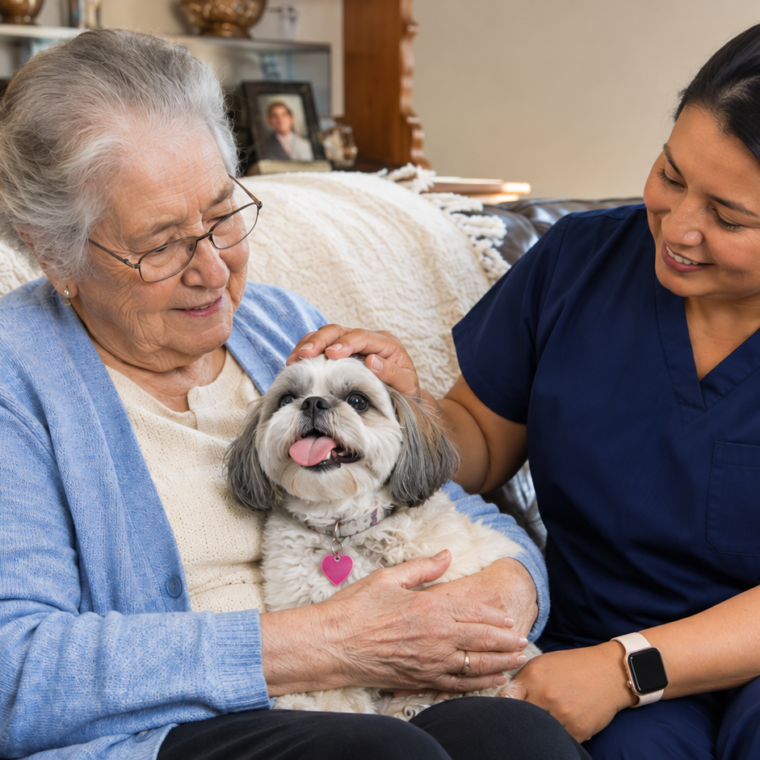

Quick answer: Seniors can often continue living with their pets while receiving nonmedical home care. Families should plan for clear walking paths, safe caregiver entry, the pet’s routine, and who handles animal care. A home caregiver’s responsibilities depend on the agency’s policy and the agreed care plan. Do not assume pet feeding, walking, litter cleaning, or veterinary transport is included.
At a Glance: The Pet and Home Care Checklist
- Tell the home care agency what pets live in the home before the first visit.
- Explain the animal’s temperament, location, and usual behavior when someone enters.
- Keep walking paths clear of bowls, toys, leads, and sleeping pets.
- Assign pet feeding, walks, litter cleaning, and veterinary appointments to named people.
- Confirm caregiver allergies, comfort, and permitted duties with the agency.
- Agree on a backup plan if the senior cannot manage the pet on a particular day.
For many older adults, a dog or cat is part of the household and a familiar daily routine. When help with bathing, meals, or laundry becomes necessary, families may worry that bringing a caregiver into the home means the pet must leave. That is not automatically the case. The better question is how to make the home comfortable and workable for the senior, the pet, and the caregiver.
The Centers for Disease Control and Prevention notes that pets can offer companionship while also carrying hygiene considerations. The right plan respects that relationship without overlooking practical safety.
1. Discuss Pets Before the First Caregiver Visit
Mention every animal in the home, including pets that usually stay outdoors. Tell the care coordinator whether a dog barks at visitors, whether a cat hides near the front door, or whether an animal needs to be separated during personal care. Describe the facts without labeling a pet as harmless or dangerous.
Ask how the agency handles homes with animals and whether the proposed caregiver has allergies or other relevant concerns. A good match depends on accurate information. Do not promise that every caregiver is comfortable with every animal.
Angels Instead describes its care planning and caregiver matching process. Families can use that conversation to raise pet related access and household questions before services begin.
2. Keep Walking Routes Clear Without Disrupting the Pet’s Life
A food bowl in the hallway, a leash stretched across a doorway, or a cat sleeping near a walker can create an avoidable obstacle. Choose a predictable location for bowls and toys that does not block the senior’s usual route to the bathroom, bedroom, or kitchen. Good lighting and clear pathways matter, particularly when mobility is limited.
The CDC NIOSH home care safety guide identifies pets and clutter as potential trip hazards for home care workers. Keep walking routes clear, especially around doors, stairs, and mobility aids. This is a practical household precaution, not a substitute for clinical fall risk assessment.
If the senior has fallen, has new difficulty walking, or needs changes to a mobility aid, consult the appropriate clinician. A non medical caregiver should not perform a clinical fall assessment or prescribe mobility exercises.
3. Decide Who Is Responsible for Pet Care
Pet care and personal care are different responsibilities. Angels Instead advertises assistance with everyday human needs, including dressing, meals, companionship, and light housekeeping. That does not establish that staff will feed animals, walk dogs, clean litter boxes, lift pet food bags, administer animal medication, or transport pets.
Write down a separate pet care plan with a responsible person for each task. A relative, neighbor, professional pet sitter, or veterinarian may be the appropriate choice for duties that are outside the home care arrangement.
- Daily feeding and fresh water: who does it, and at what times?
- Dog walks or exercise: who handles the leash and any mobility concerns?
- Litter boxes, waste disposal, and cleaning: who is responsible?
- Pet medication and veterinary visits: which person or professional handles them?
- Emergency pet contact: who can take over if the senior is hospitalized?
4. Protect the Senior’s Choices and Routine
Do not assume an older adult wants someone else to take over every task involving a beloved pet. Some seniors enjoy putting out a food bowl or sitting beside a cat, even if they need help with laundry or dressing. Ask which parts of the pet routine matter most and which activities have become difficult.
Angels Instead’s companionship care service focuses on conversation, shared activities, and support for everyday routines. Families should discuss whether and how time with a pet fits the individual care plan without assuming animal handling is part of the service.
For example, a caregiver may prepare the senior’s breakfast while a family member handles the dog’s morning walk. Later, the older adult can enjoy sitting with the dog on the porch if that is comfortable and safe for them. The arrangement preserves the relationship while assigning each responsibility clearly.
5. Plan Safe Entry, Exits, and Personal Care
A caregiver should know how to enter the home without an animal escaping. Identify the correct door, where the pet will be during arrival, and who will secure it if needed. If the senior requires bathing or transfer assistance, discuss whether the pet should remain outside that room during the task.
Do not rely on a caregiver to restrain a reactive animal or handle a bite risk. Ask the family to arrange an appropriate separation plan before visits. If a pet bites or scratches someone, follow agency procedures and seek appropriate medical advice.
6. Keep Hygiene Practical and Respectful
Routine handwashing, clean food preparation surfaces, and proper handling of animal waste help protect everyone in the household. Older adults and people with weakened immune systems may be more vulnerable to some infections associated with animals. The family should arrange cleaning tasks and medical guidance appropriate to the individual situation.
The CDC provides practical guidance for staying healthy around animals. The source discusses both benefits and infection risks; it does not mean a senior must give up a pet.
A nonmedical caregiver should not diagnose animal related illness or recommend medical treatment. For fever, a concerning bite, or other symptoms, contact a healthcare professional. For an immediate emergency, call 911.
7. Prepare for Missed Visits, Illness, and Emergencies
A pet care backup plan matters if the senior has a medical appointment that runs late, is admitted to a hospital, or temporarily cannot care for the animal. Place a written contact list where authorized family members can find it. Include the veterinarian, an emergency pet contact, feeding instructions, and any information needed to arrange temporary care.
Do not assume the home care agency can take over animal care during a schedule change. Confirm the agency’s availability for human care separately from any pet care arrangements.
How Angels Instead Can Help Houston Families?
Angels Instead provides non medical home care in Greater Houston and other confirmed service areas. Its published services include personal care, companionship, meal preparation, light housekeeping, and everyday assistance. When a senior lives with pets, the care planning conversation should cover the household setup, the older adult’s preferences, and any animal related boundaries before a caregiver is assigned.
Families can review Angels Instead’s personal care services and discuss which human care tasks would be most helpful alongside a separate plan for the pet.
To discuss an individualized arrangement, contact Angels Instead or call (281) 800-1800. Explain the pet situation, the senior’s daily needs, and the preferred visit schedule. Specific tasks and availability must be confirmed.
Frequently Asked Questions
Can a senior keep a dog or cat while receiving home care?
Often, yes. Having a pet does not automatically rule out nonmedical home care. The agency must assess the household circumstances, caregiver suitability, and agreed care tasks.
Will a home caregiver feed or walk the dog?
Do not assume so. Pet feeding, walking, waste cleanup, medication, and transport depend on the agency’s policy and explicit care agreement. Arrange a separate pet care provider when necessary.
What if a caregiver is allergic to cats or dogs?
Tell the agency before matching begins. Discuss whether a suitable caregiver and safe working arrangement are available rather than expecting someone to work around an undisclosed allergy.
Can pets be a fall risk for older adults?
Yes. Animals, toys, bowls, and leashes can become obstacles. Keep paths clear and discuss mobility concerns with the appropriate clinician.
Should the pet be in the room during bathing or transfers?
Discuss the household arrangement in advance. A pet may need to remain in another safe area so the caregiver can focus on the agreed personal care task.
Who cares for the pet if the senior goes to the hospital?
Name a family member, neighbor, pet sitter, or other responsible contact in advance. Do not assume a nonmedical home care agency provides emergency pet boarding or animal care.
Does Angels Instead offer pet care services?
Its publicly described services focus on non medical care for people. Families should ask the care coordinator directly whether any pet related task is permitted; this article does not promise pet care.
The Bottom Line
Home care for seniors with pets works best when everyone knows what belongs in the senior’s care plan and what belongs in the pet’s care plan. Protect clear walking paths, respect the older adult’s bond with the animal, and confirm the caregiver’s responsibilities before the first visit.