

Quick answer: Adult day programs and in-home care can work together when families assign clear responsibilities for morning preparation, transportation, afternoon routines, meals, and communication. An adult day program provides services at its facility; a home caregiver may support agreed daily activities at home. Confirm each provider’s actual services, schedules, eligibility, and payment rules before combining care.
At a Glance: Five Decisions to Make First
- Identify the adult day program’s exact arrival, departure, closure, and transportation rules.
- Decide who will help with dressing, breakfast, mobility, and departure at home.
- Assign responsibility for the return trip, evening meal, and settling back into the home.
- Confirm how changes, missed attendance, and urgent concerns will be communicated.
- Ask both providers about scope, scheduling, costs, and any funding restrictions before services begin.
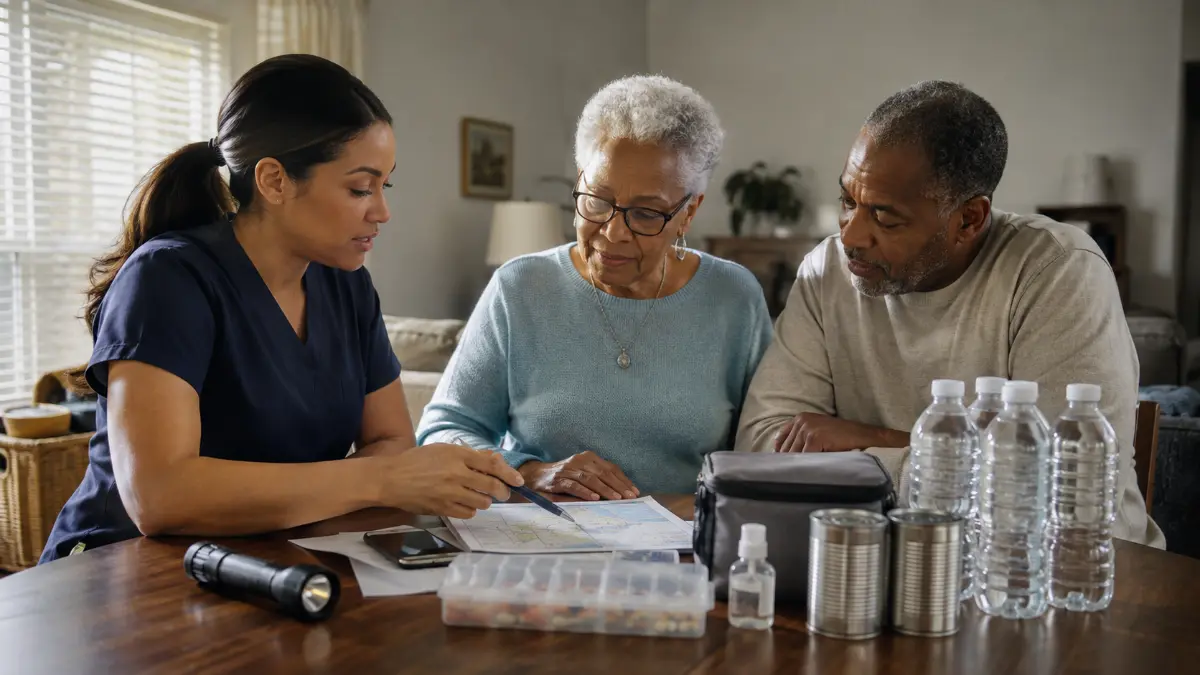
A Houston daughter may find a daytime program that gives her father activities and social contact, yet still need help before the program opens. Another family may have transportation arranged but no one available when the older adult returns home. These gaps are where a coordinated plan matters. The aim is not to duplicate care. It is to make the hours between services workable.
Adult Day Programs and Home Care Are Different Services
Adult day services generally take place at a community facility during scheduled hours. Depending on the program, services may include supervised activities, meals, personal care, nursing support, or transportation. Nonmedical home care takes place in the person’s home and focuses on agreed everyday activities, such as dressing, meal preparation, companionship, and household help.
Texas Health and Human Services explains that licensed Day Activity and Health Services programs can include nursing, personal care, meals, activities, and transportation for eligible adults. This regulated program is not identical to every private adult day center, so families must ask what their chosen facility actually provides.
Angels Instead does not need to operate an adult day center to support a person who attends one. Its role is the separate in home portion of an agreed care plan, subject to agency confirmation.
1. Map the Entire Day Before Hiring Anyone
Write down the real times, not just the program’s advertised hours. Include how long getting dressed takes, the pickup window, travel time, the end of the session, the return journey, and what the senior usually needs afterward.
- Before attendance: waking, bathing, dressing, breakfast, mobility assistance, and readiness for pickup.
- During attendance: the center’s activities, meals, nursing or personal care, only where included in its program.
- After attendance: arrival at home, snack or dinner preparation, light housekeeping, companionship, and the preferred evening routine.
- On non attendance days: family coverage, home care availability, and what changes when the program is closed.
Example: If a program starts at 9 a.m. but the ride arrives at 8:15 a.m., the family may need to arrange morning help earlier than expected. If a senior returns at 3:30 p.m. and relatives are not home until 6 p.m., the family must decide who covers that interval. These are illustrative times, not the hours of a specific Houston program.
2. Confirm Transportation Before Building the Schedule
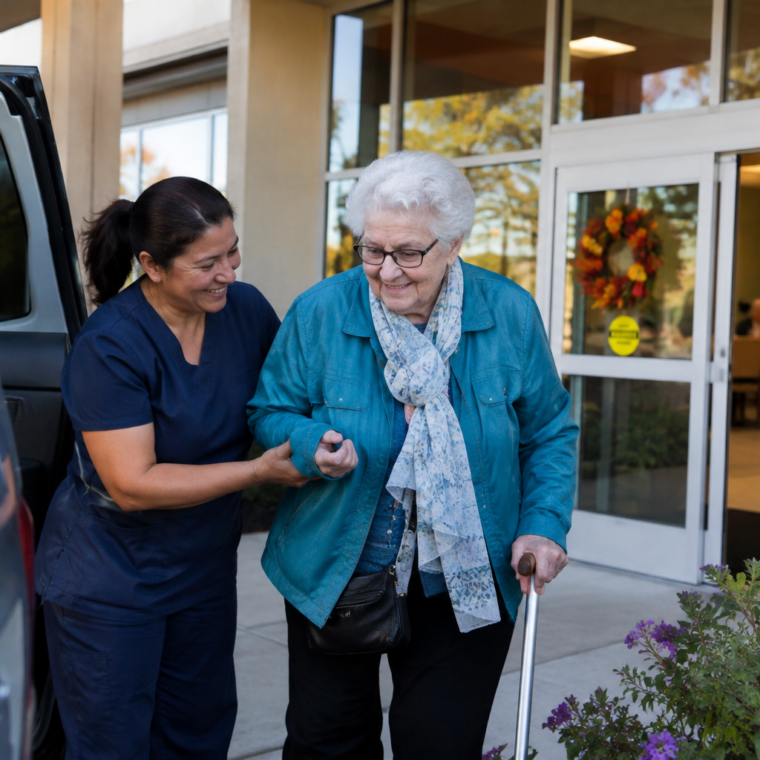
Never assume the day center provides door to door transportation or that an in home caregiver can drive. Ask who schedules the ride, whether the vehicle accommodates the person’s mobility needs, how late pickups are handled, and who receives notice of changes.
Angels Instead’s senior transportation planning guide explains why families should confirm the driver, vehicle, accompaniment, waiting time, and mobility arrangements before a trip.
If the older adult needs wheelchair accessible transportation, a specialized vehicle, or medical monitoring, arrange a provider equipped for those needs. An ordinary caregiver ride is not automatically a substitute.
3. Avoid Gaps in Morning and Afternoon Personal Care
An adult day program may help with personal care while the person is at the facility. That does not mean it provides bathing or dressing at home before pickup. Families should separate each task by place and time, then ask whether the task is included in the relevant provider’s care plan.
For the home portion of the routine, Angels Instead describes personal care services such as bathing, dressing, grooming, toileting, mobility support, meals, and light housekeeping. Confirm the specific tasks and visit length with its care coordinator.
Respect the senior’s preferences. Some people want only clothes laid out and breakfast prepared. Others may need hands on dressing assistance. The plan should be based on the person, not on assumptions about age or diagnosis.
4. Make Meals and Medication Responsibilities Explicit
Ask whether the adult day program serves lunch and snacks, whether food must be brought from home, and what happens if attendance is missed. At home, identify who prepares breakfast, dinner, and groceries. Follow any existing clinician or dietitian instructions rather than inventing a special diet.
Medication handling requires separate clarification. A regulated day program may have clinical staff and its own rules. A non medical caregiver must not be treated as a nurse or given new medication administration responsibilities without verified authorization, training, and agency policy. Put the relevant contacts and instructions in the care plan.
5. Use One Shared Communication Plan
When two organizations and several relatives are involved, messages can get lost. With the older adult’s consent, decide who receives routine updates and who handles urgent concerns. Keep the information factual and limited to what each person needs.
- Name the primary family contact and a backup.
- Record the center’s phone number and the home care coordinator’s contact information.
- Specify who reports missed pickup, a canceled session, or a change in the usual routine.
- Record practical observations such as a missed meal or difficulty getting ready, without diagnosing the cause.
- Keep clinical decisions and medical instructions with qualified professionals.
A useful note is “The ride was delayed, so lunch at home was prepared later.” A less useful note is “His condition is getting worse.” The second statement is a medical conclusion that the caregiver is not qualified to make.
6. Understand Texas Day Program Eligibility and Payment
Not every adult day center operates under the same funding or licensing arrangement. Texas Day Activity and Health Services, often shortened to DAHS, is a specific publicly funded service with financial, medical, and functional eligibility requirements. The eligibility rules for DAHS do not automatically apply to every private adult day program. Private social adult day programs may have different admission criteria, prices, and services.
The Texas HHSC DAHS eligibility handbook describes requirements for authorized services and cautions against duplication of certain publicly funded supports. Families should confirm eligibility and coordination with the program administrator or caseworker rather than assume that two services can always be billed for the same time or task.
Ask the adult day provider which services are included, what the family pays, and whether transportation is part of the arrangement. For eligible DAHS participants, transportation may be provided according to program rules; do not generalize this to every adult day center. Ask Angels Instead separately for its available schedule, minimum visit requirements, hourly pricing, and what services can be included. Do not assume a formal partnership or shared billing system.
7. Plan for Closures, Illness, and Schedule Changes
A reliable care plan includes what happens when the day center closes for a holiday, the senior chooses not to attend, a pickup is missed, or the person is unwell. Decide who stays with the older adult, who calls the center, and whether extra home care can be requested. Additional visits depend on actual caregiver availability.
If a new symptom or health concern arises, contact the appropriate clinician. Call emergency services for an immediate threat to life or safety. Neither a day center schedule nor a home care booking replaces medical assessment.
A Sample Handoff Plan: Who Is Responsible?
Before pickup: A family member or confirmed home caregiver helps with breakfast, dressing, and readiness. The adult day program confirms its pickup process and arrival requirements.
At the facility: The adult day provider handles only the services listed in its own care or enrollment agreement. Clinical services, when offered, remain with its authorized staff.
After return: A family member or confirmed home caregiver helps with the agreed meal, household tasks, and evening routine. The transportation provider confirms who is responsible for the handoff.
If plans change: The designated family contact calls the relevant provider and activates the backup plan. Neither organization should be assumed to cover an unbooked gap.
A One Page Coordination Checklist for Houston Families
- Write down the program’s actual days, hours, address, and transportation arrangements.
- List the tasks needed at home before pickup and after return.
- Confirm mobility requirements, building access, and who assists at each handoff.
- Ask who handles breakfast, lunch, snacks, dinner, and any individualized food instructions.
- Confirm medication and medical task responsibilities with authorized providers.
- Record the main family contact, backup, center contact, and home care coordinator.
- Check closure days, missed attendance procedures, and backup arrangements.
- Verify pricing, eligibility, payment restrictions, and any possible overlap.
- Review the arrangement after the first week with the older adult.
How Angels Instead Can Help?
Angels Instead provides in home support for families in Greater Houston and other communities within its confirmed service area. Depending on the agreed plan, a caregiver may assist with morning personal care, meal preparation, light housekeeping, companionship, and everyday transportation logistics before or after attendance at a separate adult day program.
To explore whether this arrangement fits your family, contact Angels Instead about a personalized care plan. Call (281) 800 1800 and explain the adult day program’s hours, the home support gaps, and the assistance your loved one prefers. Confirm exact availability and services before making commitments.
Frequently Asked Questions
Can someone attend adult day care and also receive home care?
Yes, the two services can serve different parts of the day. However, eligibility, payment rules, and restrictions on duplicating publicly funded services must be checked for the individual arrangement.
Who helps a senior get ready before adult day care?
A relative or an agreed in home caregiver may assist with dressing, bathing, breakfast, and readiness for pickup. Confirm the tasks and visit time in the care plan.
Does an adult day program always provide transportation?
No. Transportation differs by program and enrollment arrangement. Ask about pickup areas, accessible vehicles, times, and missed rides before relying on it.
Can Angels Instead provide care after an adult day program ends?
Angels Instead offers non medical in home services. Whether an afternoon or evening visit is available depends on the address, schedule, care needs, and confirmed service arrangement.
Are adult day programs and in home caregivers the same as home health nursing?
No. Adult day facilities may offer different levels of care, including nursing in regulated programs. Nonmedical in home caregivers support daily activities and do not replace licensed clinical professionals.
Will Medicare or Medicaid automatically pay for adult day care and home care?
No. Original Medicare generally does not cover non medical custodial home care or routine adult day care. Medicaid and other programs may cover eligible services subject to program rules and limits. Families should check with the day program, insurer, Medicaid caseworker, or other responsible payer.
What if the adult day center is closed or a ride is canceled?
Use the backup plan agreed in advance. Contact the center, family decision maker, and home care provider as appropriate; extra caregiver coverage is subject to availability.
The Bottom Line
Adult day programs and home care are most useful together when the family has a clear plan for the hours between them. Define who helps at home, who provides transportation, what the center supplies, and who responds when the schedule changes. The right arrangement protects the older adult’s preferences and avoids leaving important responsibilities unassigned.