
| QUICK ANSWER Cancer home care in Houston can help keep daily life organized between outpatient treatment appointments. Depending on the confirmed care plan, a caregiver may support meals, appointment preparation, transportation, bathing and dressing, light housekeeping, companionship, errands, permitted medication reminders, and planned relief for family caregivers. Non medical home care does not diagnose cancer, manage treatment, interpret symptoms, administer chemotherapy, change medicines, or replace the oncology team. |
| IMPORTANT SCOPE NOTE This article provides general caregiving information. Cancer treatment and side effects vary by person. Follow the written instructions from the oncology team. Contact the clinical team for new or worsening concerns and call 911 for an emergency. |
Cancer treatment can make an ordinary week surprisingly complicated. A family may be managing clinic visits, imaging, laboratory work, long waiting periods, changing appetite, laundry, errands, transportation, and the everyday work of keeping a home running. National Cancer Institute caregiver guidance recognizes that cancer caregiving can include doctor visits, food preparation, bathing, toileting, coordination, and emotional support.
That is where non medical home care can be useful. It can take selected daily tasks off the family while the oncology team remains responsible for diagnosis, treatment, medicines, side effects, nutrition prescriptions, laboratory results, devices, and clinical decisions.
Build Support Around the Treatment Calendar
Start with the actual treatment calendar instead of buying a generic block of care hours. Mark clinic days, infusion or radiation appointments, imaging, laboratory visits, travel time, family availability, meals, personal care needs, and the periods when the person is usually most tired.
Some families need help before an appointment so the client can get dressed, eat, gather documents, and leave on time. Others need more help after the appointment, when the client returns home and the household still needs food, laundry, or a safe evening routine. The right schedule follows the real bottlenecks rather than a standard package.
If function changes suddenly, the family should follow the oncology plan and ask whether a clinical reassessment is needed. More non medical hours are not automatically the right answer to a medical change.
Appointment Support Is More Than a Ride
A treatment day may start well before the vehicle leaves the driveway. The client may need help dressing, gathering identification, bringing a current medication list, collecting written questions, preparing mobility equipment, and organizing approved snacks or water.
Houston traffic, parking, long corridors, and waiting rooms can add physical effort to an already demanding day. Angels Instead lists transportation to appointments among its current services. Families should confirm the exact transportation and accompaniment arrangement during the assessment and should also confirm that the client is inside the current Texas service area.
With the client’s consent, a caregiver may help carry written questions or take neutral notes. The caregiver should not consent to treatment, explain test results, or interpret medical instructions as though they were a nurse or oncology professional.
Meal Support Should Follow the Clinical Plan
Treatment can affect appetite, taste, swallowing, digestion, energy, and food safety needs. National Cancer Institute nutrition guidance explains that nutrition needs can change during treatment and that a registered dietitian can help create an individualized plan.
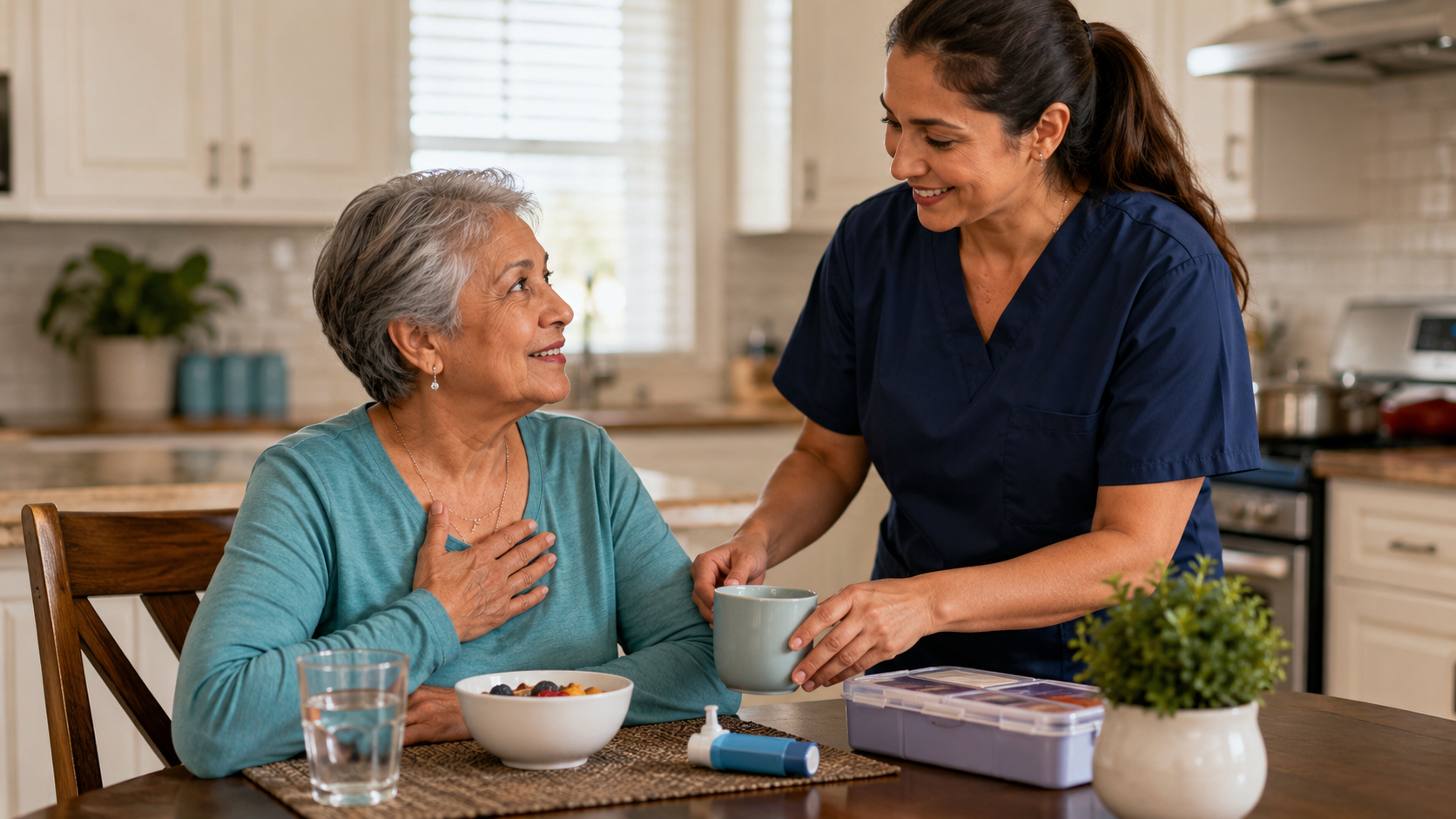
Within that plan, a caregiver may shop from an approved list, prepare familiar food, portion and serve meals, store food safely, keep permitted snacks accessible, and clean the kitchen. Angels Instead also describes meal preparation support for clients who need help with shopping, preparation, serving, and cleanup.
The caregiver should not create a cancer diet, set calorie or protein targets, recommend supplements, change fluid goals, or invent food restrictions. If the oncology team or dietitian gives specific instructions, those instructions should control the home routine.
Personal Care Can Protect Energy and Dignity
Bathing, dressing, grooming, toileting, and changing linens can feel much harder during a treatment week. Support should protect privacy and let the client do what they can safely do rather than taking over every task.
Angels Instead currently provides personal care services that include bathing, dressing, grooming, toileting, mobility assistance, laundry, light housekeeping, and meal preparation.
For a person receiving cancer treatment, the written care plan should also include any restrictions or reporting instructions from the clinical team. A non medical caregiver should not assess a wound, manage a port or drain, apply a clinical dressing, treat a rash, or make decisions about infection risk unless the exact service has been legally and operationally verified.
Light Housekeeping Can Remove Unnecessary Work
A clean and organized home does not treat cancer, but it can remove work from a week that is already crowded. Useful tasks may include laundry, changing ordinary bed linens, washing dishes, taking out household trash, clearing walking paths, organizing frequently used items, and keeping the kitchen and bathroom ready for daily use.
The care plan should define what light housekeeping means for the household. It should not quietly expand into hazardous cleanup, medical waste handling, heavy lifting, or tasks that require specialized training.
Companionship and Communication Matter Too
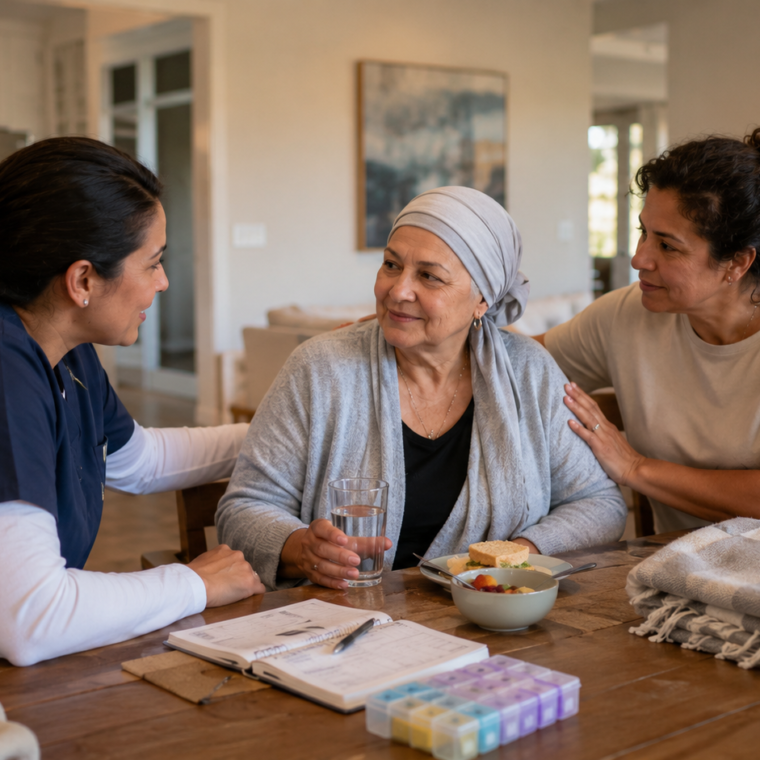
Treatment weeks can feel isolating. A caregiver can provide company, listen, support preferred activities, help the client contact family, and maintain a calm routine. The goal is not forced positivity. It is steady human presence and practical help.
Documentation should stay factual. A useful note might say that the client ate part of a meal, declined an outing, needed more help dressing, or reported feeling different than usual. The caregiver should not diagnose the cause. The care plan should state who receives updates and when the family should contact the oncology team.
National Cancer Institute treatment side effect guidance advises patients to tell the health care team about treatment problems because side effects vary from person to person and need clinical assessment.
Plan Respite Before One Family Member Carries Everything
A spouse, adult child, or other family member may be handling transportation, meals, calls, paperwork, household work, and the emotional load of waiting for the next appointment. Planned respite can cover defined daily tasks so the family caregiver can sleep, work, attend their own appointment, or spend time with other family members.
Angels Instead offers in home respite care for temporary caregiver relief. For cancer treatment weeks, the handoff should identify the client’s routine, meals, personal care needs, transportation plan, household priorities, family contacts, oncology contacts, and the steps to follow when something changes.
The purpose is not to make a family caregiver disappear from the plan. It is to prevent one person from becoming the only person who knows how the week works.
Know When Non Medical Home Care Is Not Enough
Cancer and treatment effects differ widely. National Cancer Institute infection guidance explains that some infections during treatment can become serious and that patients should know which signs require urgent medical attention.
The safest rule is simple: follow the person’s written oncology instructions. Contact the oncology team for new or worsening concerns according to that plan. Call 911 for an emergency. A non medical caregiver should not decide that a new symptom is normal simply because it appeared after treatment.
Skilled home health, palliative care, hospice, rehabilitation, or another clinical service may be appropriate in some situations. Those services have different purposes and should not be presented as interchangeable with ordinary home care.
Questions Houston Families Should Ask Before Care Begins
- Which services are non medical, and which requested tasks must stay with licensed clinicians?
- Can the care plan support transportation and appointment accompaniment, and what operational rules apply?
- How are meal instructions from the oncology team or dietitian received and documented?
- Which personal care, mobility, housekeeping, and companionship tasks can the caregiver perform?
- What is the exact policy for medication reminders and what tasks are excluded?
- How are caregiver observations documented and shared with the family?
- Can the schedule change around treatment dates when staffing allows?
- What happens if the assigned caregiver is unavailable?
A Practical Starting Plan
Map one normal treatment week. Mark the appointment schedule, travel time, meals, personal care, laundry, errands, rest periods, and family availability. Then identify the two or three moments when ordinary life is most likely to fail.
For one household, the answer may be a morning visit before treatment. For another, it may be an afternoon visit after treatment so the family caregiver can return to work. A third family may need support only on grocery and appointment days. The schedule should solve the household’s actual problems.
Frequently Asked Questions
What can cancer home care include?
Non medical home care may include appointment preparation, confirmed transportation, meals based on the clinical plan, bathing and dressing, light housekeeping, errands, companionship, permitted medication reminders, factual documentation, and respite for family caregivers. The exact scope depends on the care plan and current agency policy.
Is home care the same as home health, hospice, or palliative care?
No. Non medical home care supports daily living. Home health provides skilled clinical services when appropriate. Hospice and palliative care have different clinical purposes. Families should confirm which service is actually needed.
Can a caregiver prepare meals during cancer treatment?
Yes, when the meals follow instructions from the oncology team or dietitian. A non medical caregiver should not prescribe a diet, supplements, fluid goals, or other clinical nutrition changes.
Can respite care be scheduled around treatment weeks?
Potentially. A family may request more support around treatment days and less support at other times, subject to assessment, staffing, location, and agency scheduling. No schedule should be promised before it is confirmed.
When should the family contact the oncology team?
Follow the written treatment instructions. Report new or worsening concerns according to that plan. Call 911 for an emergency. Home care should support the household, not replace clinical judgment.
Talk With Angels Instead About the Daily Support Plan
The most useful cancer home care plan starts with the treatment calendar and the ordinary tasks that become difficult around it. If your family needs help with meals, personal care, transportation, household routines, companionship, or caregiver relief, contact Angels Instead for a free home assessment and confirm which tasks fit the current service scope.
A strong plan is practical enough to reduce daily strain and clear enough to show where non medical care stops and oncology care begins.