
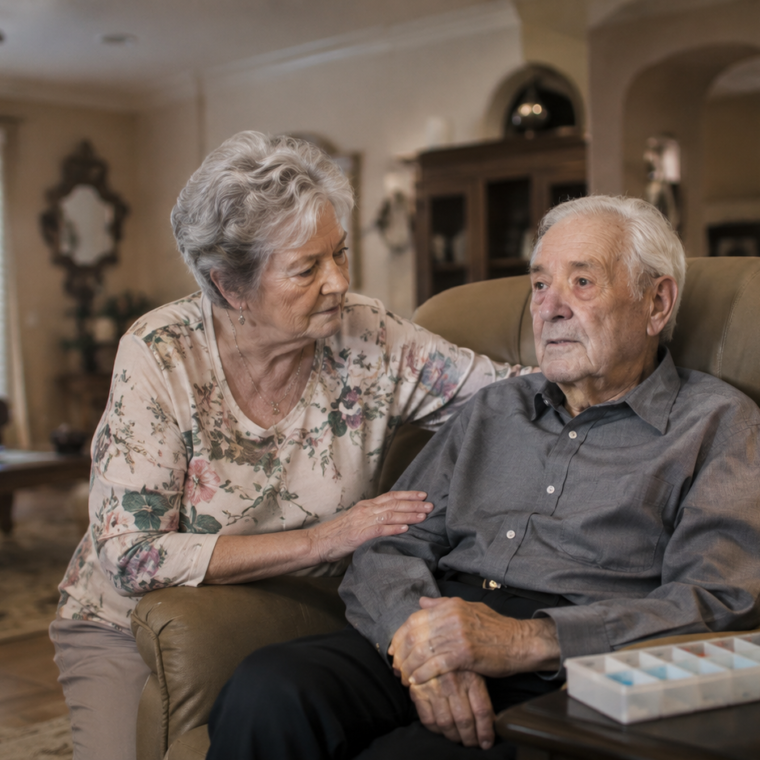

When one older spouse becomes the main caregiver for the other, the household can look independent from the outside while running on a very narrow margin. One person may be handling breakfast, medication reminders, bathing, toileting, appointments, laundry, meals, and nighttime wake ups while also managing arthritis, blood-pressure appointments, fatigue, or balance concerns of their own.
That is where in-home respite care can help. The purpose is not to replace a husband, wife, or long-term partner. It is to move selected care tasks or time blocks to a professional caregiver so the caregiving spouse is not the only person holding the entire routine together.
| Quick answer
Respite care for aging couples provides temporary in home support when one older spouse is caring for the other. A strong plan looks at two people at once: what the care recipient needs and what the caregiving spouse can safely continue doing. The goal is to share high stress tasks, protect regular breaks, and preserve the spouse’s role in the relationship rather than turning every hour together into caregiving work. |
Why Spouse Caregiving Has a Different Kind of Pressure?
A spouse often knows the care recipient better than anyone else: how they like their coffee, which shirt feels comfortable, what makes them anxious, how they prefer to be helped in the bathroom, and what a “good day” normally looks like. That knowledge is valuable. It can also make professional help feel intrusive at first.
There is another complication: the caregiver may be aging too. In a CDC analysis, the proportion of caregivers age 60 or older increased from 28.0% in 2015–2016 to 35.4% in 2021–2022. During 2021–2022, 13 of 19 measured health indicators were less favorable among caregivers than noncaregivers. The CDC caregiver-health analysis does not mean every older caregiver is unwell, but it is a strong reason not to design a care plan as if the caregiving spouse has unlimited strength and energy.
Use a Two Person Safety Check, Not a One Person Care Plan
Many care plans focus only on the person receiving help. Aging couples need a second question: what is the caregiving spouse physically and realistically able to keep doing?
For one normal week, look at the household through three lenses:
- Care recipient needs: bathing, dressing, meals, toileting, supervision, mobility, reminders, appointments, and nighttime routines.
- Caregiving spouse limits: pain, fatigue, lifting restrictions, poor sleep, balance concerns, medical appointments, or tasks that cause fear.
- Collision points: moments when one partner’s needs exceed what the other can safely or calmly provide.
A transfer can be technically possible on Monday morning and still be a bad plan after a sleepless night. A shower may be manageable until the caregiving spouse develops shoulder pain. The right schedule should reflect what is happening now, not what the couple could manage six months ago.
Build a Green-Amber-Red Task Map
A simple way to decide where respite should begin is to sort recurring tasks into three groups. This keeps the conversation practical and avoids the feeling that professional help means “taking over.”
| Category | What it means | Examples |
|---|---|---|
| GREEN – Keep | The spouse wants to do it and can do it safely without significant strain. | Sharing breakfast, choosing clothes, reading together, attending a favorite activity. |
| AMBER – Share | The task is meaningful or manageable sometimes, but it creates fatigue, time pressure, or conflict. | Meal preparation, laundry, supervision during errands, evening routines, appointment preparation. |
| RED – Reassign / escalate | The task creates pain, instability, repeated near-misses, or requires clinical skill beyond non-medical care. | Unsafe transfers, repeated falls, wound care, injections, complex medical tasks, emergency symptoms. |
If bathing, toileting, dressing, or hygiene is in the amber zone, personal care may be the logical place to start. If walking or transfers are becoming difficult, the family should discuss appropriate mobility assistance and confirm what can be safely handled within the care plan.
Protect the Spouse’s Role Instead of Replacing It
The fastest way to create resistance is to introduce a caregiver as if the caregiving spouse is no longer capable. A better approach is to decide what the spouse wants to keep and what they would genuinely like help carrying.
For example, a husband may still want to prepare his wife’s favorite breakfast but welcome help with bathing and laundry. A wife may prefer to accompany her husband to medical appointments while another caregiver handles the meal, housekeeping, and evening routine afterward. The point is not maximum delegation. It is enough support to make the relationship livable again.
This is also where companionship care can fit naturally. Sometimes the caregiving spouse needs a reliable block of time for an appointment or rest while the other partner has conversation, a familiar activity, a meal, or calm company at home.
Start With One Predictable Respite Block
Aging couples often adjust better to one consistent block than to a sudden large schedule. Choose the part of the week that produces the clearest benefit for both partners.
- A morning visit for bathing, dressing, breakfast, and household reset.
- An appointment block so the caregiving spouse can see their own doctor without rushing home.
- An afternoon block for rest, exercise, errands, worship, or time with friends.
- An evening visit when dinner, hygiene, reminders, and fatigue tend to collide.
- A recurring weekly visit that gives the couple a predictable rhythm instead of emergency-only help.
The National Institute on Aging describes respite care as short-term relief for primary caregivers and specifically notes that primary caregivers, especially spouses, may hesitate to ask for a break. NIA respite-care guidance recommends asking the primary caregiver how another person can be most helpful.
Build the Household Plan Around Both Partners
The professional care plan will identify the services provided to the client. The household plan should go one step further and document what both partners need for the arrangement to work.
- Preferred names, routines, privacy expectations, communication style, and cultural or faith practices.
- Meals, hydration, medication-reminder times, rest periods, and preferred activities.
- Bathing, dressing, toileting, grooming, and continence preferences.
- Walking ability, mobility devices, transfer instructions, and fall concerns.
- Memory changes, triggers, calming approaches, and supervision needs.
- The caregiving spouse’s medical appointments, rest needs, and tasks they should no longer be expected to perform.
- Family contacts, emergency instructions, and who can approve changes if one spouse cannot.
Avoid instructions like “help as needed.” Another caregiver needs to know what support is expected, what the care recipient can still do independently, and what should be reported to the family.
Let the Caregiving Spouse Actually Use the Break
Some spouses arrange help and then spend the entire visit supervising. That is understandable during the first introduction, but it leaves the underlying problem unchanged if it becomes permanent. The CDC recommends identifying a specific caregiving task or block of time where help is needed and organizing regular support. CDC caregiver self-care guidance also emphasizes consistent breaks from caregiving responsibilities.
The break does not have to be productive. It can be a medical appointment, an uninterrupted nap, a walk, lunch with a friend, time for finances, or simply an hour when the spouse is not listening for the next call from the bathroom.
When a Few Hours of Respite Are No Longer Enough?
Part time respite works when the care recipient can be safely supported within defined visits and the caregiving spouse is able to manage the remaining hours. Reassess the entire plan when there are frequent nighttime needs, repeated falls, wandering, unsafe transfers, rapid functional decline, or clinical tasks that do not fit non-medical home care.
Non-medical respite care does not replace skilled nursing, therapy, medical assessment, wound care, injections, or emergency treatment. If either partner’s condition changes suddenly or a task becomes unsafe, the appropriate healthcare professional should be involved. Call 911 for a medical emergency.
What If Both Spouses Need Help?
This is where families can make a dangerous assumption: because two people live in the same home, one shared care arrangement will automatically work for both. It may not.
Each person should be assessed according to their own mobility, personal-care, memory, supervision, and clinical needs. Some household tasks may benefit both partners, but hands-on care should not be treated as interchangeable. The provider should confirm the care plan and staffing needed for each person before the family relies on one arrangement.
Include Adult Children Without Taking the Couple’s Authority Away
Adult children can make the plan easier by handling paperwork, coordinating schedules, ordering supplies, joining care reviews, or helping pay for agreed services. Their role should be to reduce friction, not to turn the couple into bystanders in their own home.
Use specific observations instead of accusations. “Dad is losing his balance during transfers” is more useful than “Mom cannot handle him anymore.” Agree on one trial change, set a review date, and let both partners say what is and is not working.
Houston Families: Keep the Plan Local and Realistic
Angels Instead provides non-medical in-home support in Houston and multiple surrounding Texas communities. Families should confirm the exact location, requested schedule, and care needs during the assessment rather than assuming that every service or time block is available everywhere. You can review the company’s current service areas before scheduling.
Support the Marriage or Partnership, Not Just the Task List
When every conversation becomes “Did you eat?”, “Did you take it?”, “Hold the rail,” or “Let me help you,” the relationship can slowly disappear behind the work. Respite cannot solve every problem, but it can create room for the caregiving spouse to stop being on duty for part of the week.
Angels Instead can help Houston-area families discuss a non-medical respite plan around the older adult’s routines, the spouse’s physical limits, and the time blocks creating the most strain. Contact Angels Instead for a free, no-obligation care conversation about what support would make the household more sustainable.
Frequently Asked Questions
Does accepting respite care mean the caregiving spouse has failed?
No. Respite care is a practical way to reduce dependence on one person. For an older spouse caregiver, planned help can create time for medical appointments, rest, errands, social connection, or simply recovery from physically demanding routines.
Can the caregiving spouse stay home during respite visits?
Yes. The spouse may stay home during the first visits, rest in another room, complete paperwork, or simply be present. The important part is to establish clear roles so the professional caregiver can follow the care plan without conflicting instructions.
How can we introduce a caregiver if my husband or wife resists help?
Start with one specific task or time block and involve both partners in reasonable choices about timing, routines, activities, meals, privacy, and communication. A consistent introduction usually feels less threatening than presenting care as a complete takeover.
How many hours of respite care should an aging couple start with?
There is no universal number. Start with the recurring task or time block causing the most strain, then review the arrangement after several visits. The schedule should be based on the care recipient’s needs, the spouse’s abilities, safety, and actual household experience.
What if both spouses need personal care or mobility help?
Both people should be assessed separately. Some shared household support may help both partners, but hands-on personal care or mobility needs may require different plans, more time, or different staffing. The provider should confirm what can be supported safely before care begins.
| Editorial note
This article provides general caregiving and home care planning information. It does not replace medical, legal, licensing, insurance, or emergency advice. Angels Instead is positioned here as a non medical in home care provider; clinical and emergency needs should be handled by appropriately licensed professionals. |