
Hallucinations in dementia can happen, but they should never be dismissed automatically as “just part of aging.” In Alzheimer’s disease, hallucinations are more common as the disease progresses, while in Lewy body dementia, visual hallucinations can appear earlier. Sudden or new hallucinations may also be triggered by infection, dehydration, medication side effects, vision or hearing problems, or delirium. The safest first step is calm reassurance, environmental adjustment, and prompt medical review.
Most families do not panic the first time a loved one says they saw something unusual.
They panic the second or third time.
A man standing in the hallway. Children in the bedroom. Bugs on the blanket. A stranger in the mirror. Suddenly, home does not feel predictable anymore, and families are left asking the same painful questions: Do people with dementia hallucinate? Is this Alzheimer’s? Is this dangerous? What should I do right now?
The hard truth is this: hallucinations in dementia are real experiences to the person having them, even when they are not real to everyone else. If you argue, you often increase fear. If you ignore a sudden change, you may miss a medical problem that needs attention. The right response sits in the middle: stay calm, check for causes, protect safety, and get help when needed.
What are hallucinations in dementia?
A hallucination happens when someone sees, hears, smells, tastes, or feels something that is not actually present. In dementia care, families most often describe visual hallucinations, such as seeing people, animals, shadows, or movement that no one else sees. The person may also hear voices or sounds that are not there.
This is where many families get confused: a hallucination is not the same as a delusion. A hallucination is a false sensory experience. A delusion is a false belief, such as thinking someone is stealing money or that a spouse is being unfaithful. Both can happen in dementia, and both can be frightening, but they are not identical.
Does dementia cause hallucinations?
Yes, dementia can cause hallucinations. In Alzheimer’s disease, hallucinations are more often seen in the moderate stage, when brain changes affect reasoning, sensory processing, and behavior more deeply. In severe disease, behavior and communication problems often become even more pronounced.
But here is the part families often miss: dementia is not the only possible cause. Hallucinations in older adults may also be linked to infections, dehydration, pain, medication side effects, alcohol or drug effects, poor eyesight, poor hearing, or delirium. That means a sudden change deserves medical attention, especially if the person seems much worse than usual.
What stage of dementia is hallucinations most common?
If you are asking, “what stage of dementia is hallucinations?”, the honest answer is: it depends on the type of dementia.
In Alzheimer’s disease, hallucinations are usually more associated with the moderate stage, when confusion, misinterpretation, paranoia, and sensory processing changes become more visible.
In Lewy body dementia, visual hallucinations can happen early and are one of the condition’s most recognized symptoms. Federal aging and dementia sources note that visual hallucinations are common in Lewy body dementia and may appear earlier than families expect.
That distinction matters. If hallucinations appear early, especially along with movement problems, fluctuating alertness, or vivid sleep disturbances, a clinician may need to consider whether the diagnosis is Alzheimer’s alone or another dementia subtype.
What causes hallucinations in elderly adults besides dementia?
Families often search what causes hallucinations in elderly adults because they sense something has changed suddenly. That instinct is usually right.
Possible triggers include:
- Dehydration
- Urinary tract or other infections
- Medication side effects or interactions
- Untreated pain
- Vision or hearing problems
- Delirium, which can come on quickly and signal an urgent medical issue
This is why sudden onset hallucinations in elderly adults should never be shrugged off. A person with stable dementia who suddenly becomes dramatically more confused, frightened, or visually misperceives the room may need prompt evaluation for a reversible cause.
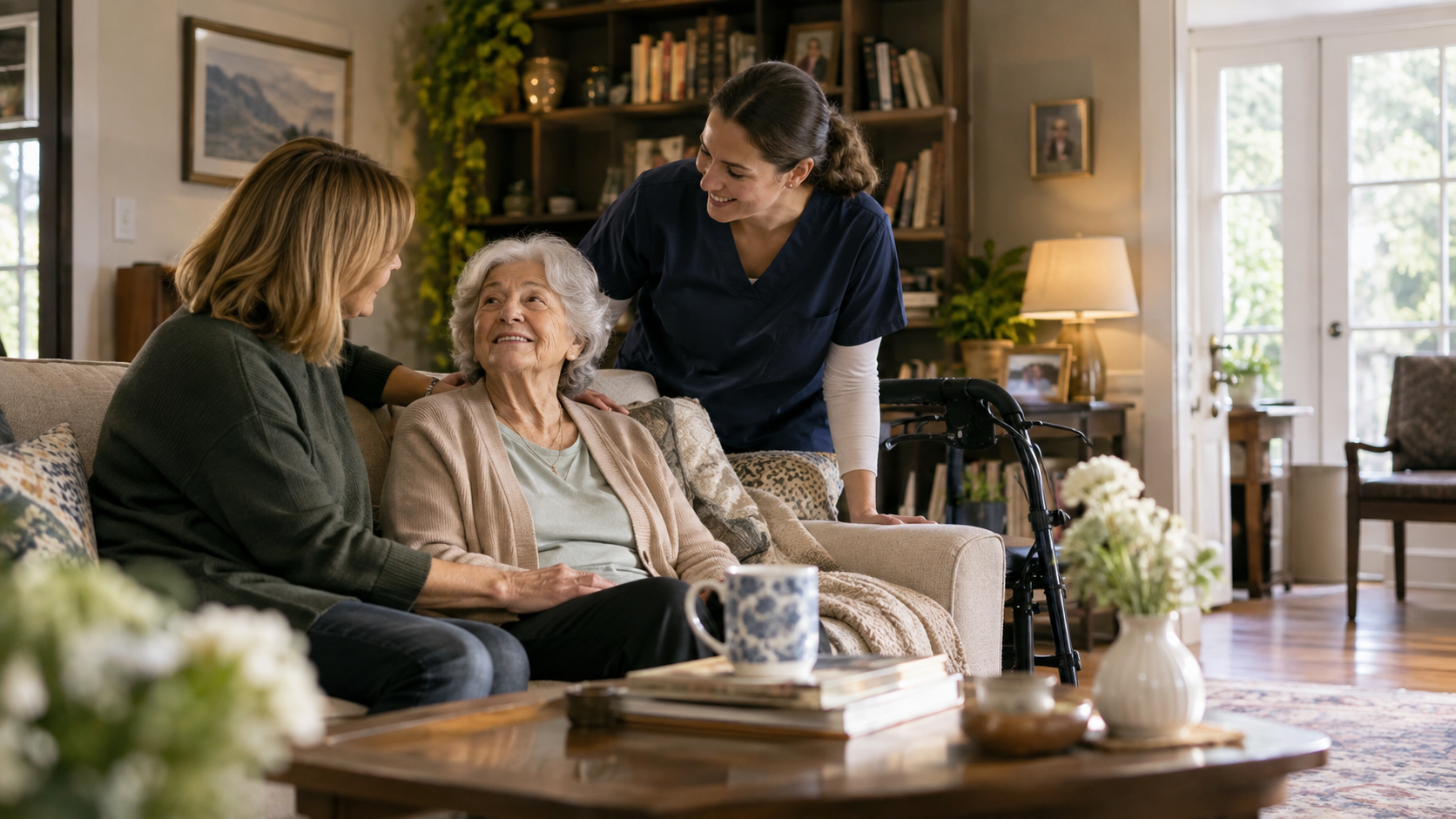
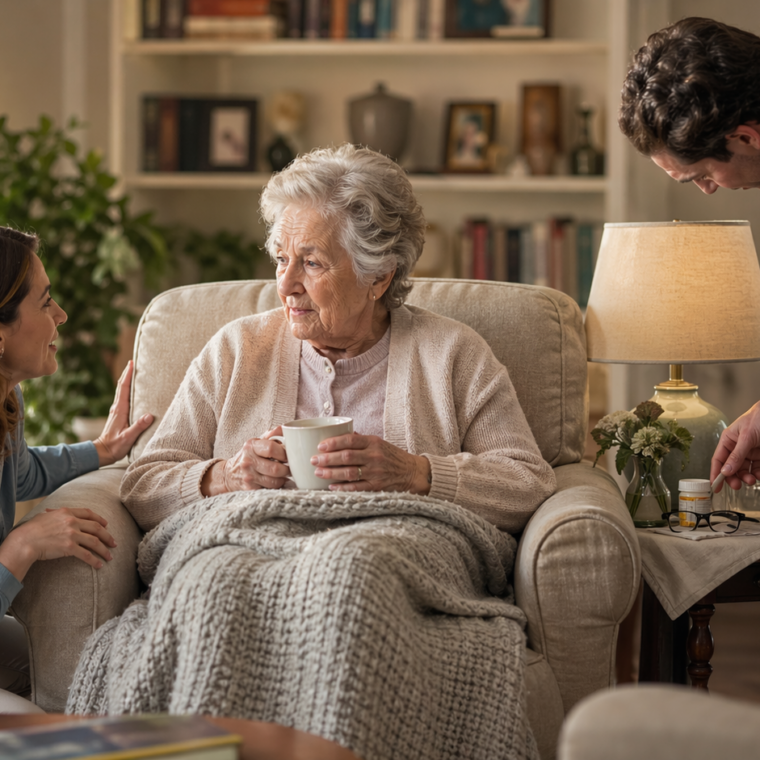
If your loved one is experiencing hallucinations and dementia, you don’t have to manage it alone. Our professional home care programs, especially services that include consistent companionship can provide reassurance, reduce anxiety, and create a safer, more structured environment at home. Our trained caregivers support daily routines and also offer emotional stability that helps to ease distressing episodes. In so doing, families have peace of mind and the support they need to better cope with these challenges.
How to respond when a loved one is hallucinating
This is the part that separates good caregiving from reactive caregiving.
When a loved one hallucinates, your first job is not to correct them. Your first job is to reduce distress and assess safety.
Start here:
1. Stay calm
If you sound alarmed, they may become more frightened. Use a slow, reassuring tone. Say things like, “I’m here with you,” or “You’re safe.”
2. Do not argue
Telling someone, “That’s not real,” usually does not solve the problem. It often makes them feel dismissed, confused, or defensive. A better response is, “I know you’re seeing something. I don’t see it, but I’m with you.”
3. Change the environment
Shadows, reflections, background noise, mirrors, and television content can all worsen misinterpretation. Improve lighting, reduce visual clutter, turn off disturbing programs, and move to a calmer room if needed.
4. Use gentle distraction
A walk, music, a snack, familiar conversation, or sitting in a brighter shared space can sometimes help the hallucination pass without confrontation.
5. Look for patterns
Do hallucinations happen at night? After poor sleep? When the room is dim? After medication changes? During illness? Tracking patterns helps doctors and caregivers act smarter, not just faster. This is especially important when dementia and hallucinations at night start to become more frequent.
When should families call the doctor?
Call the doctor promptly if:
- hallucinations are new
- symptoms are sudden or rapidly worse
- the person seems more confused than usual
- there was a recent illness or medication change
- the hallucination causes fear, aggression, or unsafe behavior
- the person may be dehydrated or unable to explain what feels wrong
Medication is not always the first answer. Major dementia-care sources recommend non-drug approaches first when possible. In some cases, medication may be considered, but antipsychotic drugs in older adults with dementia carry serious risks and must be weighed carefully with a physician.
Should in case your elderly loved one is showing new or worsening hallucinations, increased confusion, or signs of distress, it may be time to seek professional help. AngelsInstead’s highly trained caregivers can monitor changes in behavior, ensure proper hydration, assist with daily needs, and provide a calm, structured environment that helps to reduce fear and agitation. With our personal care support services, your family can respond more confidently to concerning symptoms and at the same time work alongside healthcare providers to keep your loved one safe and comfortable at home.
What this means for families at home
Hallucinations do not automatically mean a loved one is in immediate danger. But they do mean the care plan needs to become more intentional.
You may need:
- more supervision during vulnerable times of day
- calmer room setups and better lighting
- a medication review
- hydration reminders
- more structured routines
- in-home dementia support so family members are not managing every episode alone
That is where experienced home care can make a real difference. A trained caregiver can help reduce overstimulation, maintain routines, observe behavior changes, and give families breathing room during one of the most emotionally draining parts of dementia care.
If your loved one is experiencing hallucinations in dementia, you do not need to handle every frightening moment alone. Angels Instead provides compassionate in-home support that helps families create safer routines, reduce stress triggers, and respond more calmly to changing dementia behaviors. Reach out to Angels Instead to explore care that protects both your loved one’s dignity and your peace of mind.
FAQ Section
1. Do people with dementia hallucinate?
Yes. People with dementia can hallucinate, especially as the disease progresses. In Alzheimer’s, hallucinations are more often seen in moderate stages, while in Lewy body dementia they may appear earlier.
2. What stage of dementia is hallucinations?
In Alzheimer’s disease, hallucinations are commonly associated with the moderate stage. In Lewy body dementia, visual hallucinations can happen early.
3. Does Alzheimer’s cause hallucinations?
It can. Alzheimer’s-related brain changes can lead to hallucinations, but other causes like infection, dehydration, medication effects, or sensory problems should also be checked.
4. What is the difference between hallucinations and delusions?
A hallucination is sensing something that is not there. A delusion is believing something false is true. Both may occur in dementia.
5. What causes sudden onset hallucinations in elderly adults?
Sudden hallucinations in older adults can be linked to delirium, infection, dehydration, medication side effects, pain, or sensory problems. A sudden change should be medically evaluated.
6. Which dementia has hallucinations most often?
Hallucinations can occur in several dementias, but visual hallucinations are especially common and often early in Lewy body dementia.