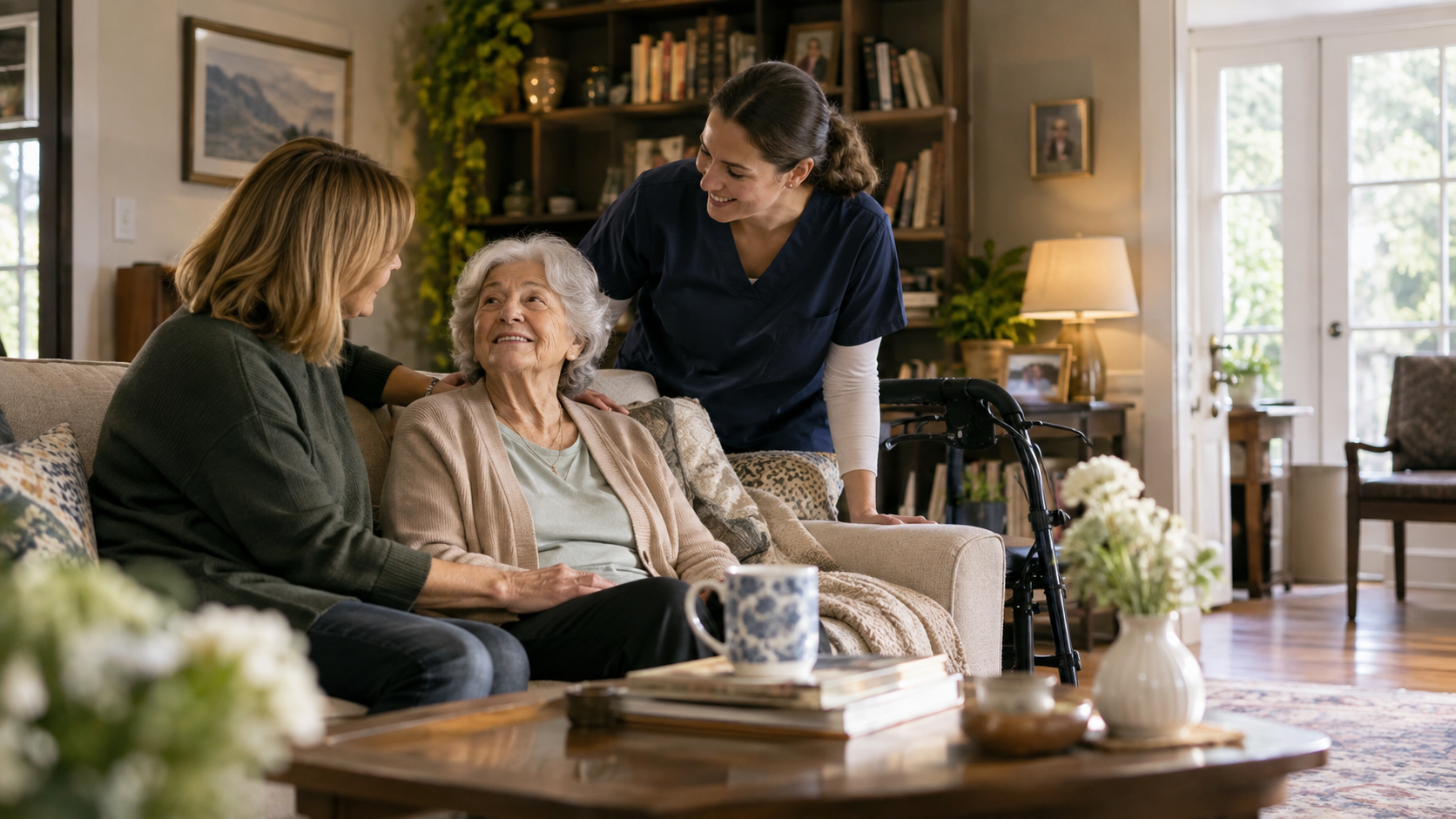


Caring for a loved one with Alzheimer’s disease or dementia at home is one of the most loving things a family can do. It can also become one of the most exhausting.
At first, families often try to handle everything themselves. They prepare meals, answer the same questions again and again, watch for wandering, help with bathing, and stay awake at night because they are afraid a parent or spouse may fall, turn on the stove, or try to leave the house.
Then one day, the family caregiver realizes something painful: “I cannot sleep because I am watching them all night.”
That is often the moment families begin searching for dementia care at home in Houston. Not because they love their loved one less, but because they love them too much to keep guessing, struggling, and carrying the weight alone.
Quick Answer: When Does Dementia Care at Home Become Too Much?
Dementia care at home becomes too much when safety, sleep, daily routines, or caregiver health begin to break down. Warning signs include wandering, nighttime confusion, missed meals, medication concerns, difficult personal care, repeated agitation, fall risks, and family caregiver exhaustion. Support at home can help families create safer routines without carrying everything alone.
Why Dementia Care at Home Is Different From Regular Senior Care
Dementia care is not just “watching someone.” That is the mistake many families make.
A loved one with dementia may look physically capable but still be unsafe alone. They may walk around the home but forget why. They may say they already ate when they missed a meal. They may become upset over something that seems small. They may ask the same question repeatedly because their brain cannot hold the answer.
Dementia care requires patience, routine, redirection, calm communication, and safety awareness. The goal is not to take away independence. The goal is to protect dignity while reducing unnecessary risk.
Alzheimer’s Association home safety guidance explains that safety measures and home adaptations can help a person living with Alzheimer’s remain in a familiar home or caregiver’s residence as abilities change.
Why Houston Families Should Not Wait Until a Crisis
CDC dementia caregiving statistics show that many adults with Alzheimer’s disease and related dementias receive care in their homes, and millions of U.S. adults provide unpaid care for someone with dementia.
That care is a powerful act of love. But it is also heavy when one person is trying to be a son, daughter, spouse, worker, driver, cook, safety monitor, and overnight caregiver at the same time.
The hard truth: many families wait too long before getting help. They wait until someone falls. They wait until a loved one wanders outside. They wait until the caregiver is physically and emotionally drained. Dementia care should not start only after a crisis.
Common Challenges Families Face With Alzheimer’s and Dementia at Home
Every family’s situation is different, but many Houston families see the same warning signs.
- Wandering or trying to leave the house
- Confusion at night
- Repeated questions
- Agitation or frustration
- Missed meals
- Medication reminder concerns
- Fall risks
- Stove or kitchen safety concerns
- Bathing, dressing, or toileting becoming difficult
- Caregiver guilt, exhaustion, or resentment
National Institute on Aging wandering guidance recommends practical safety steps such as keeping doors secured, using signs on doors, and considering door alarms or smart doorbells when appropriate.
These are not minor issues. They are signs that care may be becoming too much for one family member to manage alone.
A Real-Life Example: The Daughter Caring for Her Mother While Working Full-Time
Imagine a daughter in Houston caring for her mother with dementia. She works full-time. She checks on her mother before work. She calls during lunch. She comes home and prepares meals. At night, she sleeps lightly because her mother sometimes wakes up confused.
Her mother asks the same questions again and again. Sometimes she forgets to eat. Sometimes she gets upset because she believes she needs to “go home,” even though she is already home.
The daughter feels guilty for being tired. She feels afraid when she leaves the house. She feels lonely because other people do not fully understand what dementia caregiving feels like.
This is exactly the kind of family situation where in-home dementia care can help. A caregiver can provide companionship, personal care support, safer routines, and calm reassurance. The daughter is still involved. She is still loving her mother. But she is no longer carrying the full weight by herself.
That is not failure. That is responsible care.
How Angels Instead Supports Dementia Care at Home in Houston
Angels Instead supports families by focusing on practical, compassionate, non-medical home care. The process should begin with understanding the person, the home environment, and the pressure points affecting the family.
1. Consultation
The first step is understanding what is happening at home. Is the loved one wandering? Are nights difficult? Are meals being missed? Is personal care becoming stressful? Is the family caregiver exhausted? This conversation helps identify the real needs, not just the obvious tasks.
2. Home Safety Review
National Institute on Aging home safety tips recommend that caregivers keep thinking about home safety as the person’s behavior and abilities change. For dementia care, this may include cluttered walkways, stove safety, bathroom safety, nighttime confusion, poor lighting, and wandering risks.
3. Personalized Care Plan
No two dementia clients need exactly the same support. Some need companionship and supervision. Others need help with personal care. Some families need daytime support. Others need relief because nights have become overwhelming.
A practical care plan may include:
- companionship care for calm presence, conversation, and familiar activities
- personal care assistance for bathing, grooming, dressing, toileting, and hygiene support
- respite care so family caregivers can rest while their loved one remains supported
- mobility assistance for walking, transfers, wheelchair help, or everyday movement
- live-in caregivers when families need overnight or around-the-clock support
- Meal reminders and routine support
- Calm redirection and safety-focused supervision
The care plan should be practical, predictable, and simple. Dementia care works best when the routine feels familiar and calm.
Companionship: More Than Just Keeping Someone Company
For someone living with dementia, companionship can reduce loneliness, confusion, and emotional distress. A compassionate caregiver can sit with your loved one, talk with them, guide them through familiar activities, and help them feel seen.
This may include looking through photos, folding towels, listening to music, taking a safe walk, or simply offering a calm presence. The point is not to force conversation or correct every memory mistake. The point is to create comfort.
Personal Care With Patience and Respect
Personal care can become one of the hardest parts of dementia caregiving. Bathing, grooming, dressing, and toileting may trigger fear, embarrassment, or agitation. A loved one may refuse help because they do not understand what is happening.
Good dementia care uses calm communication, patience, routine, and redirection. Instead of arguing, the caregiver slows down. Instead of forcing, the caregiver reassures. Instead of overwhelming the person with long explanations, the caregiver uses simple, gentle language.
For families, this can reduce daily conflict and emotional stress.
Practical Dementia Care Tips Families Can Use at Home
Families do not need to do everything perfectly. Small, consistent changes can make home care safer and calmer.
Keep routines simple
Dementia often becomes harder when the day feels unpredictable. Try to keep meals, bathing, rest, and bedtime around the same time each day.
Remove common hazards
Clear walkways. Reduce clutter. Improve lighting. Keep dangerous items out of reach. Pay close attention to the kitchen, bathroom, stairs, and entrances.
Use calm language
Speak slowly. Use short sentences. Avoid arguing. If your loved one is confused, focus on reassurance before correction.
Redirect instead of confronting
If your loved one wants to “go home,” arguing may increase distress. A calmer response might be: “You are safe here. Let’s sit together for a moment.” Then redirect to a familiar activity.
Watch for caregiver burnout
National Institute on Aging caregiver guidance explains that caregiving can be meaningful, but it can also be stressful. If you are losing sleep, feeling constantly anxious, or becoming frustrated more often, that is not a character flaw. It is a signal that support is needed.
When Should a Family Get Help for Dementia Care?
Families should consider help before the situation becomes unsafe. Dementia home care may be helpful when:
- Your loved one wanders or tries to leave the house
- You are afraid to leave them alone
- They miss meals or forget basic routines
- They become confused at night
- You are losing sleep to monitor them
- Personal care has become difficult
- You feel guilty, exhausted, or overwhelmed
- You worry about stove safety or falls
- You are balancing caregiving with full-time work
The strongest families are not the ones who do everything alone. They are the ones who know when support is needed.
Can Someone With Dementia Stay at Home?
In many cases, yes, especially when the home is adapted and the person has appropriate support. Familiar rooms, routines, smells, and voices may help reduce confusion. But staying at home safely requires planning.
That may include removing hazards, building routines, providing supervision, and bringing in trained support. As dementia progresses, care needs may change. Families should continue working with healthcare professionals for medical guidance.
Angels Instead provides non-medical home care support. This does not replace diagnosis, treatment, or medical advice from a physician.
Key Takeaway
Dementia care at home becomes too much when safety, sleep, daily routines, or caregiver health start breaking down. Houston families do not have to wait for a crisis. With the right home safety planning, personalized support, and compassionate caregiving, families can protect their loved one’s dignity while also protecting themselves from burnout.
Ask Angels Instead About Dementia Care at Home in Houston
If your loved one is living with Alzheimer’s disease or dementia and home care is becoming harder, Angels Instead can help you take the next step with compassion and clarity. Whether your family needs companionship, personal care, safety-focused support, respite care, or a personalized care plan, explore Angels Instead’s home care services or contact Angels Instead to discuss support options for your loved one.
You do not have to wait for a crisis. Ask Angels Instead about dementia care at home in Houston and request a personalized care plan for your family.
Medical Disclaimer
Angels Instead provides non-medical home care services. This article is for general educational purposes only and is not medical advice. Angels Instead care does not replace medical diagnosis, treatment, emergency care, medication management from a licensed clinician, or professional medical advice. Families should consult a qualified healthcare provider for medical concerns related to Alzheimer’s disease, dementia, medications, behavioral changes, or safety risks.
Frequently Asked Questions
When should a family get help for dementia care?
A family should consider help when caregiving begins affecting safety, sleep, work, or emotional health. Warning signs include wandering, nighttime confusion, missed meals, difficult personal care, fall risks, and caregiver exhaustion.
Can someone with dementia stay at home?
Many people with dementia can remain at home when the environment is adapted, routines are consistent, and appropriate support is in place. As the condition progresses, care needs should be reviewed regularly with healthcare professionals and trusted care providers.
How does home care help Alzheimer’s patients?
Home care helps by providing companionship, personal care support, routine, safety awareness, calm redirection, and family caregiver relief. It does not replace medical treatment, but it can support daily life at home.
What does a dementia caregiver do?
A dementia caregiver may help with companionship, personal care, meal reminders, mobility support, safe routines, and supervision. A good caregiver also uses patience, calm communication, and redirection to reduce distress.
Is dementia care only for advanced stages?
No. Families often benefit from dementia care earlier, especially when routines start breaking down, safety concerns appear, or the family caregiver begins feeling exhausted.
Does Angels Instead provide dementia care in Houston?
Yes. Angels Instead offers Alzheimer’s and dementia care support for Houston and Texas families through compassionate non-medical home care, personalized routines, companionship, personal care, and family caregiver support.
What is the difference between dementia care and regular senior care?
Regular senior care may focus on daily support, while dementia care requires added patience, predictable routines, safety awareness, redirection, and calm communication for memory-related challenges.