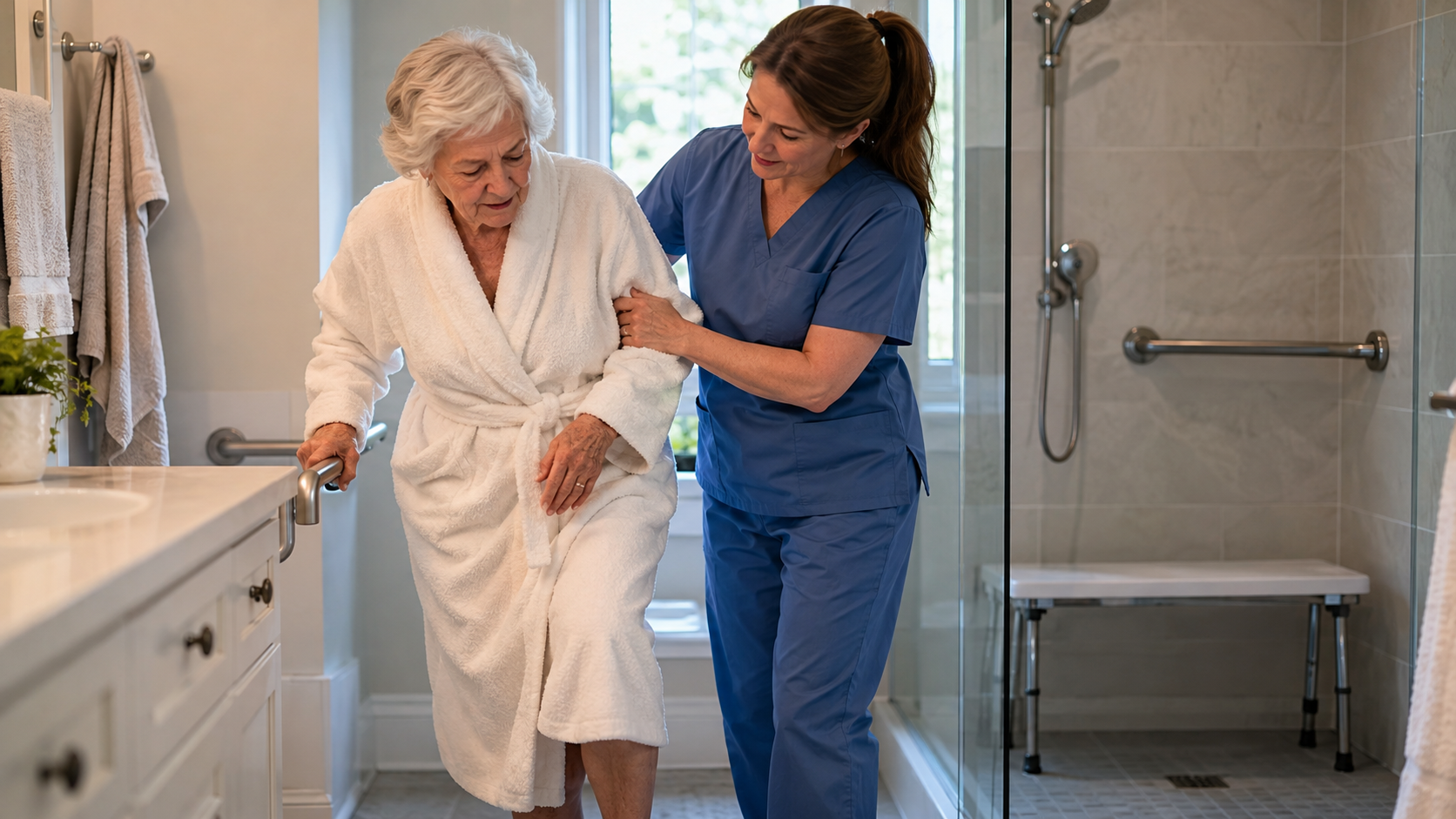


Quick Answer: ALS (Amyotrophic Lateral Sclerosis) home care can support everyday life when mobility, dressing, bathing, toileting, meals, communication, household routines, or family caregiver coverage become harder to manage. Because ALS is progressive and affects people differently, the home care plan should be reviewed as needs change. Nonmedical caregivers can follow established routines and provide approved daily living support, but respiratory care, swallowing management, therapy, equipment prescription, medication decisions, and other clinical services remain with qualified professionals.
At a Glance: A Changing ALS Care Plan
- Preserve the tasks the person still wants and is able to do.
- Increase help only where the person’s daily function or preferences have changed.
- Follow established mobility, transfer, communication, and equipment instructions.
- Keep the person directly involved in choices about personal care and daily routines.
- Update the home care plan before a new need becomes a repeated coverage problem.
- Keep clinical treatment, rehabilitation, respiratory care, swallowing care, and emergency decisions with the appropriate professionals.
The National Institute of Neurological Disorders and Stroke ALS booklet explains that ALS affects nerve cells that control voluntary muscle movement and can progressively affect walking, speaking, swallowing, breathing, and other functions. It also describes rehabilitation and assistive strategies as individualized parts of care.
1. Plan Around the Person, Not a Fixed ALS Template
Two people living with ALS may need very different help at home. One person may still handle most personal care but need assistance with household tasks. Another may need hands-on help with dressing and transfers while continuing to make every decision about the day. Communication may be unchanged for one person and a major planning need for another.
A useful home care plan starts with a current function. Document what the person does independently, where setup or standby help is useful, which tasks require direct assistance, and which activities belong with clinicians or therapists.
Because ALS can change over time, the plan should not remain frozen simply because it worked several months ago. Review it when mobility, hand function, communication, personal care, eating routines, equipment, or family coverage changes.
Changing Needs Snapshot
- Walking or transfers now take more time or assistance.
- Fasteners, grooming tools, or bathing routines are harder to manage.
- Fatigue changes how much the person wants to do during one part of the day.
- Speech changes make it important to document a preferred communication method.
- Meal setup or eating routines require more assistance within the established clinical plan.
- A spouse or family caregiver is providing more physical help or more hours than before.
2. Personal Care Should Preserve Choice and Privacy
ALS can affect the strength and coordination needed for bathing, dressing, grooming, toileting, and other self care. Needing physical assistance does not remove the person’s right to choose when a routine happens, how help is provided, what clothing is worn, or who is present.
Angels Instead’s personal care services currently include bathing, dressing, grooming, toileting, mobility, meals, light housekeeping, and laundry. The exact level of assistance should come from the individualized care plan rather than assumptions about the diagnosis.
Explain assistance before touching the person. Allow time for the person to respond. If a task can still be completed independently with setup or more time, do not automatically take it over simply because doing it for the person would be faster.
Respectful Personal Care Checklist
- Ask how the person wants the routine completed today.
- Prepare supplies before the routine begins.
- Support the difficult step without taking over every step.
- Protect privacy during bathing, dressing, and toileting.
- Use established equipment and assistance methods.
- Report a meaningful change rather than improvising a new clinical solution.
3. Mobility Support Must Follow the Established Method
ALS can affect walking, balance, limb strength, and the ability to reposition or transfer. As those abilities change, families may need more help with getting out of bed, moving between surfaces, using a wheelchair, or navigating the home.
A nonmedical caregiver should follow the transfer and mobility method already established for the person. The caregiver should not invent a new lifting technique, change an assistive device, or prescribe exercises.
Angels Instead’s mobility assistance service describes walking support, wheelchair assistance, assistive devices, transfers, transportation assistance, and range of motion activity when recommended by a healthcare professional.
NINDS notes that physical and occupational therapy can help people with ALS maintain function and independence and that occupational therapists may recommend assistive devices for daily living. Those professional recommendations should guide the home routine.
Mobility Check
- Is the current walking or transfer method still working reliably?
- Has the person begun needing more assistance than the care plan describes?
- Is new equipment being used that caregivers need training to understand?
- Does fatigue change the amount of help needed later in the day?
- Has there been a fall, near fall, new weakness, pain, or another meaningful change that should be reported?
4. Communication Preferences Should Be Written Into the Care Plan
Speech can become more difficult for some people with ALS even while their thinking and preferences remain clear. A caregiver who rushes, finishes sentences, or directs questions only to a family member can unintentionally take control away from the person receiving care.
Ask what communication method works best. It may involve speech, writing, a tablet, a communication board, eye based technology, yes or no signals, or another system selected with the clinical and rehabilitation team.
NINDS describes speech therapy, computer based speech synthesizers, eye tracking systems, and other communication technologies as options that may help some people with ALS. A home caregiver can use the established system but should not choose or prescribe the device.
Communication Preferences
- Speak directly to the person receiving care.
- Allow enough time for a response.
- Confirm the preferred method for yes, no, urgent needs, and longer conversation.
- Keep communication equipment within agreed reach when appropriate.
- Do not assume speech difficulty means the person cannot understand or make choices.
- Report when the established communication method is no longer working well.
5. Meals Require a Clear Boundary Between Daily Support and Swallowing Care
ALS can affect the muscles involved in chewing and swallowing. That makes meal support a particularly important area for clear clinical instructions. ASHA guidance on adult dysphagia identifies ALS as a condition that can cause swallowing difficulty, reinforcing why swallowing assessment and treatment decisions belong with qualified professionals.
A nonmedical caregiver may prepare food, set up the meal, provide approved assistance, and follow the person’s established eating routine. The caregiver should not independently change food texture, liquid consistency, positioning instructions, feeding techniques, or swallowing precautions.
If the person’s speech language pathologist, dietitian, physician, or other qualified clinician has provided specific meal or swallowing instructions, those directions should be reflected accurately in the care plan.
New choking, coughing during meals, difficulty swallowing, unexpected weight change, or another meaningful change should be reported according to the clinical plan. An emergency requires emergency medical services.
Meal Support Boundary
- Prepare and serve meals according to the established plan.
- Use only the texture, consistency, positioning, and assistance instructions provided for the person.
- Do not create a swallowing strategy based on general internet advice.
- Report changes in eating or swallowing through the agreed clinical pathway.
- Use emergency services when there is an immediate threat to life or safety.
6. Respiratory Care Remains a Clinical Responsibility
ALS can eventually affect the muscles used for breathing. Respiratory symptoms, ventilatory support, cough assistance, suction, oxygen questions, and respiratory equipment require qualified clinical guidance and training. The ALS Association respiratory guidance explains that ALS can weaken breathing muscles and that respiratory support should be planned with the ALS care team.
A nonmedical home caregiver should not change respiratory settings, prescribe oxygen, decide whether breathing symptoms are caused by ALS, or substitute for nursing or respiratory therapy.
The home care plan can document whom to call, which observable changes the family wants reported, and what emergency instructions have been provided. If the person has severe breathing difficulty or another immediate medical emergency, call 911.
Clinical Boundary
- ALS diagnosis and treatment decisions
- Medication administration or changes outside authorized nonmedical reminder scope
- Respiratory assessment and respiratory equipment management
- Swallowing evaluation and clinical feeding recommendations
- Physical, occupational, or speech therapy
- Prescription or selection of mobility and communication equipment
- Emergency medical treatment
7. Family Caregiver Relief Should Grow With the Workload
ALS affects the person living with the condition, but it can also steadily increase the workload carried by a spouse, partner, adult child, or other family caregiver. More help with transfers, personal care, meals, household routines, communication, and appointments can gradually consume more of the day.
Families do not need to wait until the primary caregiver is exhausted before adding relief. Respite can be planned around the parts of the week that create the most strain, while keeping the person with ALS involved in the schedule and caregiver match.
Angels Instead’s respite care service provides temporary in home support intended to give family caregivers time away while agreed daily routines continue.
Respite does not replace nursing, rehabilitation, respiratory care, or other clinical services. It covers the nonmedical daily living responsibilities included in the care plan.
Family Caregiver Relief Check
- Is one family member handling nearly every personal care routine?
- Are transfers or mobility support becoming physically difficult for the family?
- Is the caregiver losing sleep or repeatedly cancelling work, appointments, or personal needs?
- Would a predictable respite block solve more than occasional last minute help?
- Does the backup caregiver know the person’s current communication and mobility routines?
8. Review the Care Plan Before Needs Outgrow It
A progressive condition requires a care plan that can change. Waiting until a caregiver can no longer complete a transfer, communication breaks down, or family coverage collapses makes the transition harder for everyone.
Review the plan when daily function changes, new equipment is introduced, the rehabilitation team changes instructions, the family caregiver workload increases, or the person wants a different level of assistance.
Angels Instead’s home care planning process describes consultation, care plan development, caregiver matching, and ongoing support. For ALS, the practical goal is to keep the nonmedical plan aligned with the person’s current daily routine and the professional instructions already in place.
Questions to Ask an ALS Home Care Provider
- How will the person with ALS participate in the assessment and caregiver match?
- Can caregivers follow an established transfer, mobility, communication, and personal care plan?
- How are changes in function documented and reported?
- How does the agency handle needs that move beyond nonmedical caregiver scope?
- Can respite hours be added when family caregiver workload increases?
- How are substitute caregivers briefed on communication and mobility preferences?
- What current visit minimums, scheduling rules, rates, and backup procedures apply?
Frequently Asked Questions
What can home care do for someone with ALS?
Depending on the care plan, nonmedical home care may support bathing, dressing, grooming, toileting, meals, mobility, household routines, companionship, communication preferences, transportation, and family caregiver respite.
Does ALS home care replace nursing or therapy?
No. Home care supports daily living. Nursing, respiratory care, swallowing evaluation, physical therapy, occupational therapy, speech therapy, medical treatment, and emergency care require the appropriate qualified professionals.
Can a caregiver help with transfers and a wheelchair?
Yes, when the assistance is included in the care plan, within caregiver training and agency scope, and follows the person’s established transfer and mobility method.
What if speech becomes difficult?
Document the person’s preferred communication method and allow enough time for responses. Communication devices and clinical communication strategies should be selected with the appropriate rehabilitation professionals.
Can a home caregiver decide what food texture is safest?
No. Swallowing and food texture decisions can be clinical safety issues. Follow the person’s established recommendations from qualified professionals.
When should an ALS care plan be updated?
Review it whenever mobility, self care, communication, eating routines, equipment, family caregiver coverage, or professional instructions change.
The Bottom Line
ALS home care works best when it changes with the person rather than waiting for a crisis. The plan can preserve independence where possible, add respectful help as daily tasks become harder, support the communication method the person prefers, and give family caregivers meaningful relief. Clinical treatment, rehabilitation, respiratory care, swallowing care, and equipment decisions remain with qualified professionals.
If ALS is changing the amount of daily support your family needs, contact Angels Instead to discuss personal care, mobility, respite, caregiver matching, and a nonmedical care plan built around the person’s current routine.