

Quick answer: Arrange nonmedical home care before an older parent moves to Houston. Confirm the new address is in the provider’s service area, identify daily tasks that need help, prepare a written handoff of routines and contacts, and schedule a conversation about caregiver availability. Nonmedical home care can assist with everyday activities, but it does not replace medical care or guarantee continuity of services across cities.
The First Decision: What Must Be Ready on Arrival?
Moving an aging parent to Houston may put family closer together, but a new address also changes the practical details of care. The familiar pharmacy, grocery store, neighbors, and ride arrangements may no longer be available. Even if a parent feels well, the first week can be tiring when boxes, appointments, and unfamiliar rooms compete for attention.
The useful question is not simply “Do we need a caregiver?” It is “Which daily activities could become difficult during the move, and who will handle them on the first day?”
- Confirm the exact Houston area address and building entry requirements.
- List the parent’s preferred bathing, dressing, meal, mobility, and companionship routines.
- Identify who will be present on moving day and during the first week.
- Arrange any needed clinical appointments separately from nonmedical caregiver visits.
- Confirm the agency’s availability, visit lengths, and approved tasks before making promises.
1. Check the New Address Before Choosing a Care Schedule
A company that serves Houston may not serve every surrounding community or ZIP code. Give the care coordinator the full new address and expected move date. Ask about the geographic coverage, available visit windows, minimum visit length, and whether help can begin on the desired date. Do not assume that a caregiver assigned to another city can automatically transfer.
For an apartment, senior community, or gated neighborhood, also confirm entry procedures, parking, elevator access, and the person authorized to share keys or access codes. Keep sensitive access information within the agency’s approved process.
2. Build a Care Handoff That Is About Daily Life
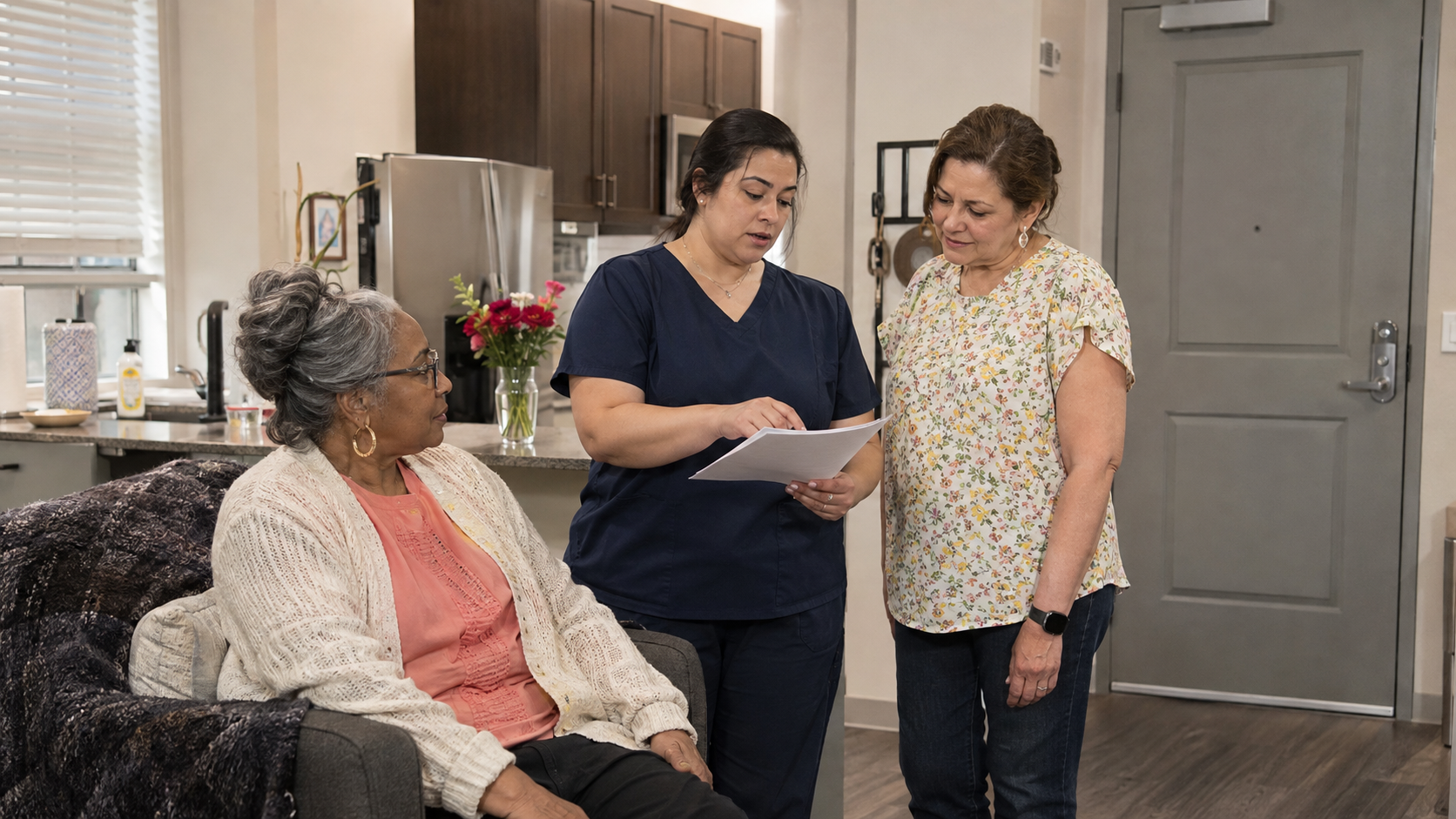
A concise handoff can prevent the new caregiver from guessing what the older adult wants. Start with the person’s own preferences and obtain consent before sharing information. The handoff should cover what the parent does independently, where help is welcome, and which routines should stay familiar.
- Preferred wake time, bathing and dressing routine, and food preferences.
- Mobility equipment already used and any clinician instructions relevant to safe assistance.
- Important household contacts, emergency contacts, and who can receive updates.
- Upcoming appointments, ordinary transportation needs, and pharmacy location.
- Communication preferences, language needs, and activities the parent enjoys.
Do not use the handoff as an informal medical order. Medication changes, therapy instructions, and clinical assessments belong to qualified healthcare professionals.
For an overview of routine assistance, see Angels Instead’s personal care services. Families should confirm which tasks are included in their individual arrangement.
3. Arrange Healthcare Continuity Separately From Home Care
Moving can interrupt medical follow-up if families wait until after arrival to look for new clinicians. Before the move, ask the current medical team about records, prescription continuity, referrals, and which appointments should be scheduled after relocation. The older adult or authorized representative should decide what records may be shared. For a practical appointment preparation checklist, see MedlinePlus guidance on preparing for a doctor visit. It recommends writing down questions and bringing a list of medicines, vitamins, and supplements.
A move may affect Medicare Advantage or prescription drug plan options, depending on the new address and current plan. Medicare explains the circumstances and timing for Special Enrollment Periods when you move. Families should contact their plan to confirm network coverage, deadlines, and any changes needed. Confirm address updates with Social Security and your plan.
A home caregiver may help organize appointment dates, prepare a ride plan, and assist with ordinary activities around visits. They should not interpret medical records, recommend a treatment, or decide whether a prescription should change.
4. Plan the First 72 Hours at the New Home
The first three days are often a logistics problem. Prioritize essential rooms and supplies before unpacking everything. Keep commonly used clothing, personal care items, food, phone chargers, and mobility aids easy to find. Make sure the older adult knows how to reach family members and ask for help.
- Arrival day: verify entry, unpack essentials, prepare a meal, and confirm who is staying or visiting.
- Day two: review the morning routine, test ordinary transportation plans, and identify household tasks that need support.
- Day three: ask what feels unfamiliar or tiring, confirm upcoming appointments, and adjust the practical care schedule.
These are planning examples, not clinical recovery instructions. If the parent has new confusion, breathing difficulty, chest pain, or other concerning symptoms, seek appropriate medical help rather than assuming the move caused them.
5. Decide Whether Family, Home Care, or Both Will Cover Each Task
Relocation can bring relatives closer without making them available every hour. A daughter may help after work but need morning assistance for her father. Another family may need meal preparation on weekdays while handling weekends themselves. Write down responsibilities rather than assuming someone will be there.
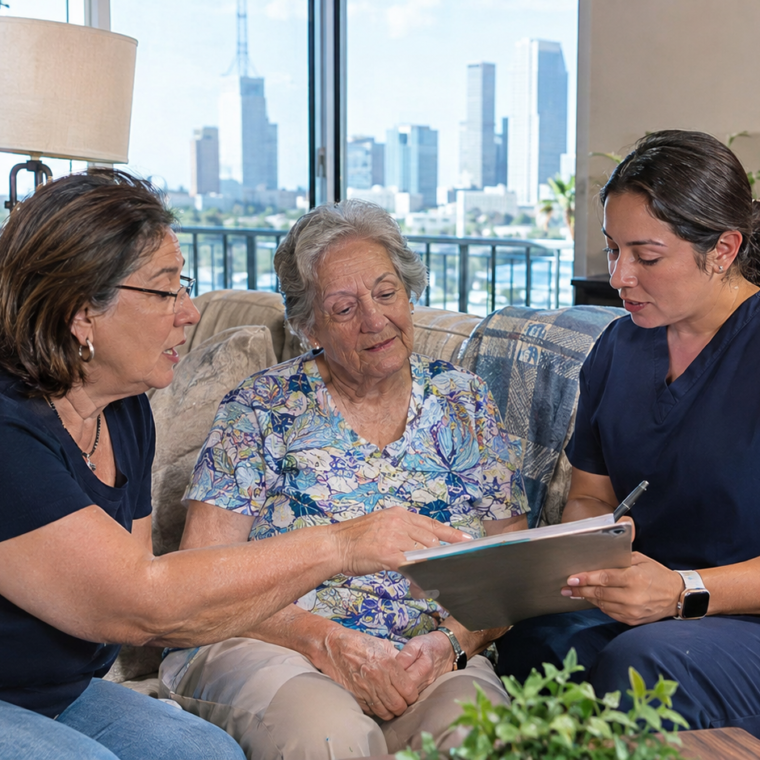
Consider a simple three-column plan: task, responsible person, and backup. Include bathing or dressing assistance, meals, laundry, errands, companionship, and transportation coordination. Review it after the first week.
Angels Instead’s companionship care information can help families consider the social and routine support an older adult may welcome after moving. Confirm actual service options with the agency.
6. Make Transportation and Community Orientation Practical
A new city means unfamiliar routes. Before the first appointment, verify the destination, pickup arrangements, mobility needs, and who will accompany the senior if necessary. Ask whether the caregiver is permitted to drive, ride along, or simply help the person prepare. These are different services and should not be assumed.
Families can also help the parent become familiar with nearby groceries, community activities, and trusted contacts at their own pace. Do not pressure a new arrival to socialize immediately; ask what they would find comfortable.
For more details on planning appointments and rides, read Angels Instead’s senior transportation assistance guide.
7. Confirm Caregiver Availability Before the Move
Ask the agency for a proposed start date, the tasks that can be included, visit frequency, cancellation rules, and how schedule changes are handled. If the older adult has a preference about communication or caregiver matching, share it as a request rather than assuming a specific match can be guaranteed.
If the parent needs skilled nursing, rehabilitation, medication administration, or another clinical service, ask the healthcare team about qualified providers. Nonmedical home care should not be described as a substitute.
A Seven Day Houston Relocation Checklist
- Verify the new address and service area with the home care provider.
- Ask the parent which routines they want to preserve.
- Prepare a consent-based daily care handoff and emergency contact list.
- Arrange medical records, prescriptions, and healthcare follow up with clinicians and the insurer.
- Check building entry, household essentials, and safe access to frequently used items.
- Confirm who handles meals, personal care, rides, and companionship during the first week.
- Review the care plan with the parent after several days and request changes if needed.
How Angels Instead Can Help Families Moving to Houston?
Angels Instead provides non medical in-home support for older adults and families in Houston and other communities it serves. Depending on the agreed care plan, support may include bathing, dressing, meal preparation, light housekeeping, companionship, and everyday appointment logistics. The agency does not provide medical diagnosis or treatment through non medical caregiving.
If your parent is moving to Houston, contact Angels Instead to discuss a home care plan. Call (281) 800-1800 with the move date, new address, and the daily tasks that need attention. Ask the care coordinator to confirm availability and services before finalizing the schedule.
Frequently Asked Questions
When should I arrange home care before my parent moves to Houston?
Begin the conversation before the move once the address and expected arrival date are known. Availability and start dates must be confirmed with the agency.
Can a caregiver start on moving day?
Possibly, depending on the agency’s schedule, care plan, location, and agreed tasks. Do not assume same-day availability.
Can an existing caregiver transfer from another city?
Not automatically. Coverage, employment arrangements, and agency service areas vary. Ask the current and new providers about continuity.
Can home care help my parent settle into an apartment?
Non Medical caregivers may help with agreed daily activities and light household tasks. Building entry rules and the agency’s permitted duties must be confirmed.
Who transfers medical records and prescriptions?
The older adult, authorized representative, healthcare team, pharmacy, and insurer coordinate medical continuity. A non medical caregiver can help organize ordinary logistics, not make clinical decisions.
Does Medicare pay for nonmedical home care after a move?
Medicare generally does not cover custodial care when it is the only care needed. Eligibility for other benefits depends on the individual program and circumstances; verify directly with the payer.
What if my parent needs more help after arriving?
Review the daily care plan, contact the agency about additional availability, and seek clinical advice for new health concerns.
What should families confirm about the first caregiver visit?
Confirm the exact address, authorized entry method, scheduled arrival window, approved daily tasks, family contact, and what happens if the parent cannot answer the door. Ask the agency how changes or missed visits are handled.
The Bottom Line
The strongest relocation plan starts before the boxes arrive. Confirm where care can be delivered, identify who handles everyday tasks, coordinate medical continuity separately, and review the arrangement once your parent has settled into Houston. Home care should support the older adult’s choices while making the transition easier for the family.