
Quick Answer: If your aging parent is struggling with stairs, start by identifying what has changed, whether the difficulty appeared suddenly, and which daily routines now depend on climbing steps. Check for household hazards, observe whether pain, fatigue, balance, or vision may be affecting movement, and seek professional advice when needed. Nonmedical home care can help with personal care, meals, laundry, and other daily tasks, reducing unnecessary trips between floors while preserving independence.
At a Glance: Six Things Families Should Check First
- Recent changes: Has stair climbing become difficult suddenly or gradually?
- Physical difficulties: Does your parent report pain, weakness, dizziness, fatigue, or difficulty balancing?
- Stair conditions: Are the steps clear, properly lit, and equipped with secure handrails?
- Daily routines: Are essential rooms, such as the bathroom or bedroom, on another floor?
- Existing guidance: Has a healthcare professional provided mobility instructions?
- Practical assistance: Could help with meals, laundry, or personal care reduce unnecessary trips?
These questions help families identify what needs attention before deciding whether home modifications, professional assessment, or additional daily support may be appropriate.
Why Stairs Can Become Difficult for Older Adults
Your parents may have climbed the same staircase for decades without a second thought. Then something changes. Perhaps they begin gripping the handrail more tightly, pause halfway upstairs, avoid carrying laundry, or use a downstairs bathroom instead of their usual one.
These changes deserve attention, but they do not automatically mean your parent must stop using the stairs or move to another home. Stair difficulty may be associated with reduced strength, balance problems, joint pain, fatigue, vision changes, medication effects, or hazards in the home.
The Centers for Disease Control and Prevention identifies several factors that contribute to falls among older adults. Families should discuss changes in mobility and fall risk with a healthcare professional rather than assume they are unavoidable consequences of aging.
The important question is not simply whether your parent can climb stairs. It is how stair difficulty is affecting their safety, daily routines, and ability to remain independent.
1. Identify What Has Changed Before Making Decisions
When an elderly parent starts having trouble climbing stairs, try to understand what is different from their usual routine. Ask questions without making them feel tested.
Questions worth asking
- Is climbing upstairs harder than walking downstairs, or vice versa?
- Does the difficulty happen every time or mainly when your parent is tired?
- Has there been a recent fall or near fall?
- Does your parent experience pain, dizziness, or unusual shortness of breath?
- Are they avoiding stairs because they feel unsteady?
- Do they struggle when carrying groceries, laundry, or other objects?
- Has the difficulty appeared suddenly?
For example, someone who walks comfortably on level ground but avoids carrying laundry upstairs may have a different support need from someone who becomes unsteady without carrying anything. Both situations deserve attention, but the response may differ.
When to seek medical attention?
A new or significant change in walking, strength, or balance should be discussed promptly with a healthcare professional. Sudden one sided weakness, facial drooping, speech difficulty, severe breathing problems, chest pain, or sudden inability to walk may indicate an emergency. Call 911 in the United States. After a fall or injury, do not encourage another stair trip simply to test ability.
2. Check the Staircase for Common Safety Hazards
Before considering major renovations, inspect the staircase itself. A familiar staircase can become more challenging when lighting, surfaces, or handrails are inadequate.
The National Institute on Aging home fall prevention guidance recommends addressing hazards involving stairs, flooring, lighting, and handrails.
Stair safety checklist for families
- Keep stairs and landings free of shoes, bags, boxes, and other objects.
- Check that lighting works and switches are accessible at both ends.
- Check whether handrails are secure and usable; seek qualified help for repairs or additions.
- Look for broken or uneven steps and loose carpet edges.
- Check whether the older adult can see step edges clearly.
- Move frequently used supplies to accessible storage when appropriate.
- Arrange a professional home safety assessment when concerns remain.
For more detail, consult the CDC home fall prevention checklist. This family checklist is not a professional safety certification. Structural repairs, electrical work, handrail installation, and equipment selection belong with qualified professionals.
3. Identify Which Daily Routines Depend on the Stairs
Stair difficulty often affects more than movement between floors. It can change how an older adult manages bathing, meals, laundry, sleep, and household responsibilities. Consider a home where the bedroom is upstairs, the kitchen downstairs, and the laundry in the basement.
Map the daily routine
- Morning routine: Does getting to the bathroom or kitchen require stairs?
- Bathing and dressing: Is the only suitable bathroom on another floor?
- Meals: Does your parent need stairs to prepare or eat food?
- Laundry: Are they carrying baskets between floors?
- Bedtime: Is climbing upstairs harder when tired?
- Errands: Are entrance steps becoming an obstacle?
- Household chores: Are repeated trips needed to collect supplies?
This exercise distinguishes an accessibility concern from a daily workload concern. Help with laundry may reduce trips for someone following established mobility guidance. But if an essential bathroom cannot be reached safely, the family may need professional assessment of the living arrangement.
4. Reduce Unnecessary Trips Without Removing Independence
When stairs become difficult, the goal is not to stop every activity. Identify tasks that can be simplified, postponed, or completed with assistance.
- Complete laundry and light housekeeping included in the care plan.
- Prepare meals and clean up afterward.
- Help with grocery shopping and errands.
- Organize commonly used household supplies.
- Support established bathing and dressing routines.
- Carry routine household items when appropriate to caregiver duties.
- Report changes that may affect the existing care plan.
These services reduce workload, not medical risk. They do not substitute for medical evaluation or mobility rehabilitation. Preserve activities your parent values while reducing avoidable demands.
5. Recognize When Personal Care Is the Bigger Concern
Sometimes stairs are the visible problem, but access to essential personal care is the bigger concern. A parent may avoid bathing because the only shower is upstairs, delay changing clothes, or rush their morning routine.
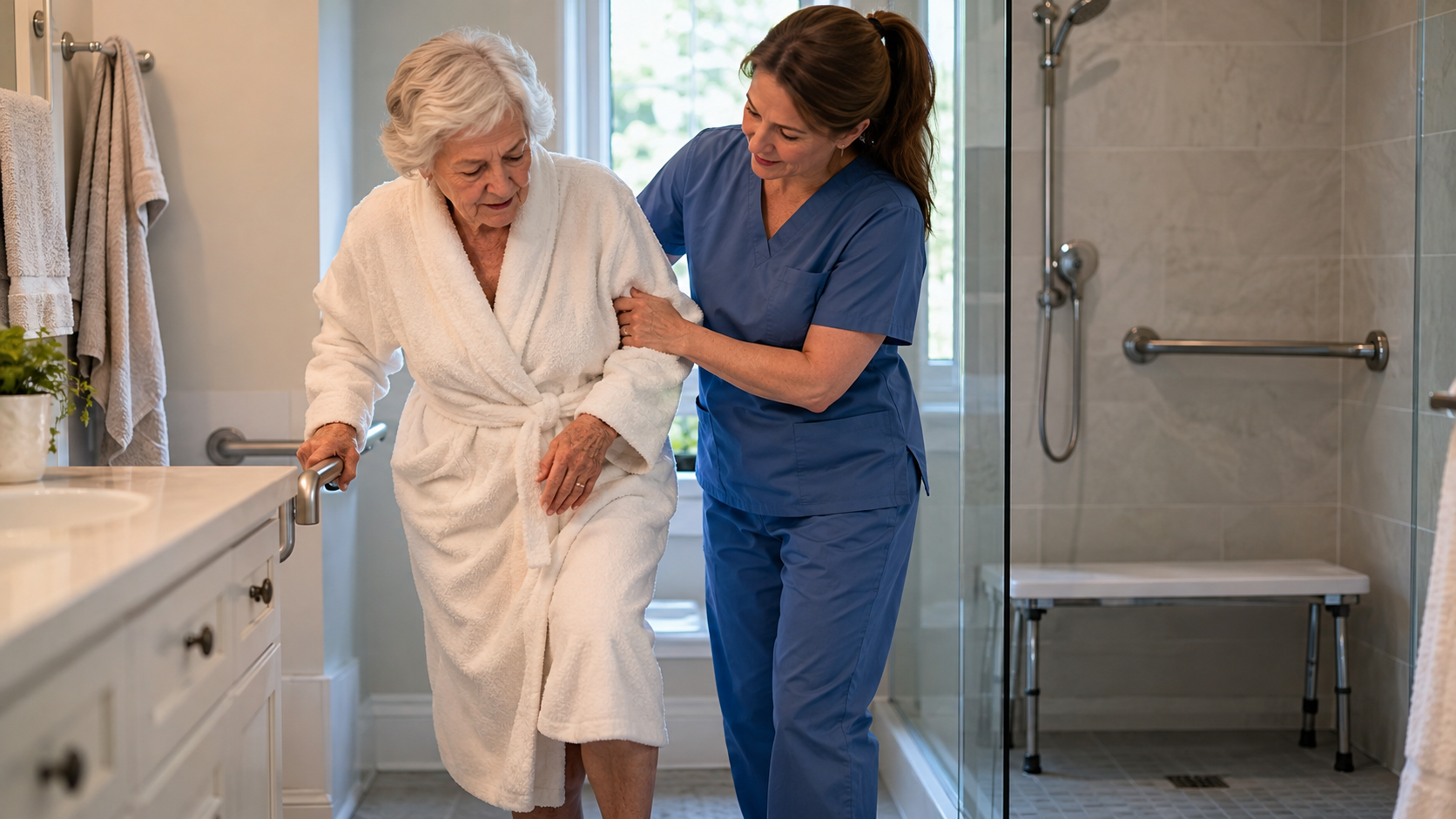
Angels Instead provides personal care assistance that may include bathing, dressing, grooming, toileting, and mobility support within an individualized plan. A caregiver may prepare supplies and provide approved assistance, but must not improvise unsafe stair transfers or introduce new mobility techniques.
When access to an essential room is unsafe, seek professional guidance rather than relying on a caregiver to overcome the problem through physical assistance alone.
6. Know When a Professional Mobility Assessment Is Needed
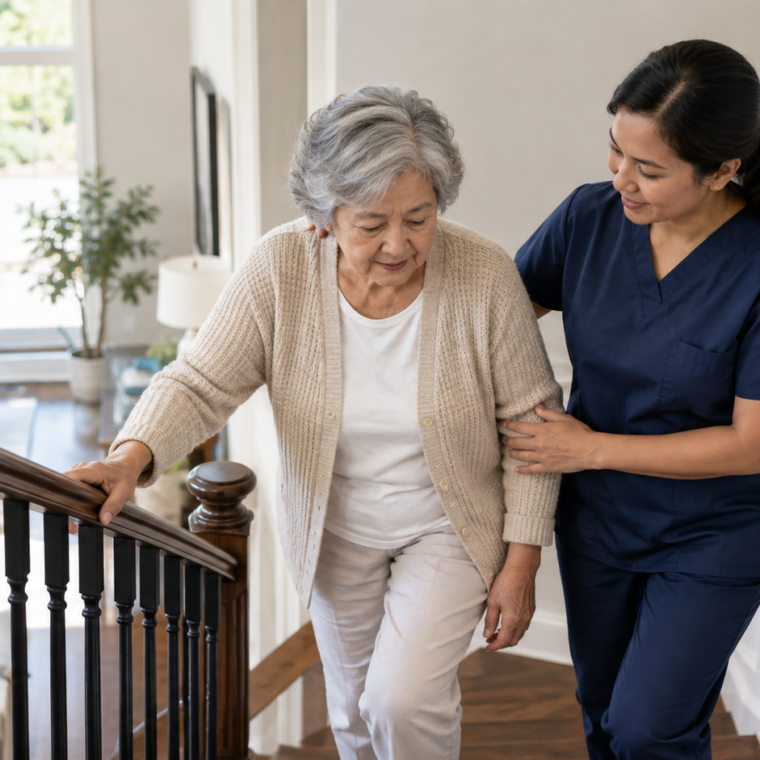
Some stair problems cannot be resolved through housekeeping or personal care assistance. A healthcare professional may need to assess changes involving balance, strength, pain, dizziness, or mobility. A physical therapist or occupational therapist may evaluate limitations and recommend appropriate strategies or environmental changes.
Situations that warrant professional discussion
- A fall or repeated near falls.
- Inability to reach an essential room safely.
- Noticeably changed ability to use stairs.
- Reliance on furniture or improvised support.
- Questions about mobility equipment or modifications.
- Family members physically assisting on stairs without an established safe plan.
Do not choose a stair lift, walker, handrail modification, or bedroom relocation solely for convenience. Appropriate options depend on the person, the home, and qualified professional recommendations.
7. Decide Whether the Home Layout Needs to Change
Before major changes, ask three questions. First, can practical assistance reduce the problem, such as help with groceries or laundry? Second, does the older adult need professional mobility or home safety guidance? Third, could a different room arrangement support essential routines more effectively?
The objective is not simply to eliminate stair use. It is to support a practical living arrangement that preserves safety, dignity, and independence.
8. Build a Home Care Schedule Around the Hardest Times of Day
Stairs may be manageable in the morning but more difficult when fatigue increases. Another parent may find early appointments particularly demanding. Plan assistance around both the task and its timing.
For example, an older adult in a two story Houston home may have an upstairs bedroom but downstairs kitchen and laundry. After appropriate professional guidance, the family might schedule nonmedical help with laundry, meals, and selected chores, while the older adult continues preferred activities within established care instructions. This is an example, not a universal care recommendation.
9. How Angels Instead Can Help Houston Families?
Angels Instead provides nonmedical home care in Houston and its listed Texas service communities. Depending on the plan, assistance may include personal care, meal preparation, laundry, light housekeeping, companionship, errands, and mobility support within caregiver training and agency scope.
Home care does not replace medical assessment, physical therapy, occupational therapy, or professional home modification advice. Start by identifying which tasks are difficult and what your loved one still wants to manage independently.
10. A Seven Day Plan for Families
- Day 1: Discuss what changed and whether medical attention is needed.
- Day 2: Check visible stair hazards without asking your parents to demonstrate unsafe movements.
- Day 3: List essential rooms and routines that require stairs.
- Day 4: Identify chores that could be handled with assistance.
- Day 5: Review existing mobility instructions and seek professional guidance where needed.
- Day 6: Discuss care preferences and practical scheduling needs.
- Day 7: Agree on next steps and when to review the plan.
This seven day plan is for nonurgent situations. Never delay medical care or necessary safety action to finish the checklist.
Frequently Asked Questions
Why is my elderly parent suddenly having trouble climbing stairs?
Sudden stair difficulty can have different causes, including changes in strength, balance, pain, or other health concerns. A sudden or significant change needs prompt medical assessment. Emergency symptoms require immediate help.
Does difficulty climbing stairs mean my parents need home care?
Not necessarily. Some families need medical assessment, rehabilitation guidance, or home safety improvements. Nonmedical home care may help when stair difficulty also affects meals, laundry, personal care, or other routines.
Can a home caregiver help an older adult use stairs?
Only when assistance follows the established care plan, is within caregiver training, and is consistent with agency procedures. A caregiver should not invent stair techniques or attempt unsafe physical assistance.
Should we install a stair lift immediately?
Not without understanding the older adult’s needs and the home environment. A qualified professional can help determine whether equipment or modifications are appropriate.
How can home care reduce unnecessary stair use?
Caregivers may help with laundry, meals, light housekeeping, errands, and other agreed tasks. This reduces chores requiring trips between floors but does not make unsafe stair use safe.
What if my parents refuse to help with stairs?
Ask what concerns them. They may worry about losing independence or accepting assistance. Discuss options respectfully and involve appropriate healthcare professionals when safety concerns remain.
When should families consider changing the living arrangement?
When essential activities cannot be completed safely or reasonably, seek professional guidance about mobility, accessibility, and living arrangements. No single solution fits every household.
The Bottom Line
When an aging parent starts struggling with stairs, first understand what changed. Check for hazards, identify affected daily routines, and seek professional guidance for mobility or safety concerns. Not every difficulty requires immediate renovation. Help with meals, laundry, personal care, and other responsibilities can sometimes make home life more manageable.
If stairs are making bathing, meals, laundry, or other daily routines difficult for your aging parent, call Angels Instead at (281) 800-1800 or discuss your family’s home care needs. The team can discuss practical nonmedical support options based on your loved one’s needs and preferences.