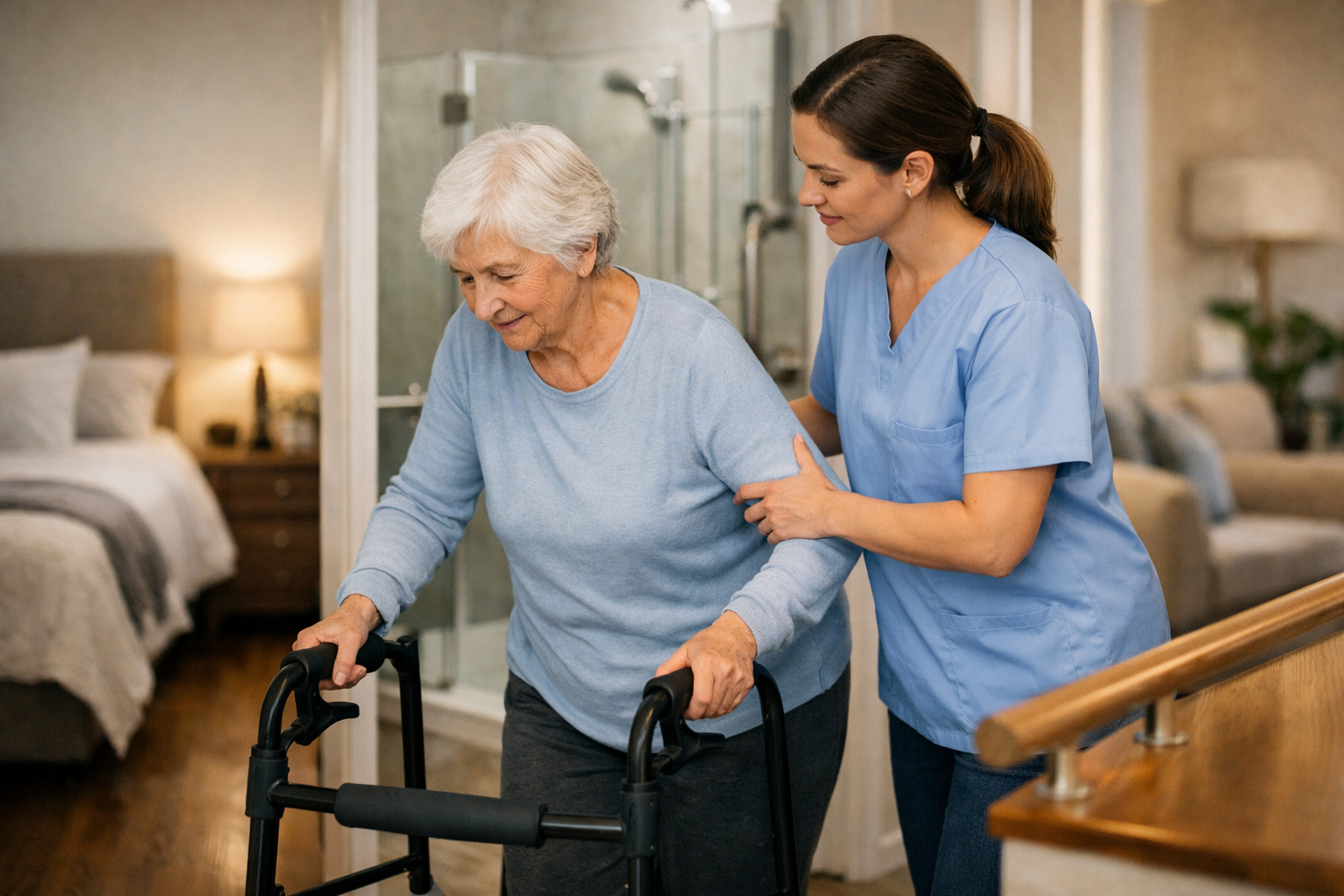
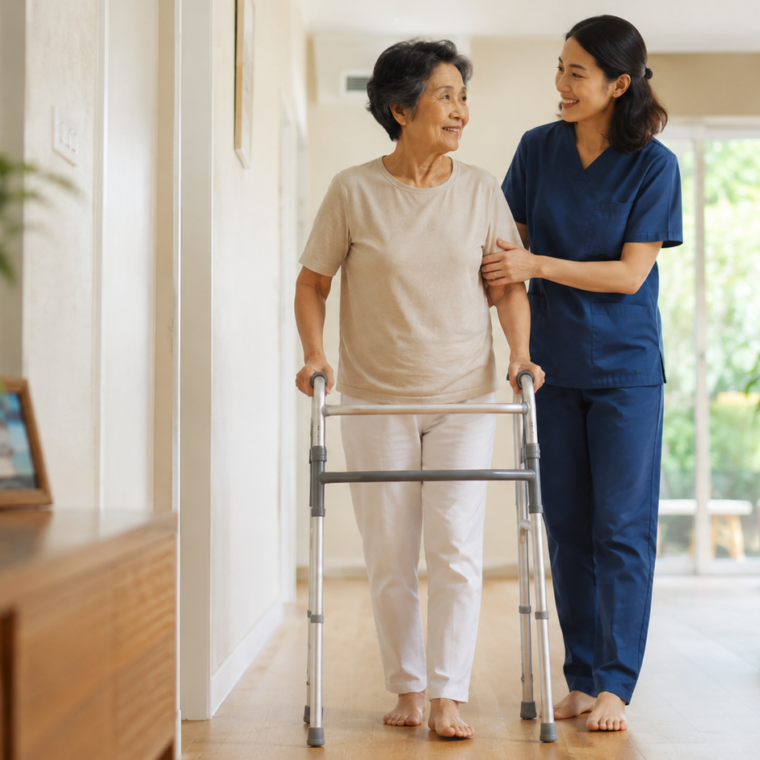

When an aging parent stops walking around the house alone, do not brush it off as laziness. That fear usually means something has changed. Maybe they slipped once. Maybe their legs feel weaker. Maybe the hallway feels too dark, the bathroom feels unsafe, or getting from the bedroom to the kitchen suddenly feels risky. Families often notice small changes first: a parent waits for help before standing, avoids the shower, stops going outside, or stays in one chair most of the day.
This is exactly where mobility assistance can matter. Angels Instead supports seniors with walking help, wheelchair help, safe movement, assistive devices, and fall-risk awareness at home. The goal is not to force independence. The goal is to make movement feel safe enough that your loved one does not become trapped by fear.
Why Fear of Walking Alone Should Not Be Ignored?
Fear after a near-fall can quietly shrink a senior’s world. They may stop walking to the bathroom alone, avoid the kitchen, skip hobbies, or refuse family visits because moving feels embarrassing. The CDC older adult fall data shows that more than one in four older adults falls each year, and one fall doubles the chance of falling again. That means fear is not silly. It is a warning sign that needs a practical response.
The problem is that avoiding movement can make the situation worse. Less walking can lead to stiffness, weaker legs, isolation, and more dependence. NIA falls prevention guidance highlights the importance of home safety, physical activity, and practical fall-prevention steps for older adults. Families should treat fear of walking as a care-planning issue, not a personality problem.
Common Signs Your Loved One Needs Mobility Support
- They hold furniture or walls while walking.
- They ask someone to walk beside them every time they stand.
- They avoid stairs, bathrooms, kitchens, porches, or hallways.
- They stop bathing or dressing because moving feels unsafe.
- They have had a fall, stumble, or near-fall.
- They use a cane or walker incorrectly.
- They become anxious when left alone for even short periods.
When these signs appear, families should look beyond the obvious. The issue may involve balance, pain, medication side effects, vision changes, poor footwear, clutter, or low confidence after a previous scare. A caregiver is not a substitute for a doctor, but non-medical support can make daily movement safer while the family also follows medical guidance.
How Angels Instead Helps Seniors Move With More Confidence?
A good care plan starts with the senior’s real routine. Where do they feel most unsafe? Which rooms do they avoid? Do they need help standing up, walking to meals, using the bathroom, or getting ready for bed? Angels Instead can combine personal care with mobility support when fear affects bathing, grooming, toileting, dressing, or meal routines.
For some seniors, the answer is not heavy hands-on help. It may be steady presence, verbal cueing, clear pathways, reminders to use a walker, and patient encouragement. Companionship care also matters because fear grows when a senior feels alone. A calm caregiver can help your loved one walk slowly, take breaks, and rebuild confidence without shame.
What Families Should Fix at Home First?
Start with the obvious hazards: loose rugs, cluttered walkways, poor lighting, slippery bathroom floors, unstable furniture, and hard-to-reach items. MedlinePlus balance exercise guidance explains that balance exercises can be part of fall-prevention routines when approved by a healthcare professional. Families should also ask a clinician about sudden weakness, dizziness, pain, vision changes, or medication changes.
Do not make the mistake of simply saying, ‘You need to walk more.’ That is lazy and often counterproductive. Fear does not disappear because a family member lectures. It improves when the home is safer, routines are predictable, and the senior feels supported instead of pressured.
When More Support May Be Needed?
If your loved one is afraid to stand, avoids toileting, refuses bathing, has repeated near-falls, or becomes unsafe when alone, scheduled care should be discussed. Some families start with a few hours of help during high-risk parts of the day. Others need live-in caregiver support or respite care when one family caregiver is carrying too much physical and emotional strain.
The strongest plan is not built around panic. It is built around prevention. If fear of walking is already changing your parent’s daily life, it is time to act before one missed step becomes an emergency.
If your loved one is afraid to walk alone, schedule a care conversation with Angels Instead. We can help create a safer daily routine with respectful mobility support, companionship, and personal care that protects dignity at home.
Frequently Asked Questions
Why is my senior parent suddenly afraid to walk alone?
A senior may become afraid after a fall, near-fall, illness, pain, balance changes, vision problems, medication changes, or loss of confidence. Sudden changes should be discussed with a healthcare provider.
Can home care help if my parents are scared of falling?
Yes. Non-medical home care can provide walking support, supervision, reminders, companionship, and help with safer routines. It does not replace medical evaluation, physical therapy, or emergency care.
What rooms are most dangerous for a senior afraid to walk?
Bathrooms, bedrooms, kitchens, stairs, hallways, and entryways are common risk areas because of slippery floors, poor lighting, rugs, clutter, and frequent position changes.
Should I force my parent to walk more?
No. Forcing can increase fear and resistance. A better approach is to remove hazards, ask about pain or dizziness, use calm encouragement, and build short, supported movement into daily routines.
When should a family call Angels Instead for mobility assistance?
Call when fear of walking affects bathing, toileting, meals, sleep, family outings, or basic independence. Repeated stumbles, near-falls, or avoidance are strong warning signs.
Is mobility assistance the same as physical therapy?
No. Physical therapy is clinical care. Angels Instead provides non-medical support such as walking help, cueing, supervision, companionship, and daily routine assistance.