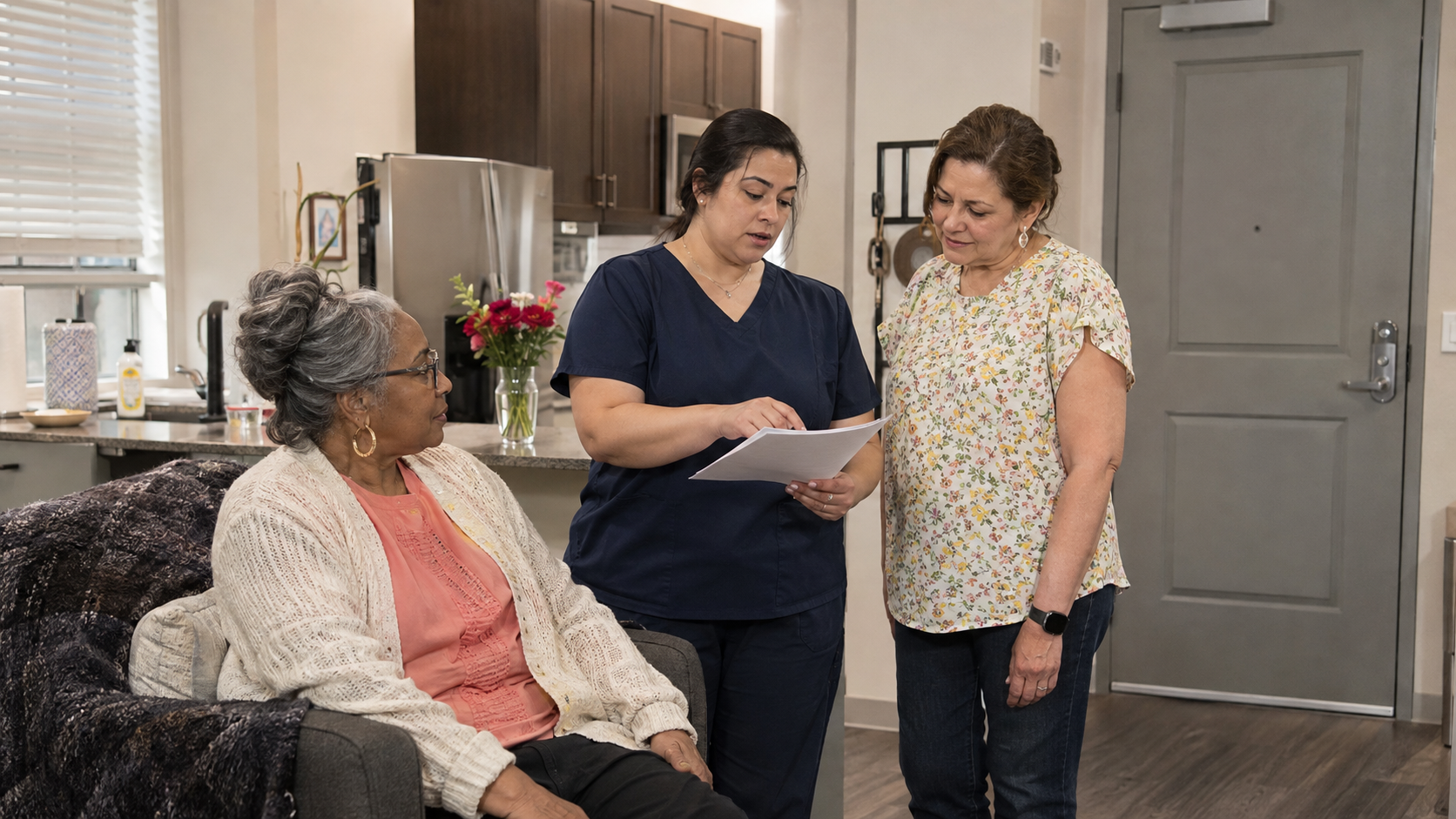



A home renovation can temporarily change how an older adult moves, eats, bathes, rests, and receives help. Families can reduce disruption by deciding which rooms remain usable, how caregivers will enter, and when a temporary care arrangement is safer than staying in the work area.
Quick answer: Can a senior receive home care during a renovation?
Often, yes. Nonmedical home care may continue when the household remains safe and accessible for the older adult and caregiver. The family, contractor, and care provider should agree on a workable schedule, clear routes through the home, and a plan for disrupted bathrooms or kitchens. If essential spaces are unusable or the environment is unsafe, the family may need temporary accommodation or another care arrangement.
Why do renovations create special challenges for older adults?
A renovation does more than make a house noisy. Furniture may move, familiar pathways may disappear, and the bathroom or kitchen may be unavailable at the time someone needs assistance. Even a short project can interrupt medication reminders, meal routines, rest, and scheduled caregiver visits.
The risk is especially important when an older adult uses a walker, has limited vision, becomes disoriented by changes, or needs help with bathing and transfers. These circumstances call for a practical household plan, not an assumption that a caregiver can work around every hazard.
1. Identify which parts of the home are safe to use
Before work begins, walk through the home with the contractor and identify the rooms that will remain accessible. Confirm a continuous route from the entrance to a usable bathroom, sleeping area, and place to eat. Keep construction supplies, cords, tools, and loose coverings out of these routes.
For broader prevention guidance, review the CDC’s older adult fall prevention resources. A caregiver can report a blocked or hazardous route, but the contractor and household decision-maker remain responsible for correcting construction hazards.
2. Plan around bathrooms, bathing, and personal care
A bathroom remodel can make routine care difficult even when the rest of the house is usable. Confirm where the older adult will use the toilet, wash hands, and bathe, and whether that space is accessible with their usual mobility aids. Avoid improvising unsafe transfers or relying on a bathroom that is not ready for use.
Depending on the individual’s needs and the agency’s confirmed scope, personal care support may help with dressing, hygiene routines, and other daily activities in an appropriate setting. Caregivers should not be expected to create a makeshift clinical or construction safety solution.
3. Keep meals and medication routines predictable
If the kitchen is closed, arrange a clean eating area, accessible drinking water, and meals that can be safely stored and served. Set a family contact for grocery deliveries and food preparation questions. Keep medication containers and instructions in a designated area away from construction dust, heat, and disruption.
A nonmedical caregiver may provide medication reminders within the agreed care plan, but should not change doses, decide which medications to skip, or make clinical decisions. Ask the prescribing clinician or pharmacist about any medication storage or administration concern.
4. Coordinate the contractor schedule with care visits
Give the contractor a realistic picture of when the older adult needs quiet, bathroom access, meals, or assistance moving between rooms. Agree on who will communicate unexpected closures or loud work. Share only the personal information necessary to coordinate the schedule.
Ask the care provider whether the usual visit times can continue. Do not assume a caregiver can arrive earlier, stay longer, supervise workers, or manage renovation tasks without a confirmed agreement.
5. Address dust, paint, and other environmental concerns
Construction dust and fumes may make a work area unsuitable for some residents. Ask the contractor how work areas will be isolated, how ventilation will be handled, and when rooms can be used again. In some homes built before 1978, disturbing painted surfaces can create hazardous lead dust. Ask the contractor whether EPA lead safe renovation requirements apply to the specific property and work. The rule has exceptions, including certain housing designated for older adults or people with disabilities, so coverage should not be assumed.
The U.S. Environmental Protection Agency explains requirements and protections under its Renovation, Repair and Painting Program. Families should direct questions about testing, containment, lead safe practices, and cleanup to qualified contractors or environmental professionals, not non medical caregivers.
6. Decide when staying at home is no longer practical
A temporary move may be worth considering if there is no usable toilet, the main entrance is blocked, the older adult cannot reach a safe sleeping area, essential utilities are unavailable, or construction conditions interfere with necessary care. The decision should reflect the individual’s mobility, cognition, health needs, and available support.
If the older adult relocates temporarily, confirm the new address, building entry procedure, emergency contacts, caregiver service area, and any changes to visit timing before the move. Never assume that services automatically transfer to a different address.
A practical renovation and care checklist
- Confirm the contractor’s start dates, work zones, and daily access hours.
- Identify a safe entrance and clear route to a usable toilet and sleeping area.
- Plan meals, water, bathing, and medication reminders during utility interruptions.
- Keep the caregiver informed about access changes and the designated family contact.
- Arrange a quiet rest area and protect essential personal items.
- Agree on a same day response if the work area becomes unsafe.
- Confirm whether temporary accommodation or revised care visits are needed.
A Houston example: A bathroom remodel while Mom receives home care
Imagine a Houston family renovating the only downstairs bathroom while their mother uses a walker and receives morning personal care. The family learns that the upstairs bathroom is not safely accessible. Instead of expecting the caregiver to improvise, they arrange a temporary accessible bathroom solution or alternative place to stay, confirm the care location and schedule with the agency, and tell the contractor when the older adult needs an unobstructed route. This is an illustrative scenario, not a description of a specific Angels Instead client.
How Angels Instead can fit into the plan
Families may want to discuss whether companionship and daily routine support or personal care can be arranged around a renovation. The exact services, hours, location, and caregiver availability must be confirmed directly with Angels Instead. Nonmedical caregivers are not contractors, mold or lead specialists, or substitutes for skilled nursing.
If you are planning renovations while caring for an older parent in the Houston area, contact Angels Instead about care options or call (281) 800-1800 to discuss the household situation and available support.
Frequently asked questions
Can home care continue while contractors are working?
It may continue if the older adult and caregiver have safe access to essential rooms and the provider confirms the arrangement. A hazardous or inaccessible work area may require a change in plan.
Can a caregiver stay with a senior during noisy renovation work?
Possibly, if the location remains safe and the requested support fits the agreed care plan. A caregiver is not responsible for monitoring construction safety or supervising contractors.
What if the only bathroom is being remodeled?
Plan an accessible alternative before work begins. If there is no safe bathroom, consider postponing the work or arranging temporary accommodation and confirming care at that location.
Can a home care aide clean up renovation dust?
Routine housekeeping duties depend on the agreed service scope. Construction debris, potentially hazardous dust, and specialist cleanup should be handled by qualified professionals.
Should a senior move out during a major renovation?
It depends on access, utilities, noise, environmental conditions, and the person’s needs. Families should consult relevant healthcare professionals when health concerns affect the decision.
Can Angels Instead provide care at a temporary address?
Ask the agency directly. Service area, staffing, care needs, and scheduling must be confirmed before assuming care can move to another location.
What should families tell the home care agency before construction begins?
Share dates, access restrictions, bathroom and kitchen disruptions, known safety concerns, any temporary address, and the family member authorized to approve care plan changes.