
Quick Answer: Osteoporosis weakens bones and raises the risk of fractures. At home, that means ordinary routines such as bathing, dressing, walking, transfers, reaching, lifting, and household tasks may deserve more attention when they involve a fall or awkward movement. Nonmedical home care can support established daily routines and reduce unnecessary rushing or physical strain. It does not diagnose osteoporosis, prescribe exercise, decide medication, or guarantee that a fracture will be prevented.
Fracture Risk Snapshot
- Osteoporosis can reduce bone strength and increase the chance of a broken bone.
- Fractures commonly affect the hip, spine, and wrist.
- A minor fall can cause a fracture in a person whose bones are fragile.
- Some vertebral fractures can occur during ordinary stresses such as bending or lifting.
- Home care can support safer daily routines, but medical treatment and fracture risk assessment belong with qualified healthcare professionals.
The National Institute of Arthritis and Musculoskeletal and Skin Diseases explains that osteoporosis develops when bone mass, mineral density, or bone structure changes in ways that reduce bone strength. NIAMS also notes that the condition is often silent until a fracture occurs.
1. Osteoporosis Changes the Consequence of an Ordinary Mistake
A wet bathroom floor is a concern for any older adult. A missed step, awkward turn, or loss of balance can also matter more when bones are fragile. The important difference is not that a person with osteoporosis should stop moving. It is that families should take the person’s established fall and fracture precautions seriously.
The goal at home is not to make the person afraid of normal activity. It is to remove avoidable hazards, provide the level of assistance already needed, and avoid improvising with movements that have become difficult.
A diagnosis alone does not tell a caregiver exactly how to assist. One person may walk independently but need help entering the shower. Another may use a walker. Another may have lifting, bending, or movement restrictions after a previous fracture. The care plan should reflect the individual rather than the label.
2. Bathing and Dressing Deserve a Closer Look
Bathrooms combine hard surfaces, water, narrow spaces, standing, turning, reaching, and transfers. Dressing can involve bending toward the feet, balancing while pulling on clothing, reaching behind the body, or standing while tired. These are ordinary routines, but they can become more demanding when balance, strength, pain, vision, or mobility has changed.
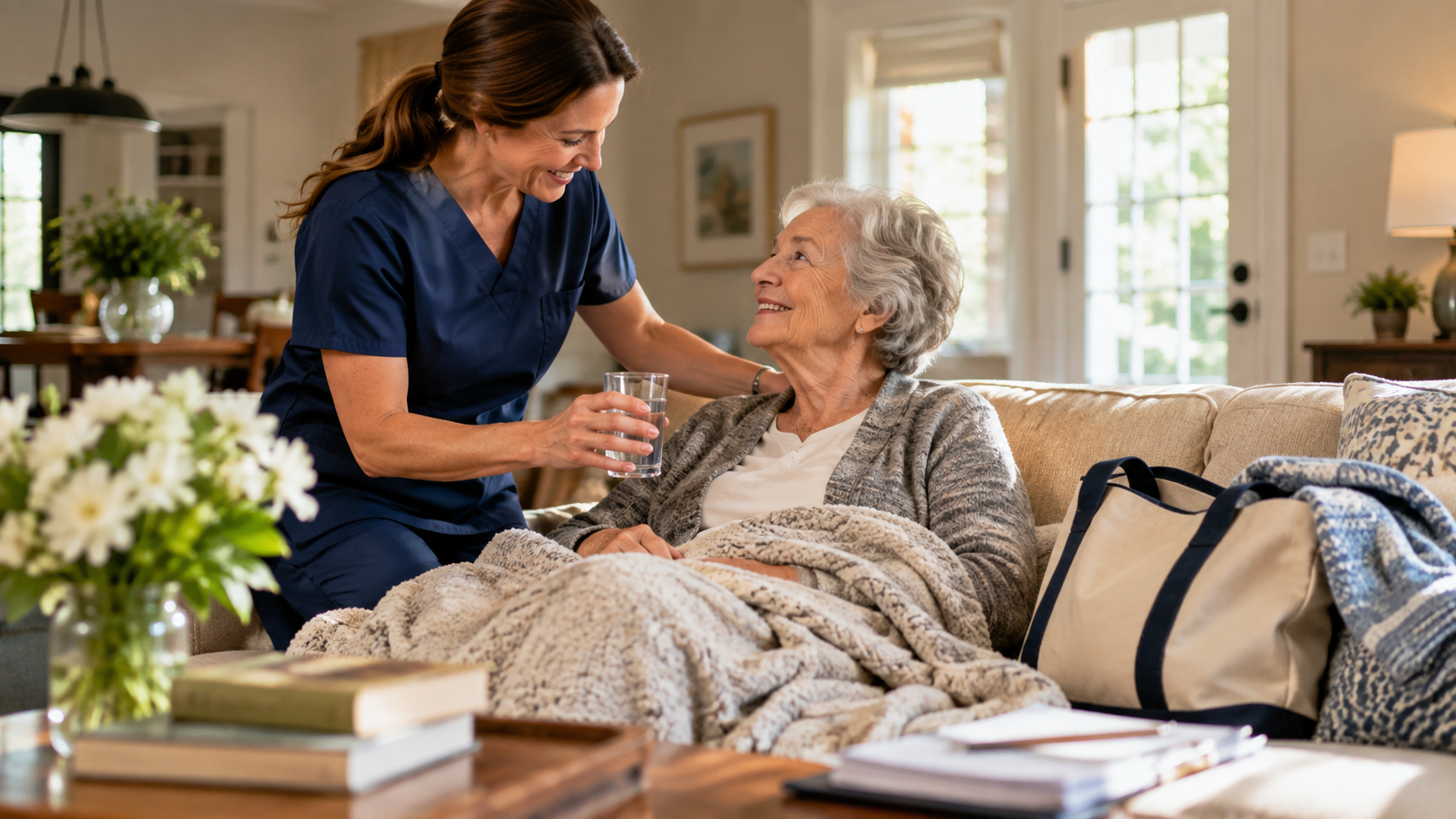
Angels Instead’s personal care services include assistance with bathing, dressing, grooming, toileting, mobility, meals, light housekeeping, and laundry. For a senior with osteoporosis, the useful approach is to assist with the difficult step while preserving what the person can still do comfortably and safely.
Bathing and Dressing Check
- Does the person feel unsteady stepping into or out of the bathing area?
- Is standing long enough to bathe or dress becoming difficult?
- Does reaching toward the floor or feet create pain, instability, or concern?
- Is the person rushing because the routine takes longer than it used to?
- Has a clinician or therapist given specific movement or equipment instructions that should be followed?
- Has there been a recent fall, new pain, or sudden change that needs professional evaluation?
3. Mobility Help Should Follow an Established Method
Families sometimes respond to osteoporosis by becoming overly protective. Others do the opposite and assume a familiar transfer or walking routine is automatically safe because it worked before. Both approaches can miss the point.
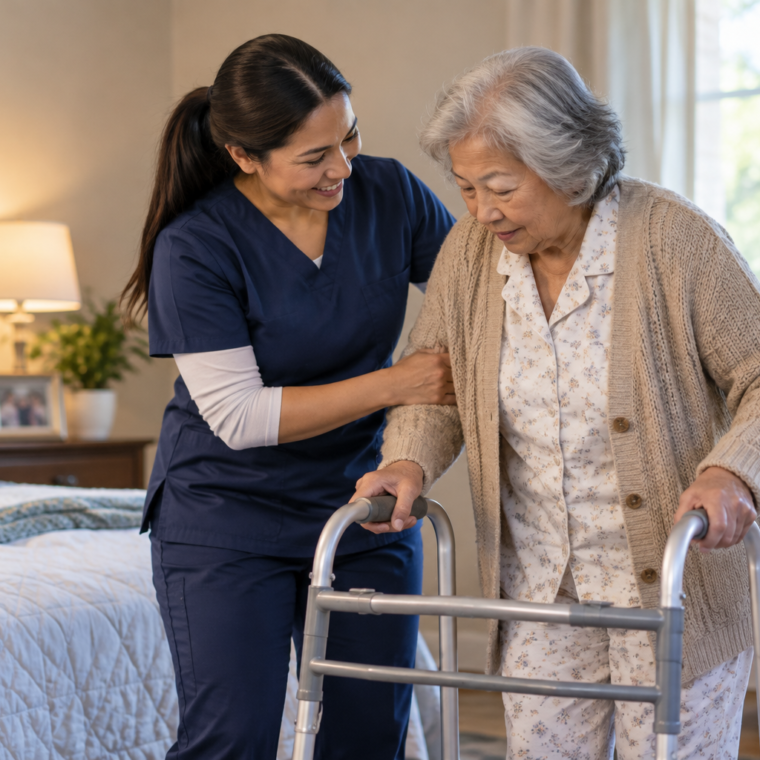
A caregiver should use the person’s established mobility method and equipment. If a clinician or therapist has recommended a walker, wheelchair, transfer technique, or specific precaution, home care should work around that plan rather than inventing a new one.
Angels Instead’s mobility assistance service currently describes walking support, wheelchair assistance, assistive devices, transfers, transportation assistance, and range of motion activity when recommended by a healthcare professional.
A nonmedical caregiver should not prescribe exercise, decide that a person should stop using an assistive device, or change a professional transfer recommendation.
Mobility and Transfer Check
- Use the mobility equipment already selected for the person.
- Keep walking paths clear before asking the person to move.
- Allow enough time for standing, turning, and transfers.
- Do not pull, twist, or improvise a transfer when the established method is unclear.
- Report new weakness, dizziness, pain, falls, or a meaningful decline in mobility.
- Ask the healthcare or rehabilitation team when a movement restriction or transfer method needs clarification.
4. The Home Environment Can Remove Avoidable Fall Hazards
Fall prevention matters for older adults generally, and the consequences can be especially serious when osteoporosis is present. The Centers for Disease Control and Prevention recommends addressing trip hazards, improving lighting, adding grab bars around bathing and toileting areas, and using railings on both sides of stairs.
CDC fall prevention guidance also recommends discussing fall risk with a healthcare professional and reviewing medicines that may contribute to dizziness or sleepiness.
A home caregiver can help keep ordinary pathways uncluttered, place frequently used items where they are easier to reach, support light household routines, and follow the person’s existing safety plan. Structural modifications, equipment selection, and clinical fall risk recommendations should be guided by the appropriate professional when needed.
Home Routine Checklist
- Keep commonly used walking paths clear of loose objects.
- Make sure the person can see the route to the bathroom and other frequently used areas.
- Keep daily items within practical reach when possible.
- Address spills and obvious trip hazards promptly.
- Follow existing instructions for grab bars, railings, walkers, wheelchairs, or other equipment.
- Do not rearrange important furniture or mobility equipment without considering how the person normally moves through the home.
5. Reaching, Lifting, and Housework May Need to Be Reassigned
NIAMS notes that bones affected by osteoporosis can sometimes fracture during normal stresses such as bending or lifting. That does not mean every household movement is dangerous. It does mean families should pay attention when an older adult is struggling with a task or has been given movement precautions.
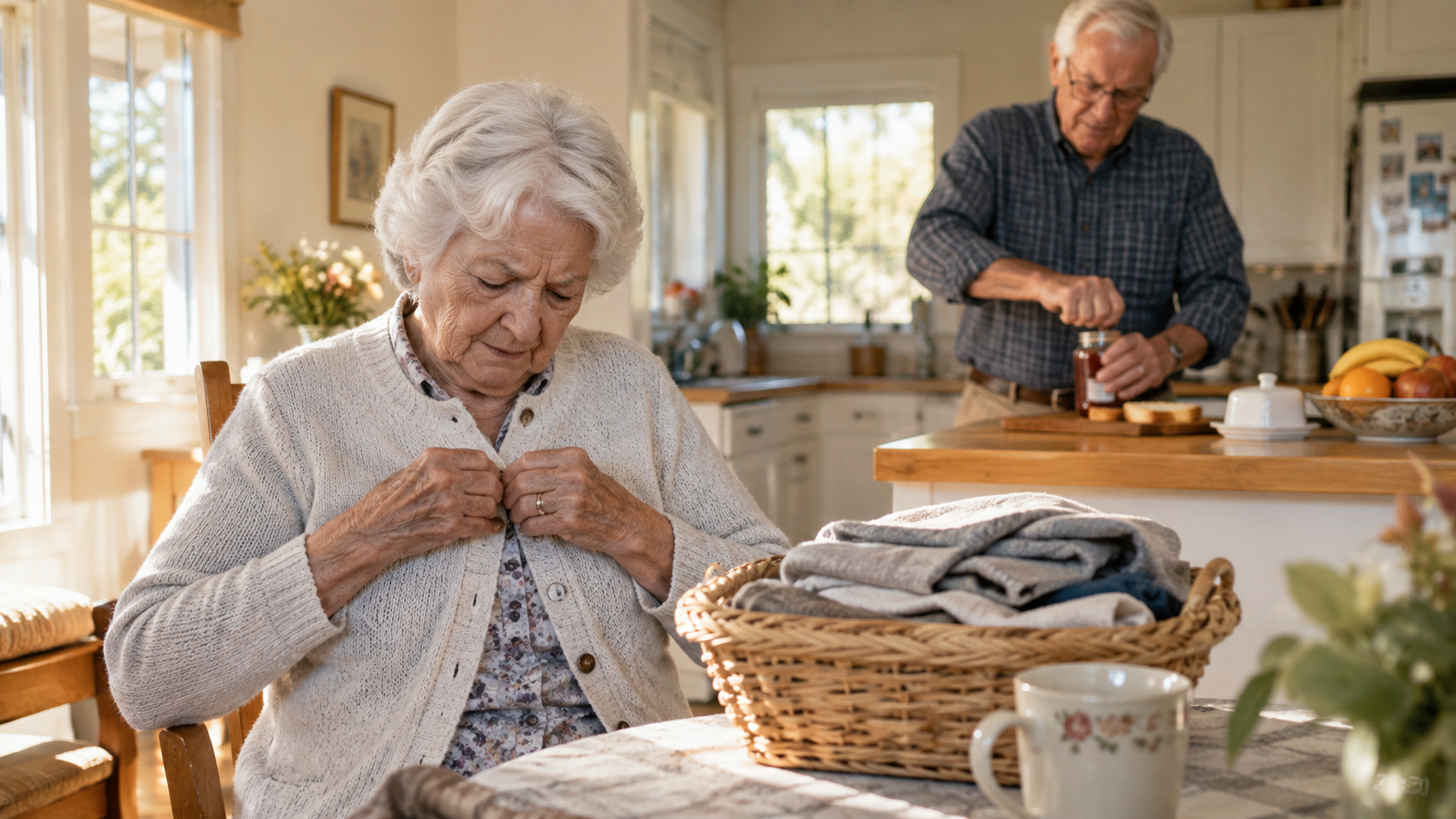
Laundry baskets, low cabinets, heavy cookware, floor level storage, vacuuming, changing bedding, and carrying groceries can involve repeated bending, lifting, reaching, or twisting. When those tasks are difficult, a caregiver can take over the household portion without taking over the person’s entire day.
This is one place where practical home care can preserve independence. The senior can keep choosing meals, clothing, activities, and routines while someone else handles the physically demanding steps.
6. Exercise and Bone Treatment Stay With the Healthcare Team
Physical activity can be important for bone health, strength, and fall prevention, but exercise is not a generic prescription for someone with osteoporosis. A person’s fracture history, balance, other health conditions, and current treatment can change what is appropriate.
NIAMS guidance on living with osteoporosis advises people with osteoporosis or bone loss to talk with a doctor or physical therapist before beginning an exercise program and notes that exercise should be tailored to individual needs.
A nonmedical caregiver can support an activity routine that has already been approved. The caregiver should not create a strength program, recommend supplements, change osteoporosis medication, or decide which movements are safe after a fracture.
Medical Boundary
- Diagnosis and bone density testing belong with qualified healthcare professionals.
- Osteoporosis medicines and supplements should be managed according to the medical plan.
- Exercise and rehabilitation recommendations should come from the appropriate clinician or therapist.
- New severe pain, a suspected fracture, or a significant change after a fall requires medical evaluation.
- Home care can support daily living but cannot guarantee that falls or fractures will not occur.
7. After a Fall, Do Not Assume Everything Is Fine Because the Person Can Still Talk or Move
Osteoporosis can make fractures more likely after a minor fall. Families should follow the person’s medical instructions after a fall and seek professional evaluation when there is pain, injury, inability to bear weight, new difficulty moving, head impact, or another concerning change.
A caregiver’s role is to report what happened clearly, keep the person as safe and comfortable as possible within training, and follow the established emergency or clinical plan. The caregiver should not diagnose whether a bone is broken.
If there is an immediate threat to life or safety, call 911.
8. Know When Ordinary Routines Are Becoming a Care Need
Families do not need to wait for a serious fall before discussing support. A pattern of near falls, fear of bathing, difficulty dressing, unsafe transfers, abandoned household tasks, or increasing reliance on a spouse may be enough to review the home routine.
The question is not whether the older adult can do absolutely everything alone. The better question is which tasks are still comfortable and reliable, which tasks need setup or standby help, and which tasks now require direct assistance.
Angels Instead’s home care planning process begins with consultation, care plan development, caregiver matching, and ongoing support. For a senior with osteoporosis, that process can focus on the specific routines that are becoming difficult while keeping medical decisions with the healthcare team.
Decision Check: Is More Daily Support Appropriate?
- Has bathing, dressing, toileting, or grooming become physically difficult?
- Does the person avoid certain rooms or routines because of fear of falling?
- Are transfers or walking taking more effort or creating repeated near falls?
- Are bending, lifting, laundry, meal preparation, or household tasks becoming difficult?
- Is a family caregiver providing more physical help than they can comfortably manage?
- Has a clinician already given precautions that are difficult to follow without another person’s help?
Frequently Asked Questions
Can home care prevent fractures in a senior with osteoporosis?
Home care can support established safety routines and reduce avoidable rushing or physical strain, but it cannot guarantee that a fall or fracture will be prevented.
What can a home caregiver help with?
Depending on the care plan, support may include bathing, dressing, grooming, toileting, mobility, transfers, meals, light housekeeping, laundry, companionship, and help keeping the home routine organized.
Should a caregiver encourage more exercise for osteoporosis?
A caregiver can support an exercise or activity routine that has already been recommended. Exercise prescription and movement restrictions should come from the person’s doctor, physical therapist, or other qualified professional.
Why are falls more concerning with osteoporosis?
Osteoporosis reduces bone strength and increases fracture risk. NIAMS notes that fragile bones can break after minor falls and, in some cases, during ordinary stresses such as bending or lifting.
What should a family do after a fall?
Follow the person’s established medical instructions and seek professional evaluation for concerning pain, injury, head impact, new mobility difficulty, or other significant changes. Call 911 for an immediate threat to life or safety.
Does osteoporosis mean a senior should stop doing things independently?
No. Support should preserve the person’s choices and abilities. The goal is to provide help where a routine has become difficult or risky, not to take over tasks the person can still manage appropriately.
The Bottom Line
Osteoporosis changes the consequences of falls and some everyday stresses, but it does not erase an older adult’s independence. Families can focus on the routines that create the most concern, remove avoidable hazards, follow established mobility and medical instructions, and add practical help where the person needs it.
If ordinary routines are becoming harder for an older adult with osteoporosis, contact Angels Instead to discuss personal care, mobility, household support, and a care plan built around the person’s current daily needs.