
For a lot of older persons and families, the documentation they get when they leave feels like the end. Everyone wants the comfort of home: their own bed, their own routine, and the peace and quiet that hospitals don’t always have.
But discharge isn’t the end of actual recovery. It’s usually the most delicate time.
If there isn’t a clinical plan in place, going from being watched all the time in a hospital to being watched only sometimes at home might be quite dangerous. At Angels Instead, we assist fill that gap so that “going home” really helps people heal instead of making things worse.
The “Revolving Door” Effect: When Getting Out of Jail Means Going Back In
Hospitals are meant to keep patients stable during the worst part of their disease or damage. The next step after someone is no longer in immediate danger is to let them go.
But stable doesn’t always mean healed.
Many patients go back to the hospital quickly, stressfully, and often unnecessarily because they don’t get the right support when they leave. Healthcare literature frequently references studies indicating that approximately 20% of Medicare recipients are readmitted within 30 days of release.
That statistic stands for real people whose recovery was slowed down by problems that may have been found sooner or avoided with the correct care plan.
Risk 1: Mistakes with medications and missed doses
Nurses keep a close eye on drugs within the facility. At home, that duty generally falls to a tired patient or a family member who is already too busy.
After a hospital stay, medication schedules often change quickly. There may be new prescriptions, changed dosages, short-term pain drugs, blood thinners, antibiotics, and maintenance medications for illnesses like diabetes or high blood pressure.
That’s when mistakes happen, including missing medications, taking too many doses, harmful interactions, or getting old and new prescriptions mixed up.
Medication reconciliation is an important safety step when a patient leaves the hospital. It involves comparing what a patient should be taking with what they are actually taking to make sure they don’t forget to take anything, take too much of something, or have a bad reaction with another drug.
This becomes structured and consistent with expert home care, not guesswork.
Risk 2: Falling and not being able to go around at home
There are call buttons, grab bars, adjustable beds, and professionals around in hospitals to keep people safe.
Not homes.
Many older people feel frail, have longer reaction times, less balance, and mental fog after being in the hospital. A slight step, a rug that isn’t tight, a restroom floor that is slick, or a hallway that isn’t well-lit can all be quite dangerous.
A fall in the first week home might cause broken bones, reopened surgery sites, or setbacks that make rehabilitation take longer.
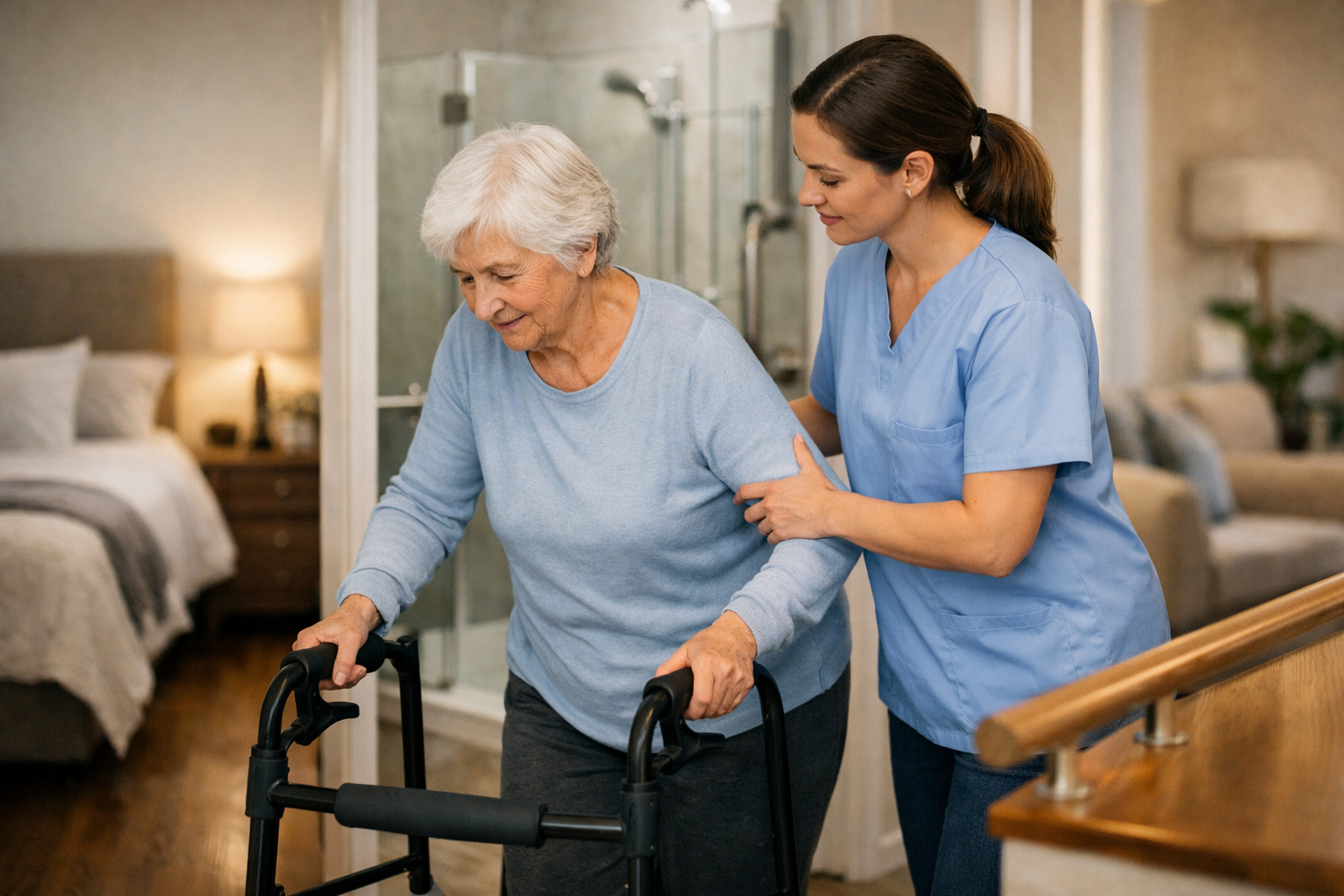
Professional aid lowers the chance of falling by giving safe help with moving around, keeping an eye on people during high-risk activities, and making small changes to everyday routines.
Risk 3: The lack of nutrition that slows down healing
You need fuel to heal.
The body requires more protein, water, and certain nutrients after surgery or illness to heal and fight off infection. But a lot of individuals go home with a lack of appetite, tiredness, nausea, or trouble cooking.
This is more than just a hassle. Older persons who are at nutritional risk are more likely to be readmitted after being discharged.
Meal preparation, reminders to drink enough water, and making sure clients have the food they need to heal are all part of home support.
Risk 4: Not Seeing the Early Warning Signs
Getting better is a full-time job. Family support is important, but most families don’t know how to notice tiny clinical red flags.
Caregivers who have been trained know to look for early symptoms like:
Signs of infection include redness, warmth, strange swelling, fever, or discharge around a surgical site.
Dehydration: quite prevalent after changing medications
Changes in mood or thinking: bewilderment, withdrawal, or indicators of being vulnerable after leaving the hospital, which is sometimes called “post hospital syndrome” in medical writing psnet.ahrq.gov
If you catch these signals early, you can call your primary care doctor instead of rushing back to the ER.
How home care after surgery can help you heal more safely
The best recoveries happen at home, where home is a safe place to get treatment.
At Angels Instead, we combine clinical knowledge with caring assistance every day. We don’t just “check in.” We assist set up routines for taking medicine, moving safely, getting enough nutrition, and regular check-ins to make sure recovery stays on track.
The days right after your loved one gets home from the hospital after pneumonia, a hip replacement, heart surgery, or any serious event can have an effect on their long-term health.
Don’t take a chance on that window.
You don’t have to figure this out alone.
We’ll answer your questions, explain options, and provide transparent pricing tailored to your situation.
Request for a Free Quote