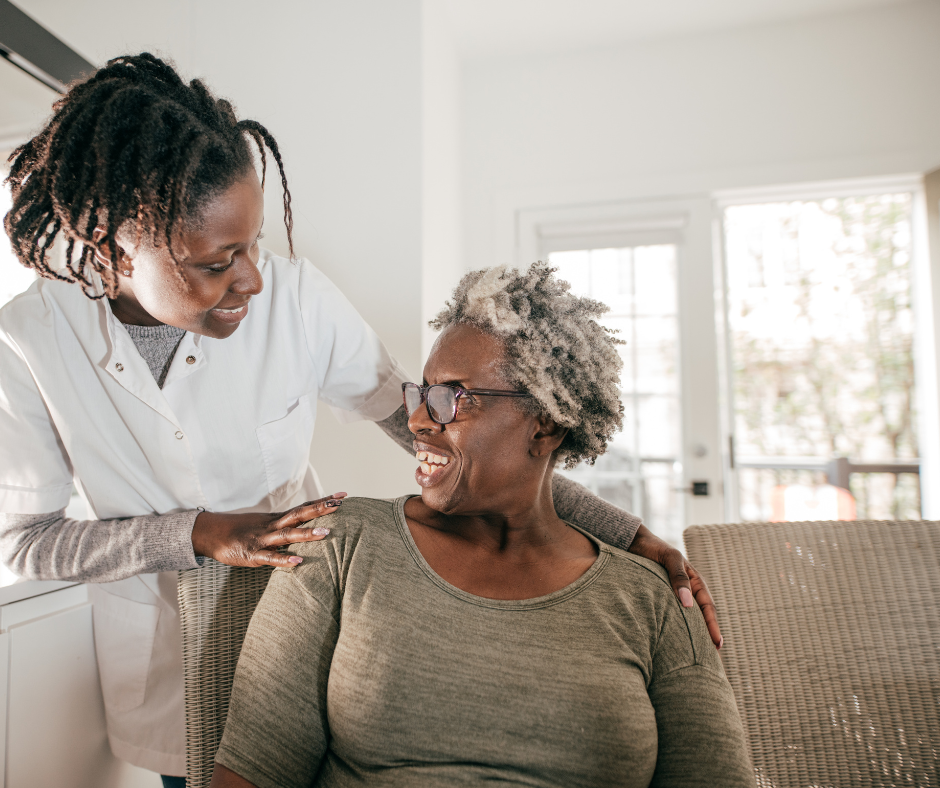

Most families do not search for mobility help after the first wobble. They search after the first scare.
A near fall in the bathroom. A shaky transfer from bed to chair. A walk down the hallway that suddenly feels uncertain. You can see your loved one trying to stay independent, but you can also see the risk increasing.
That is where mobility assistance becomes more than help. It becomes protection.
The goal of mobility support at home is simple: keep your loved one safe while preserving confidence and independence. When movement becomes harder, people often move less. When people move less, strength drops. When strength drops, falls become more likely. A consistent plan breaks that cycle.
This guide explains what mobility assistance at home includes, what you should prioritize first, and how families in Houston can build a safer daily routine without making their loved one feel powerless.
What mobility assistance really means
Mobility assistance is hands on help and guidance that supports safe movement through daily life. It can include steadying support during walking, help using mobility tools, safe transfers, gentle movement routines recommended by a healthcare professional, and transportation support for appointments or community activities.
It is not medical treatment. It’s practical help that reduces risk and makes daily activities feel manageable again.
If you’re searching mobility assistance Houston, you’re likely looking for a caregiver who can support everyday movement safely and consistently in your loved one’s own home.
The hidden reasons mobility gets worse
Mobility decline is not only about muscles. It’s often about fear and energy.
- Fear of falling creates hesitation
- Hesitation leads to less movement
- Less movement reduces strength and balance
- Reduced strength increases fall risk
That is why fall prevention is not only installing grab bars. It’s building confidence through safe routines.
The first things to focus on for fall prevention at home
If you want results fast, focus on the moments where falls happen most.
1) Safe transfers between bed, chair, and bathroom
Transfers are one of the highest risk moments because they combine balance, timing, and strength. Having help with safe transfers from bed to chair reduces strain on the senior and reduces panic for the family.
Practical tip
Watch for rocking motions, grabbing furniture, or sudden sitting. Those are early warning signs that transfers are becoming unsafe.
2) Bathroom routines
Bathrooms are fall zones. Wet surfaces, tight spaces, nighttime trips, and rushing create risk.
Practical tip
Build a calmer bathroom routine. Better lighting. Clear pathways. A consistent time. A slow pace. Mobility help during bathroom trips is a major part of fall prevention care.
3) Walking in high traffic areas at home
Hallways with rugs, clutter near couches, and narrow turns are common trouble spots.
Practical tip
Remove trip hazards and simplify routes. The more predictable the path, the more confident movement becomes.
What mobility assistance services can include
Families often assume mobility help means only pushing a wheelchair. Real support is broader.
Ambulation support and walking safety
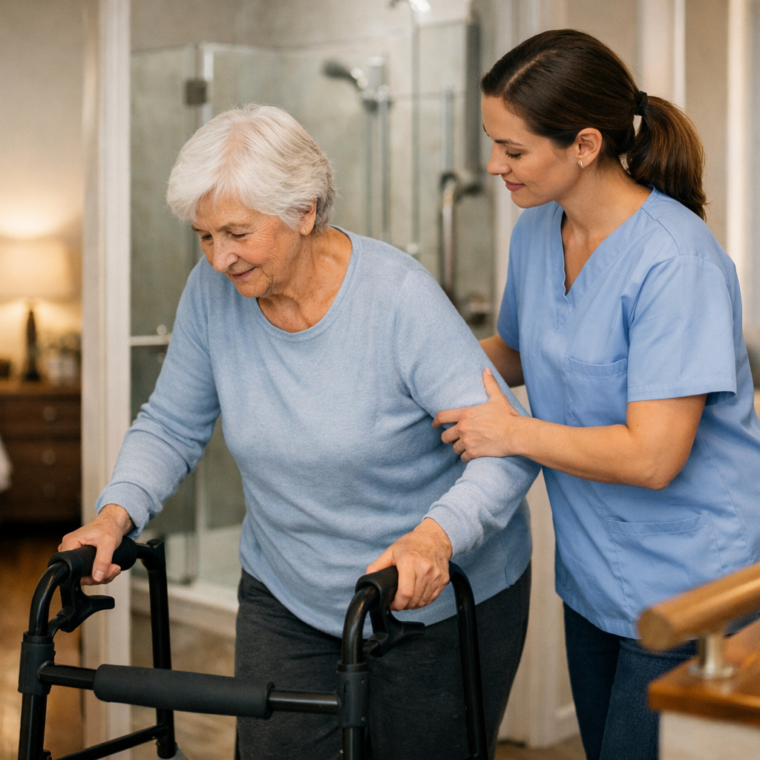
This includes steadying support, pacing, and guiding safe movement within the home. It also includes reminding a senior to use their device instead of reaching for furniture.
Wheelchair support that protects dignity
Wheelchair help includes safe seating, getting in and out of the chair, and making sure the senior is positioned comfortably and securely.
Assistive devices used correctly
Many seniors have a cane or walker, but don’t use it correctly or consistently. Mobility assistance includes support using assistive devices like canes and walkers, so they actually reduce risk rather than create it.
Gentle movement routines
Some clients benefit from range of motion exercises recommended by a healthcare professional. These routines can support joint flexibility and comfort when done consistently and safely.
Staying connected outside the home
Mobility challenges often shrink a senior’s world. Transportation assistance helps seniors get to appointments, events, and social activities so isolation doesn’t grow alongside mobility decline.
Tip driven checklist for choosing mobility assistance in Houston
If you are comparing providers, don’t choose based on availability alone. Choose based on safety process.
Tip 1- Ask how they handle fall risk awareness
You want to hear specifics: scanning for hazards, pacing, cueing, and transfer support. Vague answers mean vague care.
Tip 2- Ask how caregivers are trained for transfers and devices
Mobility assistance requires competence. Ask what training caregivers receive for transfers, walkers, wheelchairs, and safe movement cues.
Tip 3- Ask how the agency supervises and adjusts care
Mobility needs change. Ask how updates are captured and how the plan evolves.
Tip 4- Ask what happens if the match is not right
A good provider makes it easy to request a change without conflict.
Tip 5- Start with the hardest moments of the day
Many families benefit most from coverage during morning routines, evening routines, and nighttime bathroom trips. Start there, then expand.
A simple weekly plan that improves confidence
You don’t need an intense plan. You need a consistent one.
Week 1
Focus on transfers and bathroom routines. Identify hazards. Set a calm pace.
Week 2
Add short supported walks inside the home. Build confidence. Reinforce device use.
Week 3
Add one community outing with support if appropriate. Keep it predictable and low stress.
When mobility support becomes routine, confidence returns. And when confidence returns, people move more. That is how fall prevention actually works.
If your loved one needs safer movement at home, Angels Instead provides mobility assistance designed to preserve independence while reducing risk. Families in Houston and surrounding Texas areas can request a free home assessment to map out the safest plan for daily movement and routines.
Call (281) 800 1800 or visit the Mobility Assistance page to schedule a consultation. Tell us where the biggest risk moments are right now and what would make you feel confident again.