
Quick Answer: Home care for seniors with essential tremor can help when shaking makes ordinary routines such as eating, drinking, dressing, grooming, meal preparation, writing, or household tasks harder to complete. A nonmedical caregiver can support the practical parts of the day, follow an established care plan, and help the older adult preserve as much independence as possible. Diagnosis, medication changes, treatment decisions, therapy recommendations, and decisions about assistive devices belong with qualified healthcare professionals.
At a Glance: Where Home Care Can Fit
- Prepare meals and organize the eating area so the older adult has less setup work.
- Provide the level of dressing and grooming assistance already included in the care plan.
- Help with laundry, light housekeeping, and other tasks that become frustrating or tiring.
- Give the person enough time to complete the parts of a routine they still want to do independently.
- Observe meaningful changes and report them through the agreed family or clinical communication plan.
- Keep diagnosis, treatment, medication, therapy, and equipment recommendations with the healthcare team.
MedlinePlus explains that tremor is involuntary shaking that most often affects the hands but can also involve other parts of the body. It can make daily tasks such as eating, dressing, writing, and controlling utensils more difficult. Essential tremor is one type of tremor, and the correct diagnosis matters because shaking can have different causes.
1. Start With the Task, Not the Tremor
A diagnosis does not automatically tell a family how much home care is needed. Two people with essential tremor may have very different daily routines and very different levels of difficulty.
One older adult may still bathe and dress independently but struggle to carry a full cup or use a spoon without spilling. Another may find buttons, grooming tools, food preparation, handwriting, or household tasks increasingly frustrating. Someone else may need only occasional setup help on more difficult days.
The practical question is not whether the person has essential tremor. The question is which parts of the day have become difficult enough that support would preserve comfort, dignity, or independence.
Tremor Task Snapshot
- Eating and drinking
- Meal preparation and kitchen cleanup
- Buttons, zippers, jewelry, and other fine hand movements
- Hair care, shaving, oral hygiene, and other grooming routines
- Writing notes, handling papers, or organizing everyday items
- Laundry and light household tasks
- Carrying objects from one part of the home to another
2. Meals Can Become a Daily Frustration Before They Become a Care Crisis
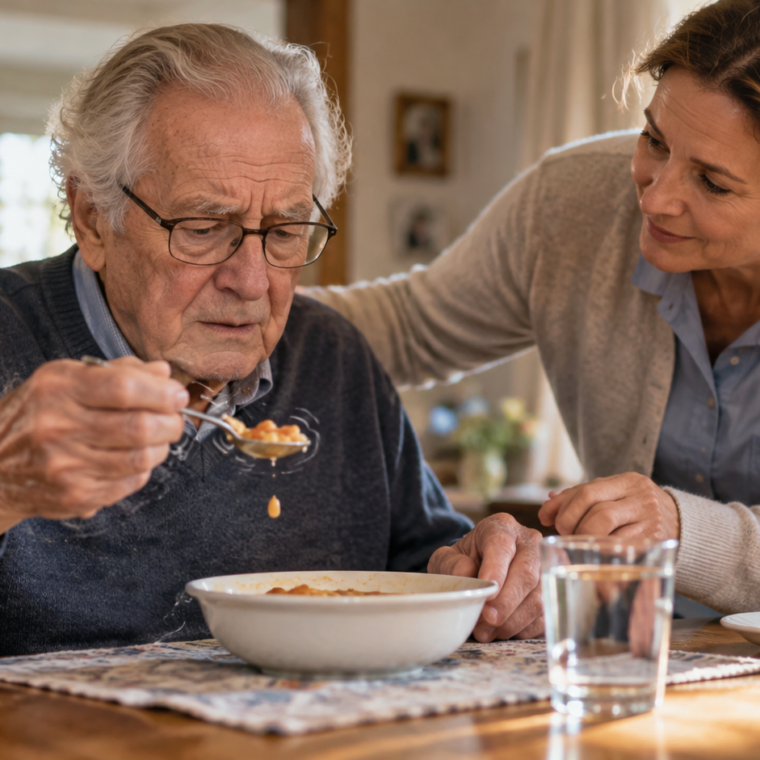
Hand tremor can make a spoon, fork, cup, or food container harder to control. That does not mean the older adult should automatically be fed or have every meal prepared for them.
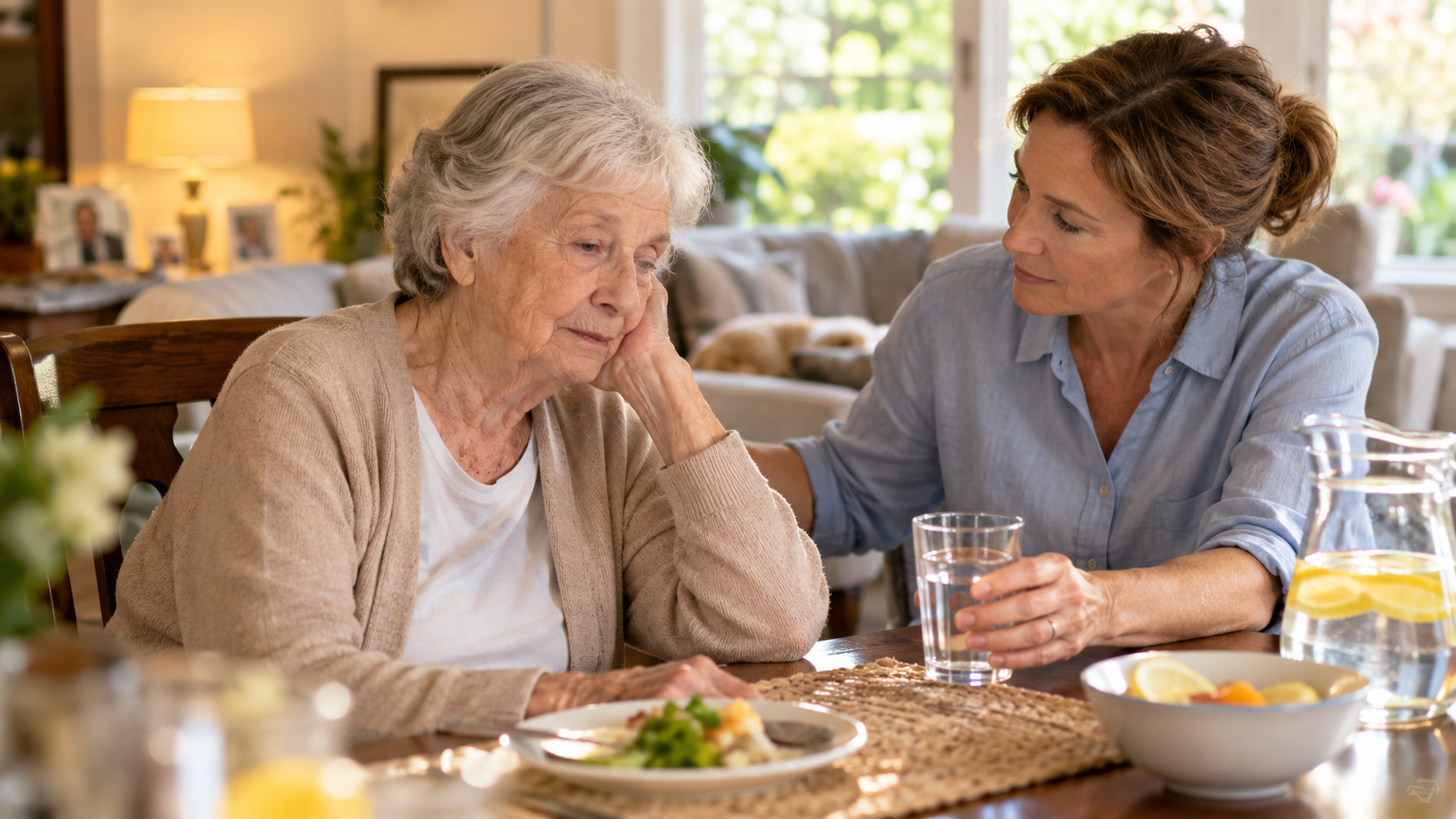
A caregiver can reduce the workload around the meal. That may include preparing food according to the established plan, setting up the table, opening containers, carrying dishes, serving the meal, cleaning up, and providing the level of assistance included in the care plan.
Angels Instead’s Quality Meals service describes meal preparation support for older adults at home. For a person with essential tremor, the goal should be to make mealtime more manageable without creating new medical nutrition rules.
If the person has a prescribed diet, swallowing instructions, or another medical nutrition requirement, the caregiver should follow the established plan rather than changing it independently.
Meal Support Check
- Can the person still eat independently once the meal is prepared and placed within easy reach?
- Is opening packaging or carrying dishes harder than eating the meal itself?
- Does the person want setup help rather than hands on feeding assistance?
- Are there clinician provided diet or swallowing instructions that must be followed?
- Has eating or drinking changed enough that the healthcare team should be informed?
3. Dressing and Grooming May Need Selective Help
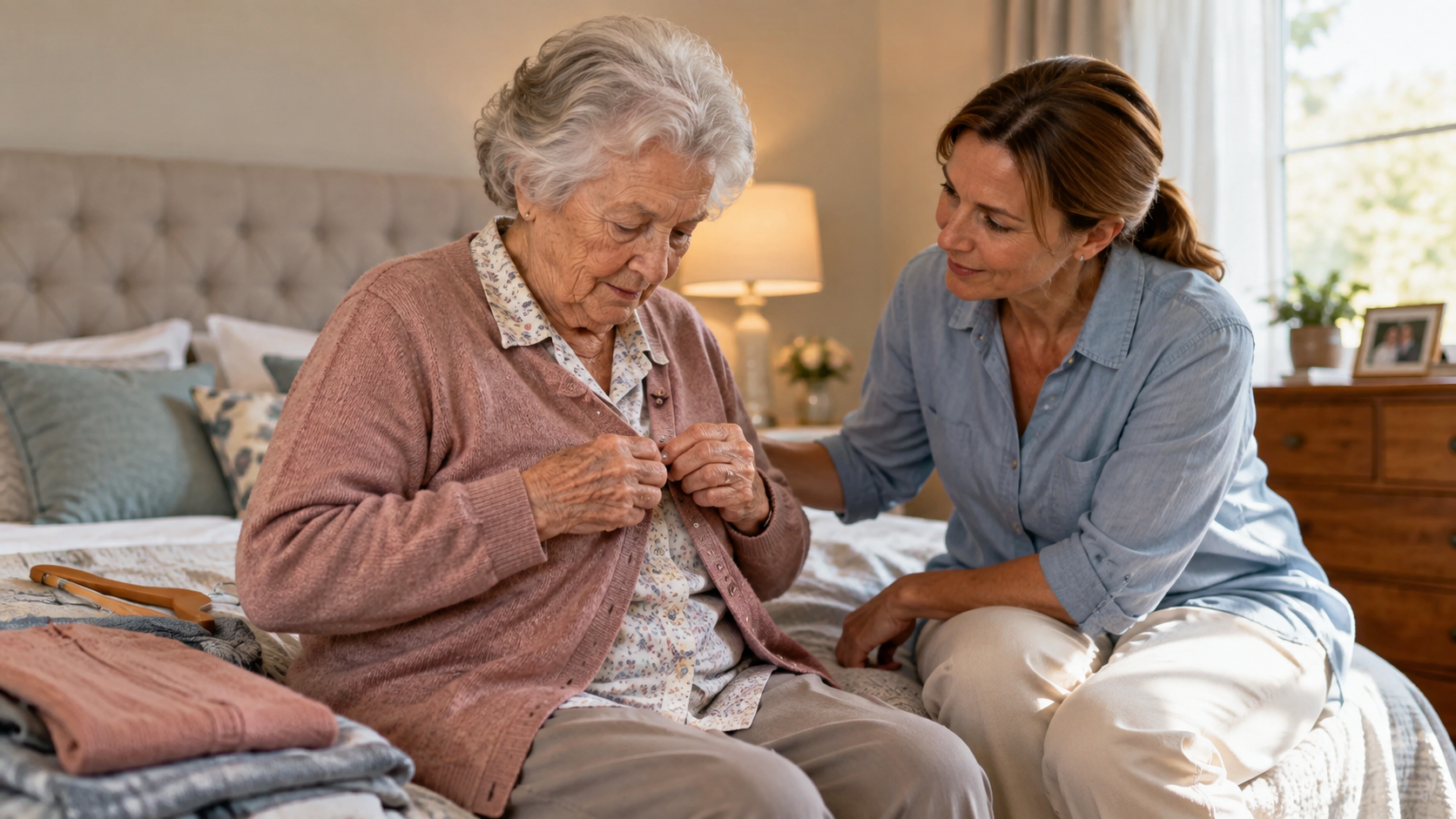
Essential tremor can interfere with fine hand movements. Clothing fasteners, grooming tools, cosmetics, shaving, oral hygiene, or handling small personal items may take longer or become frustrating.
Good personal care support should focus on the difficult step rather than taking over the entire routine. If the person can choose clothing, put on most garments, and complete part of grooming independently, the caregiver can support only the steps that require help.
Angels Instead’s Personal Care service includes assistance with bathing, dressing, grooming, toileting, mobility, meals, laundry, and light housekeeping. The exact level of assistance should come from the individualized care plan and the older adult’s preferences.
Personal Care Snapshot
- Set out clothing and personal care items before the routine begins.
- Allow extra time instead of rushing the person through a difficult task.
- Ask before taking over a step the person may still want to attempt.
- Protect privacy during bathing, dressing, and grooming.
- Report a meaningful change rather than assuming it is simply part of essential tremor.
4. Do Not Assume Every Tremor Is Essential Tremor
This distinction is important. Tremor can have different causes, and a nonmedical caregiver should not decide which type a person has. Essential tremor is a medical diagnosis.
If shaking is new, has changed substantially, or appears with other concerning symptoms, the family should contact the appropriate healthcare professional. A caregiver can describe what was observed, when it happened, and how it affected the routine, but should not label the cause.
The same boundary applies to treatment. Medication changes, deep brain stimulation, therapy, and other clinical treatment decisions belong with qualified professionals. Home care supports daily life around the condition rather than treating the condition itself.
5. Assistive Devices Should Not Become an Improvised Prescription
Families may see weighted utensils, special cups, clothing adaptations, writing tools, or other products marketed for tremor. Some may be useful for some people, but a home caregiver should not prescribe equipment or promise that a particular device will control tremor.
If an occupational therapist, physician, or another qualified professional has recommended a device or strategy, the home routine can be organized around those instructions. The caregiver can then help make the approved item accessible and support its established use within the care plan.
This keeps the role clear: the clinical team evaluates and recommends. The home caregiver helps make the resulting daily routine workable.
6. Household Support Can Protect Energy and Independence
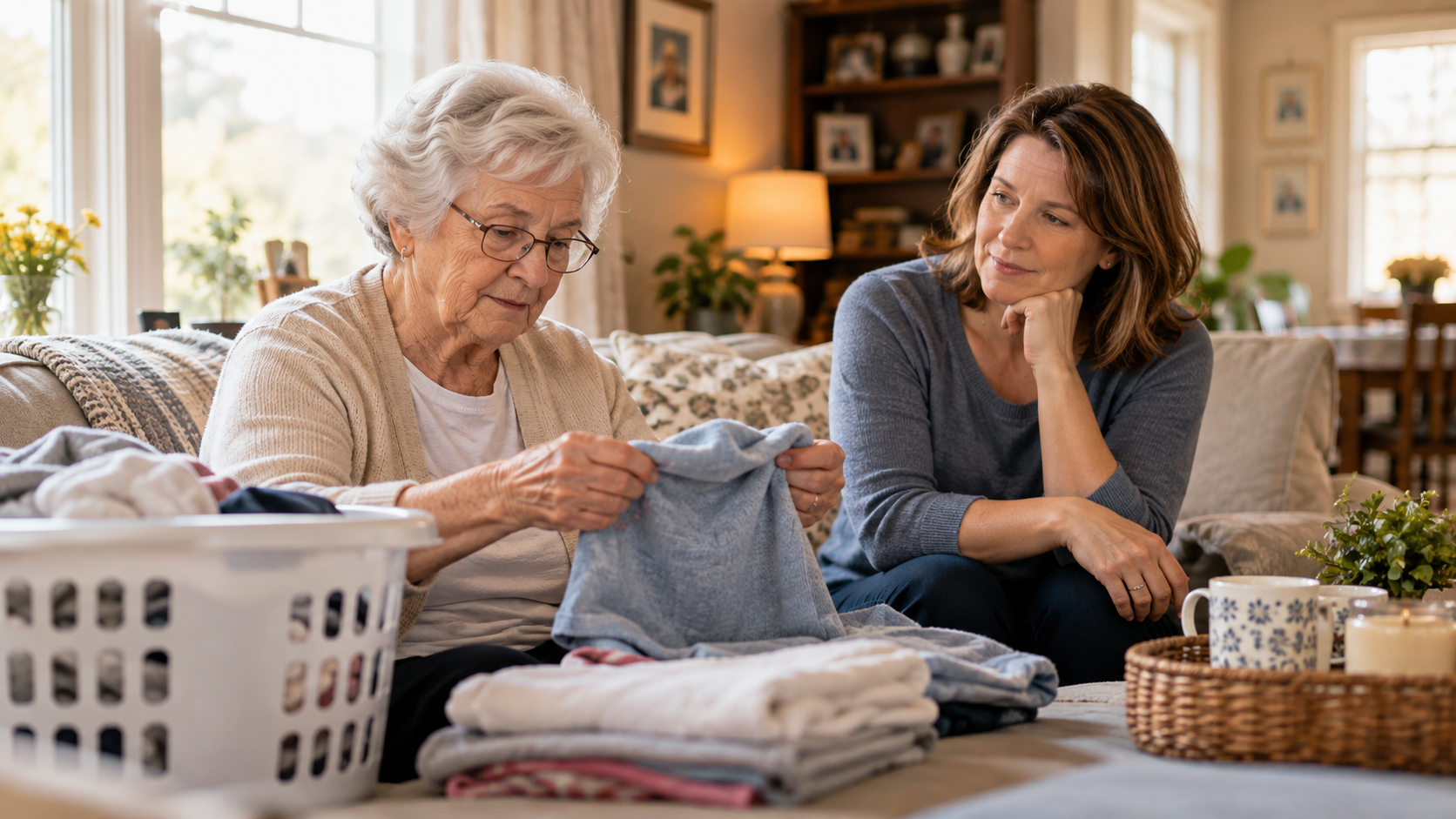
Not every tremor related difficulty involves personal care. Laundry, dishes, carrying items, opening containers, changing linens, and meal cleanup can consume time and patience that the older adult would rather use elsewhere.
Light household support can remove some of that workload without turning the person into a passive observer in their own home. The older adult may still choose the meal, fold some clothing, organize personal belongings, or direct how the household task is done.
The National Institute on Aging notes that older adults living at home may need help with everyday activities such as dressing, grooming, eating, laundry, housecleaning, and meal related tasks. That supports a task based approach: add help where the daily routine is difficult while preserving the parts the older adult can still manage.
The care plan should reflect what help is useful and what the person still wants to manage independently.
7. Companionship Matters When Tremor Changes How Someone Participates
Visible shaking can make some people self conscious about eating with others, writing in public, attending activities, or completing hobbies. A home caregiver should not assume the person is embarrassed or socially withdrawn, but can respond respectfully if the older adult says certain activities have become uncomfortable.
Angels Instead’s Companionship Care can support conversation, hobbies, meals, errands, and social engagement according to the person’s preferences. The point is not to pressure someone into activities. It is to make participation easier when practical support or a trusted companion would help.
Daily Support Without Taking Over
- Ask which task the person wants help with before stepping in.
- Break assistance into the smallest useful amount.
- Keep frequently used items organized and accessible according to the person’s preferences.
- Allow more time for eating, dressing, grooming, or writing when the person wants to continue independently.
- Do not treat visible shaking as a reason to remove every choice or responsibility.
8. Know What a Caregiver Can Observe and Report
Consistent caregivers may notice that a familiar task is taking much longer, spills are becoming more frequent, grooming has changed, or the person is asking for more help than before. Those observations can be useful.
The caregiver should report facts rather than conclusions. For example, the person needed help holding the cup at breakfast is more useful than the tremor is getting medically worse. The healthcare team can decide whether a change needs clinical evaluation.
New tremor, a major change from the person’s normal pattern, or shaking that appears with other new symptoms should be discussed with a healthcare professional. A home caregiver should report what was observed rather than decide why the change occurred. For a medical emergency or an immediate threat to life or safety, call 911.
9. Build the Care Plan Around the Hardest Part of the Day
Families do not necessarily need to begin with long visits. If breakfast and morning grooming are the main pressure points, a focused morning schedule may solve more than a longer visit at a time when the person is already independent.
If meal preparation, laundry, errands, and companionship are the main needs, the schedule can be built around those tasks. If the older adult needs hands on personal care, the consultation should identify the exact routines and level of assistance required.
Angels Instead’s Looking for Care process includes consultation, personalized care planning, caregiver matching, and ongoing support. That structure allows families to begin with the routines that matter most and adjust the plan when needs change.
Decision Check: Could Home Care Help?
- Is a diagnosed tremor making eating, dressing, grooming, meals, or household tasks harder?
- Can the person still complete part of the routine if setup or limited assistance is provided?
- Would help with household work preserve more time and energy for activities the person values?
- Does the family need consistent support carrying out an already established daily plan?
- Are diagnosis, treatment, medication, therapy, and equipment decisions still being handled by qualified professionals?
Frequently Asked Questions
Can home care treat essential tremor?
No. Nonmedical home care does not diagnose or treat essential tremor. It supports daily routines while qualified healthcare professionals manage the medical condition.
What can a caregiver do for a senior with essential tremor?
Depending on the care plan, support may include meal preparation, personal care, dressing and grooming assistance, light housekeeping, laundry, companionship, errands, and help organizing ordinary routines.
Can a caregiver recommend weighted utensils or other tremor devices?
A caregiver should not prescribe equipment or promise that a device will control tremor. If a qualified professional has recommended an item, the caregiver can support its established use within the care plan.
Is essential tremor the same as Parkinson’s disease?
No. They are different conditions. Tremor can have several causes, so diagnosis belongs with a healthcare professional rather than a home caregiver.
When should a family contact a healthcare professional about tremor?
Contact the appropriate healthcare professional when tremor is new, changes meaningfully, interferes more with daily life, or occurs with other new symptoms. Follow the person’s existing clinical instructions when available.
How can a family start home care without taking away independence?
Begin with the specific tasks that have become difficult. Keep the parts the older adult can and wants to do independently, then add only the level of assistance that is useful.
The Bottom Line
Essential tremor can turn small hand movements into time consuming daily challenges. Home care does not need to take over the person’s life to be useful. The right support can reduce the workload around meals, dressing, grooming, household tasks, and companionship while preserving the older adult’s choices and independence.
The medical team remains responsible for diagnosis and treatment. Home care focuses on making the ordinary day more workable.
If essential tremor is making several daily routines harder for an older adult in your family, contact Angels Instead to discuss which tasks need support, what the person still wants to do independently, and what schedule may fit the current routine.