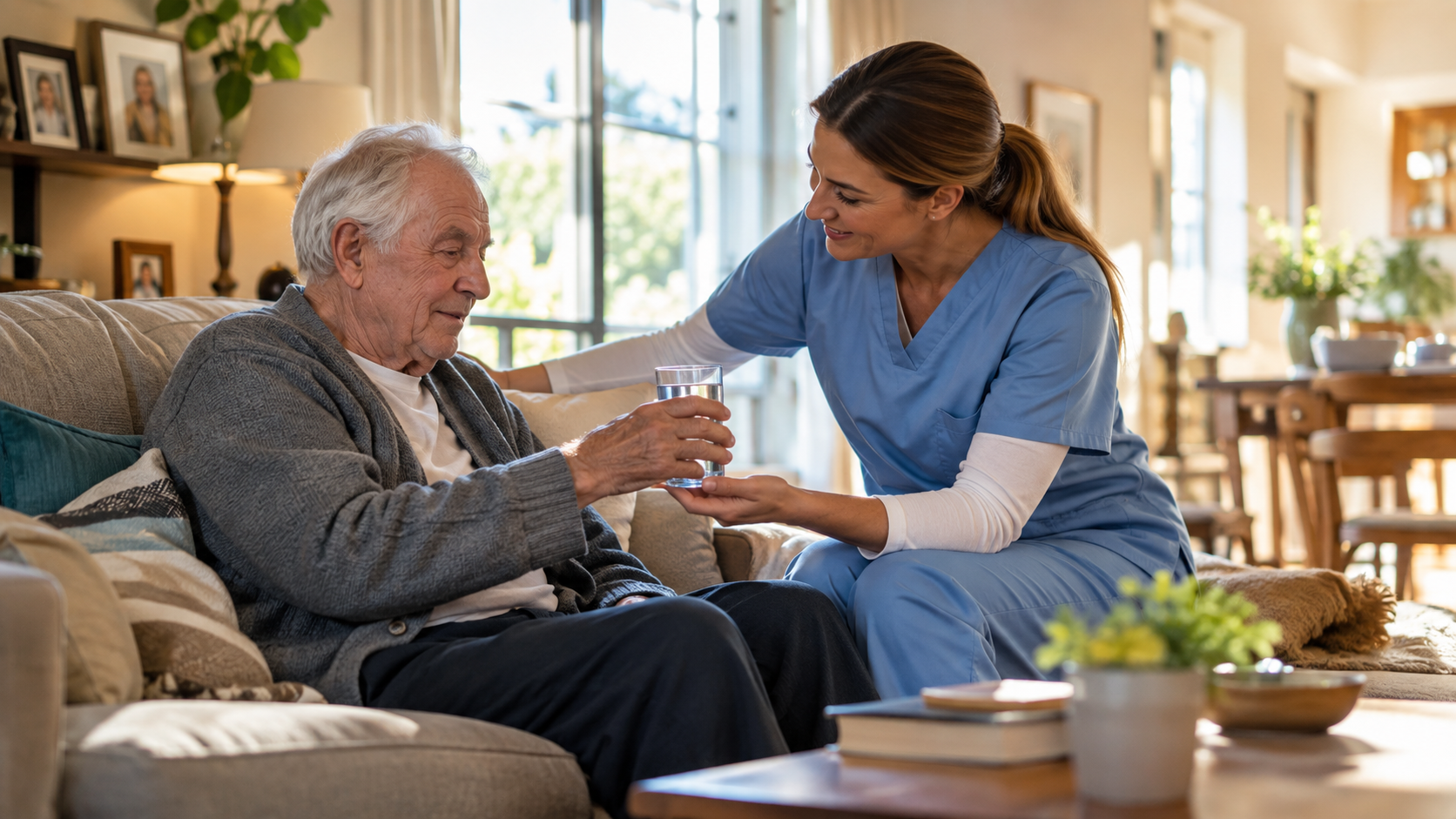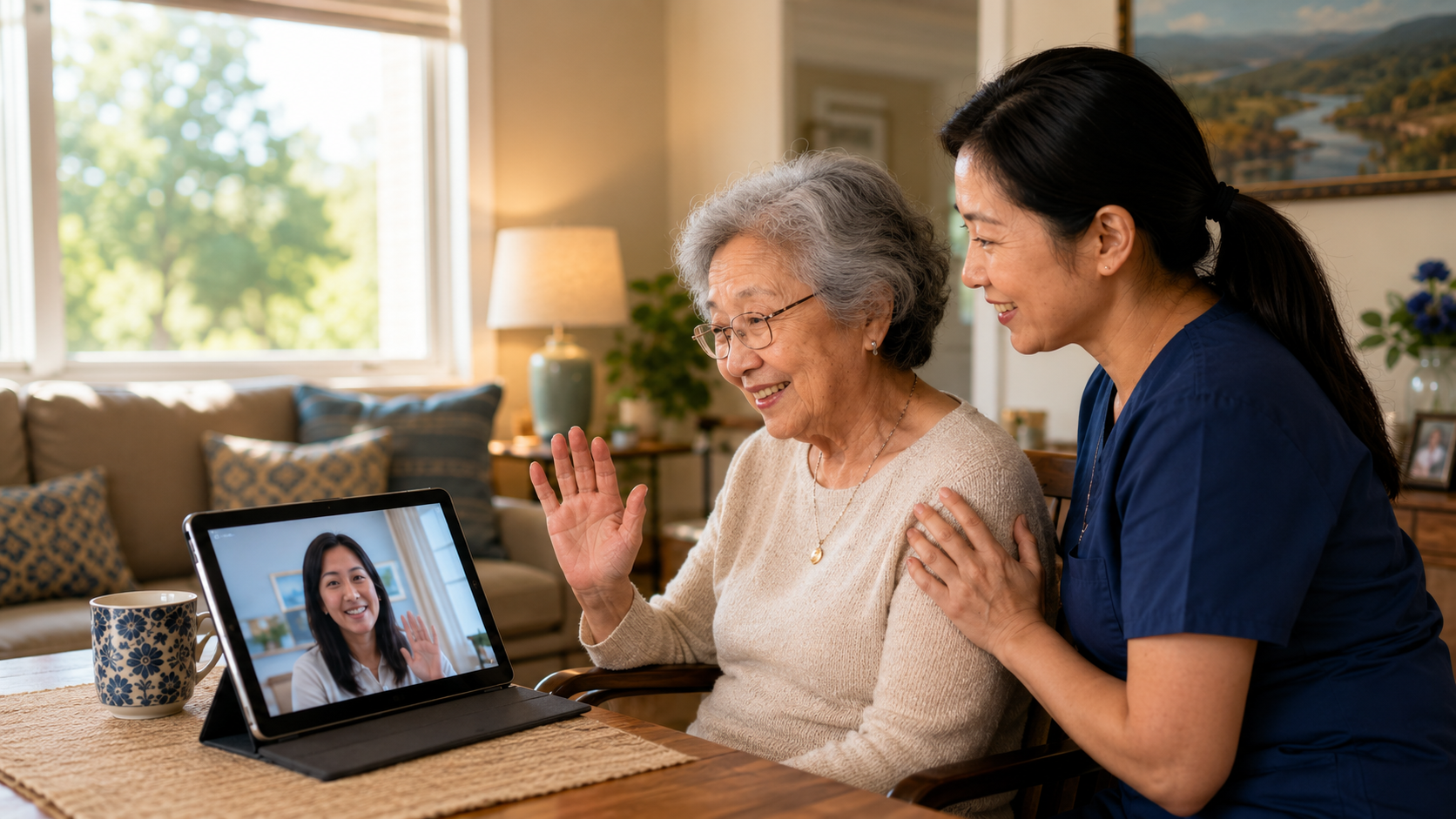


A caregiver leaves after a four hour visit. Your first instinct may be to ask, “How did everything go?”
The answer is often, “Fine.”
That may not be enough information when you are coordinating care for an aging parent. But the opposite extreme is not helpful either. Families do not need a minute by minute record of every conversation, bathroom visit, television program, or quiet moment.
A useful caregiver communication log sits between those extremes.
It gives the family and care team enough information to understand whether important routines happened, whether something meaningful changed, and whether the current care plan needs attention.
For Houston families using home care, the goal is not to collect more information. It is to capture the information that helps the next responsible person provide consistent, respectful support.
Quick Answer: What Should a Caregiver Communication Log Include?
A useful caregiver communication log should briefly record the date and visit time, important care plan tasks completed, meaningful changes from the person’s usual routine, meals or hydration when relevant, mobility or personal care concerns, notable preferences or refusals, and any follow up needed by the family or agency.
Urgent health or safety concerns should be communicated immediately through the appropriate agency, family, clinical, or emergency channel rather than left in a routine note.
The log should avoid unnecessary private details, judgmental language, unsupported medical conclusions, and constant monitoring.
Why “Everything Was Fine” Is Not a Care Update
Home care depends on consistent routines.
If a family has arranged help with breakfast, bathing, dressing, mobility, companionship, laundry, or another agreed task, the next caregiver or family contact may need to know whether that routine happened and whether anything important changed.
That does not require a long report.
A note such as “Ate most of breakfast, preferred to shower after lunch, used walker for both trips to the kitchen, daughter asked to replace toothpaste before Friday” provides useful context without documenting the person’s entire day.
A consistent communication process can also reduce repeated questions and conflicting instructions from different relatives.
Angels Instead describes ongoing support as including regular communication with families and care plan adjustments when needed. About Us and care process
Start With the Care Plan, Not a Blank Notebook
The weakest communication log asks the caregiver to write down anything that happened.
That creates inconsistent notes and encourages irrelevant detail.
A stronger approach begins with the current care plan. If the caregiver is scheduled to assist with morning personal care, breakfast, mobility, and companionship, those are the routines that deserve attention.
Families should also ask the agency how routine visit information is normally documented and communicated before creating a separate family system.
The goal is simple: What does the next responsible person need to know to continue the agreed support safely and respectfully?
1. Record the Visit Basics
Every useful note needs basic context.
Record the date, approximate visit period, and caregiver name when that information is not already available through the agency’s system.
This should not become an unofficial time clock audit.
The purpose is continuity. If a question arises later, the family and agency can identify which visit the note describes.
2. Track the Care Plan Tasks That Matter
A concise note can indicate whether priority routines were completed, changed, declined, or could not be completed.
Depending on the person’s care plan, that may include:
- Bathing, dressing, grooming, toileting, or other approved personal care
- Meal preparation and meaningful changes in eating
- Walking, mobility, or transfer assistance included in the plan
- Medication reminders within the caregiver’s authorized nonmedical role
- Light housekeeping or laundry included in the visit
- Companionship activities
- Approved errands or household tasks
The note does not need to prove that the caregiver was busy every minute.
Allowing an older adult time to complete a task independently, sharing a quiet conversation, or simply being present may be part of respectful care.
Angels Instead’s personal care services provide additional context about the daily living assistance the company currently offers.
3. Record Meaningful Changes From the Person’s Usual Routine
A communication log becomes useful when it captures change rather than documenting every ordinary moment.
If your father normally eats breakfast but leaves most of it untouched during repeated visits, that may be worth communicating.
If your mother usually walks to the kitchen with her walker but suddenly does not want to stand, that is different from simply choosing to sit for an afternoon.
Use neutral observations.
Write what happened, not what you think caused it.
“Mrs. J declined lunch and said she was not hungry” describes an observation.
“Mrs. J is depressed” makes a clinical conclusion that a non medical caregiver should not independently make.
Likewise, “Needed more time than usual to stand from the chair” is more useful than “Getting weaker.”
4. Give Meals and Hydration the Right Amount of Attention
Families often worry about eating and drinking, but the amount of documentation should reflect the person’s actual support plan.
If meal preparation is important, a simple note can record what was prepared and whether the person ate some, most, or very little.
There is usually no reason for a family created routine log to require calorie calculations, nutrition analysis, or exact fluid measurements unless qualified healthcare guidance and the provider’s approved process require that information.
Caregivers should not be expected to diagnose dehydration, malnutrition, swallowing disorders, or other medical conditions.
Angels Instead’s current meal preparation service page provides the relevant service context.
5. Protect Dignity in Personal Care Notes
Bathing, toileting, incontinence, dressing, and grooming are private.
Record only what the next responsible person needs to know.
A note might say that the client declined a shower but accepted help changing clothes.
It does not need humiliating or unnecessary details.
Avoid labels such as “lazy,” “stubborn,” “messy,” or “uncooperative.”
Describe the person’s choice or what actually occurred.
If a person declines a non urgent task, document the relevant facts and follow the established care process.
6. Describe Mobility Instead of Diagnosing It
Useful mobility notes describe what happened.
For example:
- Used the walker to reach the bathroom
- Requested assistance when rising
- Declined the planned walk
- Used the wheelchair for an outing
A sudden or serious change in movement, balance, pain, alertness, or ability to transfer may require direct communication rather than simply being recorded for someone to read later.
Angels Instead’s mobility assistance service includes walking, wheelchair, transfer, and assistive device support within its current service description.
7. Do Not Turn Companionship Into a Personality Score
“Good mood” and “bad mood” are vague.
Describe what the person actually chose to do.
For example:
- Talked about family photographs
- Preferred music instead of a walk
- Called a friend after lunch
- Wanted quiet time during the afternoon
These observations help another caregiver understand preferences without pretending to evaluate the person’s mental health.
Quiet presence can also be valuable.
Angels Instead’s companionship care service includes conversation, hobbies, activities, and social engagement.
8. Separate Routine Updates From Immediate Concerns
This is one of the most important boundaries.
Some information can wait for the normal update. Other situations may require immediate action according to the person’s instructions, agency procedure, or emergency circumstances.
Examples may include:
- A fall or injury
- A serious and sudden change in alertness, breathing, speech, movement, or behavior
- Chest pain or another symptom that appears urgent
- A medication problem outside the normal reminder process
- Suspected abuse, neglect, or exploitation
- A situation the caregiver cannot safely manage
For an emergency, call 911.
A communication log is not a substitute for medical assessment, emergency response, or direct communication with the appropriate person or agency.
9. Know What Should Stay Out of the Log
More documentation is not automatically better.
Avoid:
- Judgmental descriptions
- Unnecessary details about private conversations
- Unsupported medical conclusions
- Speculation about why someone behaved a certain way
- Routine photographs used only to prove care occurred
- Irrelevant information about visitors or relatives
- Passwords or banking information
- Minute by minute tracking without a legitimate care reason
10. Do Not Use Photos as Routine Proof of Care
Routine photographs of meals, medications, bathrooms, clothing, or the client can quickly become intrusive.
Photos may reveal private information, personal documents, medications, the inside of the home, or the person during a vulnerable moment.
If a photograph is genuinely required for an approved purpose, families should follow the provider’s current consent and privacy procedures.
Care should not become surveillance simply because it takes place inside the home.
11. Use One Primary Family Communication Contact
Even a good communication system can fail when several relatives give different instructions.
Whenever practical, identify one primary family contact for routine updates.
Other relatives can remain involved, but the caregiver and agency should have clarity about who receives ordinary communication and who discusses changes to the care plan or schedule.
12. Look for Patterns, Not Isolated Imperfections
One skipped lunch does not automatically mean the care plan is failing.
One quiet afternoon does not prove social withdrawal.
One slower transfer does not prove physical decline.
Consistent notes become more useful over time.
Are meals repeatedly being declined? Is bathing becoming more difficult? Does the client prefer care at another time of day? Are scheduled tasks consistently taking longer than expected?
Those patterns can help the family have a more useful conversation with the agency.
Families who have recently started professional care may also find Angels Instead’s First 30 Days of Home Care guide useful for understanding caregiver matching, routine adjustment, communication, and care plan review.
A Simple Caregiver Communication Log Template
| Section | What to Record | What to Avoid |
| Visit basics | Date, visit period, caregiver name if needed | Unnecessary attendance surveillance |
| Priority routines | Completed, changed, declined, or not completed | Recording every minute |
| Meals | What was prepared and meaningful changes in intake when relevant | Nutrition analysis unless appropriately directed |
| Personal care | Relevant assistance, preference, or refusal | Embarrassing or judgmental detail |
| Mobility | Neutral description of walking, transfers, or support | Diagnosing weakness or decline |
| Companionship | Activities and preferences | Scoring personality or mood |
| Follow up | What the family or agency needs to address | Leaving urgent concerns for later |
Person Centered Care Should Shape the Log
The Administration for Community Living explains that person centered planning is directed by the person receiving support and considers the person’s strengths, goals, preferences, culture, language, and desired outcomes.
That principle is useful for caregiver communication too.
A note should help the next caregiver understand the person rather than reducing them to a list of problems.
Instead of “refused activity,” consider: “Preferred to stay home and listen to music.”
Instead of “difficult with shower,” describe what occurred: “Asked to move shower to the afternoon and completed dressing independently.” That language is more specific and respectful.
What Families Should Do With the Information
Do not collect notes indefinitely without using them.
Ask practical questions: Is the current schedule still working? Are the assigned tasks realistic during the visit? Has a new preference emerged? Does a routine repeatedly need clarification? Are the person’s needs changing?
If the pattern suggests that support needs to change, discuss it with the agency rather than quietly rewriting the care plan through informal instructions to the caregiver.
The National Institute on Aging explains that older adults living at home may use different forms of assistance for personal care, household tasks, meals, transportation, safety, and other needs.
Source: National Institute on Aging services for older adults living at home
For Houston Families, Communication Should Reduce Work
Hiring home care should not create a second job managing the caregiver.
If the communication process requires constant photographs, lengthy reports, several family group chats, and repeated explanations after every visit, it is not simplifying care.
A short, consistent update connected to the person’s actual support needs is usually more useful.
The point is continuity, not control.
Key Takeaway
A caregiver communication log should help the next responsible person understand what mattered during the visit. Track priority routines, meaningful changes, preferences, and follow up needs. Use neutral observations instead of diagnoses or judgment. Communicate urgent concerns directly rather than leaving them in a routine note.
Most importantly, document enough to improve continuity without turning someone’s home and daily life into a surveillance system.
Build a Clearer Home Care Communication Plan
If your family is using or considering home care in Houston, Angels Instead can help develop a personalized care plan and establish clear expectations around the routines that matter most.
Call Angels Instead at (281) 800 1800 or contact the Angels Instead team to discuss your family’s home care needs.
Frequently Asked Questions
What should a caregiver write in a daily care log?
Record the visit basics, relevant care plan tasks, meaningful changes from the person’s usual routine, preferences or refusals that affect care, and any follow up needed. Keep the note concise, neutral, and factual.
Should caregivers record every meal and drink?
Not necessarily. Food and hydration information is most useful when it relates to the person’s care plan or represents a meaningful change. Detailed clinical monitoring should follow appropriate professional guidance and provider procedures.
Can family members ask for photos during every home care visit?
Families should be cautious about routine photo reporting because it may expose private information and become intrusive. Follow the provider’s current consent and privacy procedures when photographs are genuinely necessary.
What should be reported immediately instead of left in the log?
Falls, injuries, serious sudden changes, urgent symptoms, medication problems outside the normal reminder process, suspected abuse or exploitation, and situations the caregiver cannot safely manage may require direct escalation. Call 911 for an emergency.
Who should receive caregiver updates?
Whenever practical, families should identify one primary contact for routine updates. This can reduce conflicting instructions while allowing other relatives to stay informed through an agreed family process.
Does Angels Instead communicate with families after care begins?
Yes. Angels Instead currently states that its ongoing support includes regular check ins, communication with families, satisfaction review, and adjustments to the care plan when needed.
Note
This article provides general educational information about communication in nonmedical home care. It is not medical, legal, privacy, compliance, or emergency advice. Individual providers may have their own documentation, privacy, consent, and escalation procedures. Families should follow the provider’s current policies and qualified healthcare guidance when clinical monitoring is required. Call 911 for an emergency.